
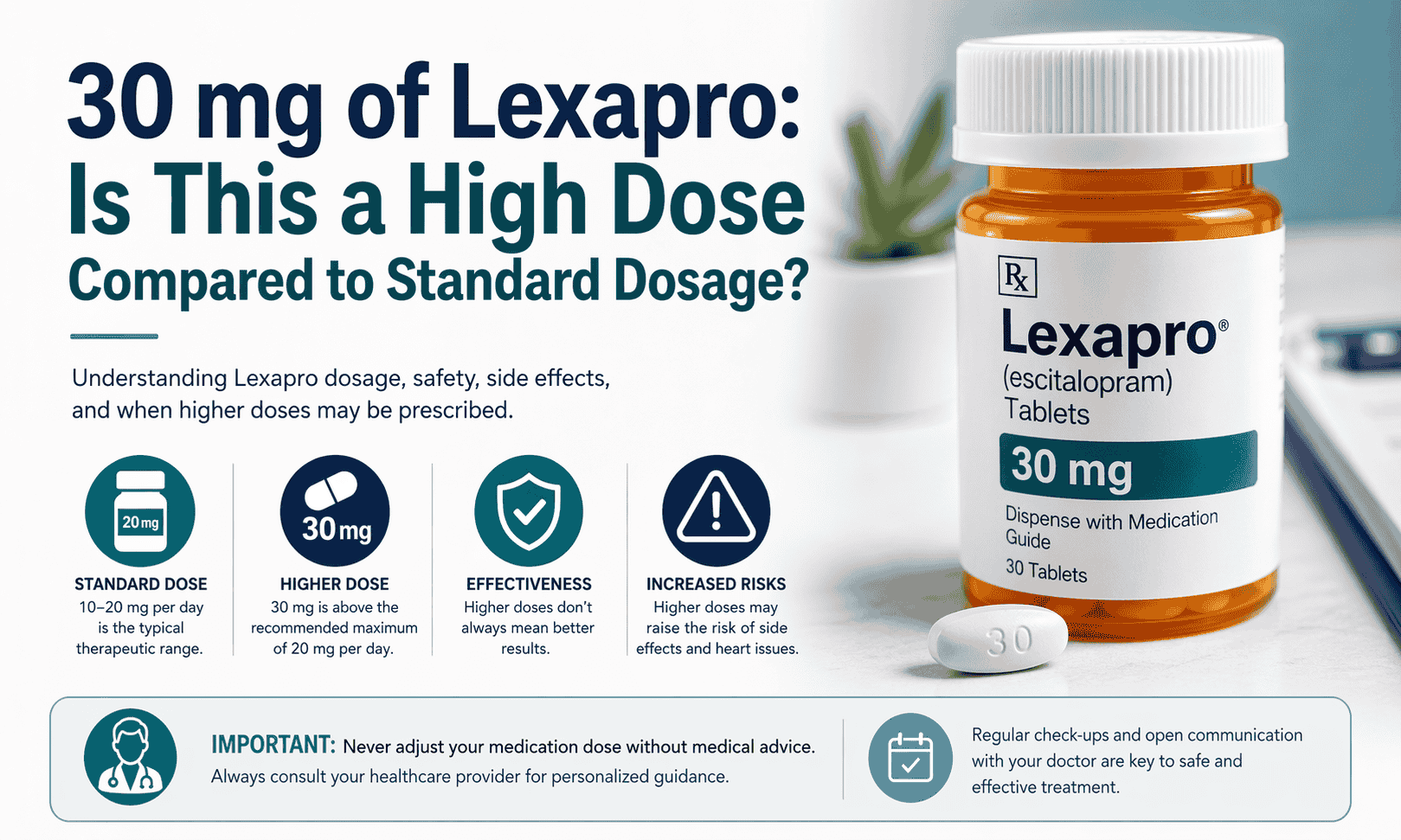
When it comes to antidepressant medications, dosage plays a crucial role in both effectiveness and safety. One common question people ask is whether 30 mg of Lexapro is considered a high dose. The short answer: yes, in most cases, 30 mg is above the standard recommended dosage. But the full picture is more nuanced, depending on individual needs, medical history, and how the body responds to treatment.
Let’s break this down in a clear, practical way.
What Is Lexapro and How Does It Work?
Lexapro is the brand name for Escitalopram, a medication that belongs to a class of drugs called selective serotonin reuptake inhibitors (SSRIs). These medications are commonly prescribed to treat:
- Major depressive disorder (MDD)
- Generalized anxiety disorder (GAD)
Lexapro works by increasing levels of Serotonin in the brain. Serotonin is a neurotransmitter associated with mood regulation, emotional balance, and overall mental well-being.
Standard Dosage of Lexapro
For most adults, the typical dosing guidelines are:
- Starting dose: 10 mg per day
- Usual therapeutic dose: 10–20 mg per day
- Maximum recommended dose: 20 mg per day (according to U.S. Food and Drug Administration guidelines)
Doctors usually start patients on a lower dose and adjust gradually based on how well the medication works and whether side effects occur.
Is 30 mg of Lexapro considered a High Dose?
In standard medical practice, 30 mg is considered above the recommended maximum dose. Most clinical guidelines suggest not exceeding 20 mg per day because:
- Higher doses do not always significantly improve effectiveness
- The risk of side effects increases with dosage
However, in some rare cases, a doctor may prescribe 30 mg off-label. This usually happens when:
- The patient has not responded to standard doses
- The benefits are judged to outweigh the risks
- The patient is closely monitored
So while 30 mg is not typical, it is not unheard of under careful medical supervision.
Why might a Doctor Prescribe 30 mg?
There are specific scenarios where a higher dose might be considered:
1. Treatment-Resistant Depression
Some individuals do not respond to standard doses. In such cases, increasing the dose may help improve symptoms.
2. Severe Anxiety Disorders
Patients with severe or persistent anxiety may require higher doses for symptom control.
3. Individual Differences
Each person metabolizes medication differently. Factors like genetics, weight, liver function, and other medications can influence how Lexapro works.
That said, doctors usually explore other strategies such as switching medications or combining therapies before exceeding recommended doses.
Risks and Side Effects of High Doses
Taking 30 mg of Lexapro increases the likelihood of side effects. Common side effects at any dose include:
- Nausea
- Headache
- Insomnia or drowsiness
- Dry mouth
- Sexual dysfunction
At higher doses, more serious risks can emerge:
1. Serotonin Syndrome
A potentially dangerous condition caused by excessive serotonin levels. Symptoms include:
- Agitation
- Rapid heart rate
- Sweating
- Muscle rigidity
2. QT Interval Prolongation
High doses of escitalopram may affect heart rhythm, increasing the risk of abnormal heartbeats.
3. Increased Anxiety or Restlessness
Ironically, higher doses can sometimes worsen anxiety in certain individuals.
Because of these risks, medical supervision is essential when taking higher-than-standard doses.
Is 30 mg More Effective Than 20 mg?
This is where expectations often need adjustment.
Research suggests that increasing the dose beyond 20 mg does not always lead to significantly better results. In many cases:
- Benefits plateau at standard doses
- Side effects increase disproportionately
That means a higher dose is not automatically a better solution. Effectiveness depends on the individual, not just the number.
Alternatives to Increasing the Dose
If 10–20 mg of Lexapro isn’t working well, doctors may recommend:
- Switching to another antidepressant
- Adding another medication (augmentation therapy)
- Cognitive behavioral therapy (CBT)
- Lifestyle changes, such as exercise and sleep improvement
These options can sometimes be more effective and safer than simply increasing the dosage.
Important Safety Considerations
If you or someone else is taking 30 mg of Lexapro, keep these points in mind:
- Never adjust your dose without medical advice
- Report unusual symptoms immediately
- Avoid combining with other serotonin-increasing drugs unless prescribed
- Regular check-ups may be required (especially for heart health)
Self-medicating or increasing dosage on your own can lead to serious complications.
Who Should Avoid High Doses?
Certain groups should be particularly cautious:
- Older adults
- People with heart conditions
- Those taking medications that affect heart rhythm
- Individuals with liver impairment
For these populations, even standard doses may need adjustment.
Final Thoughts
So, is 30 mg of Lexapro a high dose? Yes, by standard medical guidelines, it exceeds the typical maximum of 20 mg per day. While it may be prescribed in select cases, it is generally considered a higher-than-normal dose and requires close medical supervision.
If you feel your current dose isn’t working, the best step is to consult your doctor rather than increasing it on your own. Treatment for depression and anxiety is highly individualized, and the safest path is always guided care.
FAQs
1. Is 30 mg of Lexapro safe?
It can be safe under a doctor’s supervision, but it is above the standard recommended dose and carries higher risks.
2. Why is the maximum dose usually 20 mg?
Because higher doses don’t consistently improve effectiveness and may increase side effects, including heart-related risks.
3. Can I increase my Lexapro dose myself?
No. Always consult a healthcare provider before making any changes to your medication.
4. What happens if I accidentally take 30 mg?
One-time intake may not be dangerous for everyone, but you should contact a doctor, especially if symptoms like dizziness or rapid heartbeat occur.
5. Are there better options than increasing the dose?
Yes. Alternatives include switching medications, therapy, or combining treatments for better results.