
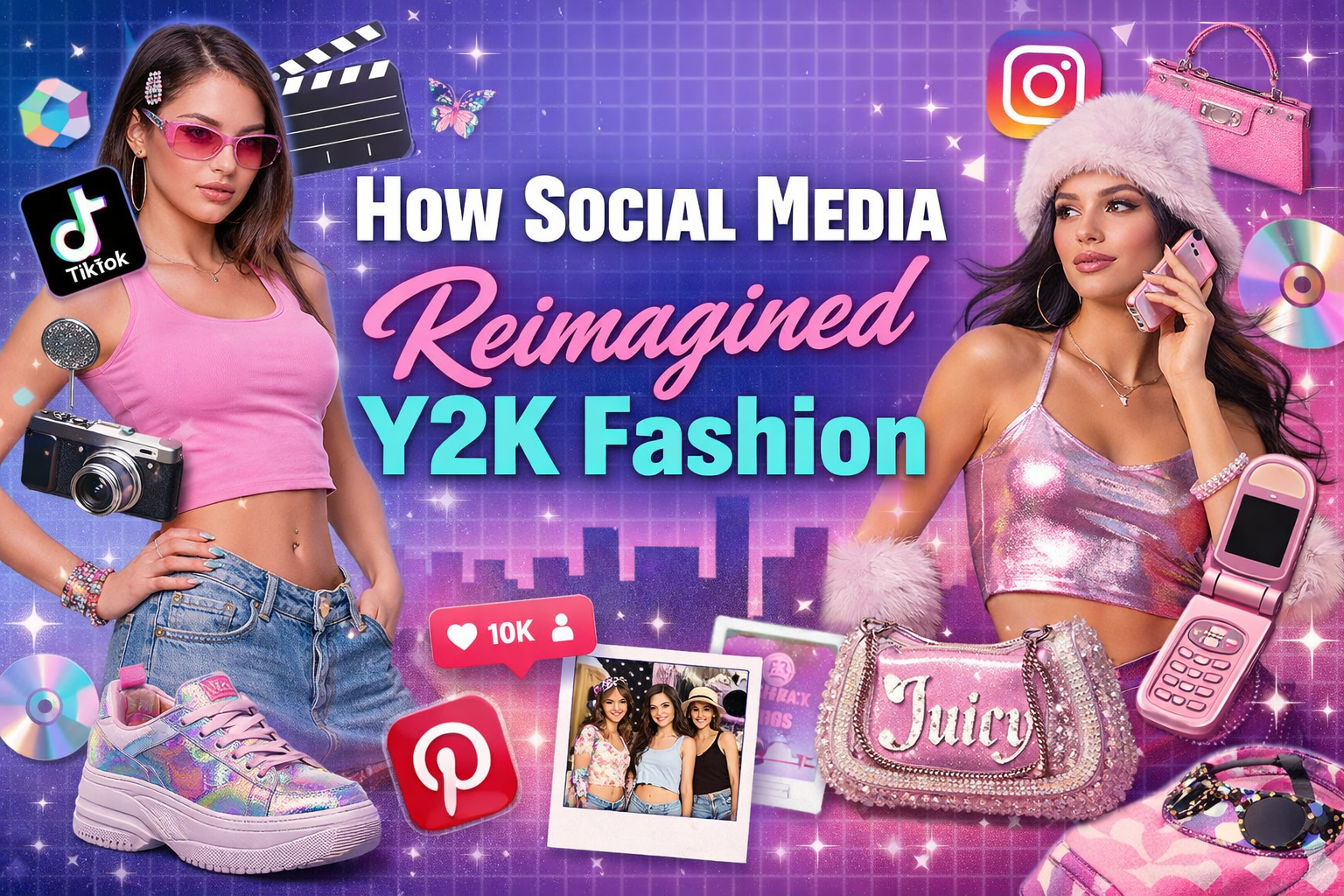
The Y2K fashion aesthetic, once dismissed as a chaotic mix of low-rise jeans, rhinestones, and futuristic silhouettes, has made one of the most powerful comebacks in modern style history. But this revival didn’t come from traditional runways or fashion magazines. Instead, social media completely reimagined Y2K fashion, reshaping it for a digital-first generation.
Platforms like TikTok, Instagram, Pinterest, and YouTube didn’t just revive early 2000s fashion; they re-edited, democratized, and globalized it. What was once celebrity-driven and exclusive is now community-led, remixable, and endlessly viral. Let’s explore how social media transformed Y2K fashion into a defining style movement of the 2020s.
The Role of Social Media in Reimagining Y2K Fashion
1. TikTok as the Catalyst of the Y2K Revival
TikTok played a pivotal role in bringing Y2K fashion back into the mainstream. Short-form videos made it easy to showcase nostalgic outfits, styling hacks, and thrifted finds in under a minute. Viral trends like “Y2K glow-up,” “2000s girl aesthetic,” and “main character energy” introduced low-rise jeans, baby tees, butterfly clips, and platform sandals to Gen Z users who were not even born during the original Y2K era.
Unlike magazines of the early 2000s, TikTok allowed anyone to participate. The algorithm rewarded creativity rather than status, allowing micro-creators to define trends faster than luxury brands. This shift turned Y2K fashion from a celebrity trend into a crowd-powered movement.
2. Instagram’s Visual Storytelling and Curated Nostalgia
Instagram reshaped Y2K fashion through highly curated visual storytelling. Fashion influencers used pastel grids, flash photography, mirror selfies, and Polaroid-style edits to recreate early 2000s aesthetics. Hashtags like #Y2KFashion, #Y2KAesthetic, and #2000sStyle accumulated billions of views, turning the aesthetic into a searchable visual archive.
Instagram also softened some of Y2K’s more extreme elements. While original Y2K fashion was often bold and chaotic, social media reimagined it with cleaner silhouettes, better tailoring, and more inclusive sizing. This balance of nostalgia and modern styling made the trend more wearable for today’s audience.
3. Gen Z’s Reinvention of Y2K Through a Modern Lens
Gen Z didn’t simply copy Y2K fashion; they reinterpreted it. Social media allowed young creators to blend early 2000s style with modern values like gender fluidity, body positivity, and sustainability. Crop tops, cargo pants, and mini skirts were styled across different body types and genders, breaking the rigid beauty standards of the original era.
This reinvention made Y2K fashion less about fitting into a mold and more about personal expression. Oversized fits replaced ultra-tight silhouettes, and thrifted pieces replaced fast-fashion exclusivity, proving that nostalgia can evolve with cultural awareness.
Also Read: https://y3koutfits.com/y2k-hairstyles/
4. Celebrity Influence Amplified by Social Platforms
While celebrities influenced Y2K fashion in the early 2000s through paparazzi shots and red carpets, social media multiplied that influence exponentially. When stars like Bella Hadid, Dua Lipa, Kylie Jenner, and Hailey Bieber post Y2K-inspired outfits, those looks spread instantly across platforms.
What’s different now is speed and accessibility. Fans can immediately recreate celebrity outfits using affordable alternatives linked through Instagram shopping or TikTok storefronts. Social media blurred the line between celebrity style and everyday fashion, accelerating trend cycles faster than ever.
5. Pinterest as the Mood Board of the Y2K Aesthetic
Pinterest became the planning and inspiration hub for Y2K fashion lovers. Users created mood boards featuring metallic fabrics, rhinestones, early 2000s runway looks, and pop culture references like Britney Spears, Paris Hilton, and Destiny’s Child.
Unlike TikTok’s fast trends, Pinterest offers longevity. Searches for “Y2K outfits,” “2000s fashion aesthetic,” and “Y2K accessories” surged year after year, proving that the revival isn’t just a fleeting trend but a sustained aesthetic movement shaped by visual discovery.
6. Thrift Culture and Sustainable Fashion on Social Media
One of the most important ways social media reimagined Y2K fashion is through sustainability. Platforms like TikTok and Instagram popularized thrift hauls, upcycling tutorials, and resale platforms such as Depop and Poshmark.
Instead of buying new replicas, users hunt for authentic early 2000s pieces, vintage Juicy Couture tracksuits, low-rise denim, or logo handbags. This shift aligned Y2K fashion with eco-conscious values, transforming a once fast-fashion-heavy era into a symbol of circular fashion.
7. Fashion Micro-Trends Born From Algorithms
Social media algorithms fragmented Y2K fashion into dozens of micro-trends. Instead of one dominant look, we now have sub-aesthetics like:
- McBling Y2K
- Soft Girl Y2K
- Cyber Y2K
- Indie Sleaze revival
- Barbiecore Y2K
These micro-trends thrive because algorithms push niche content to interested audiences. This personalization allows users to engage with Y2K fashion in ways that feel unique rather than one-size-fits-all.
8. DIY, Customization, and Creator-Led Styling
Social media empowered users to become designers. DIY tutorials for bedazzling jeans, cropping tops, adding rhinestones, or customizing bags flooded TikTok and YouTube. This creator-led approach mirrors the playful, experimental spirit of early 2000s fashion but with better tools and global reach.
Customization transformed Y2K fashion from mass-produced trends into personalized statements. The focus shifted from brand labels to creativity, making individuality the core of the revival.
9. Digital Nostalgia and the Power of Aesthetic Memory
Social media thrives on nostalgia, and Y2K fashion fits perfectly into this emotional landscape. Grainy filters, flip-phone imagery, early internet icons, and throwback pop music create a digital time capsule that feels comforting in uncertain times.
This emotional connection is crucial. Y2K fashion on social media isn’t just about clothes; it’s about reliving or imagining a carefree, optimistic era. Platforms turned fashion into storytelling, where outfits evoke memories, moods, and cultural moments.
10. How Brands Adapted to Social-First Y2K Fashion
Fashion brands quickly recognized social media’s influence on the Y2K revival. Instead of dictating trends, brands now listen to creators, analyze viral content, and adapt collections accordingly. Many labels relaunched archive designs, collaborated with influencers, or created Y2K-inspired drops exclusively for social platforms.
This shift reversed traditional fashion hierarchies. Social media users now lead trends, while brands follow, proving that Y2K fashion’s comeback is powered by community, not corporations.
FAQs: How Social Media Reimagined Y2K Fashion
1. Why did the Y2K fashion become popular again on social media?
Social media amplified nostalgia, creativity, and self-expression, making Y2K fashion visually engaging and emotionally appealing to Gen Z and millennials alike.
2. Which platform influenced Y2K fashion the most?
TikTok played the biggest role due to its viral short-form videos, though Instagram and Pinterest also significantly shaped the aesthetic.
3. How is modern Y2K fashion different from the original?
Today’s Y2K fashion is more inclusive, sustainable, and customizable, blending early 2000s elements with modern values and styling.
4. Is Y2K fashion just a trend or a lasting style?
Its continued presence across platforms suggests it’s more than a trend; it’s an evolving aesthetic influenced by digital culture.
5. Can Y2K fashion be worn sustainably?
Yes, thrifting, upcycling, and resale platforms make it easy to embrace Y2K fashion sustainably.