
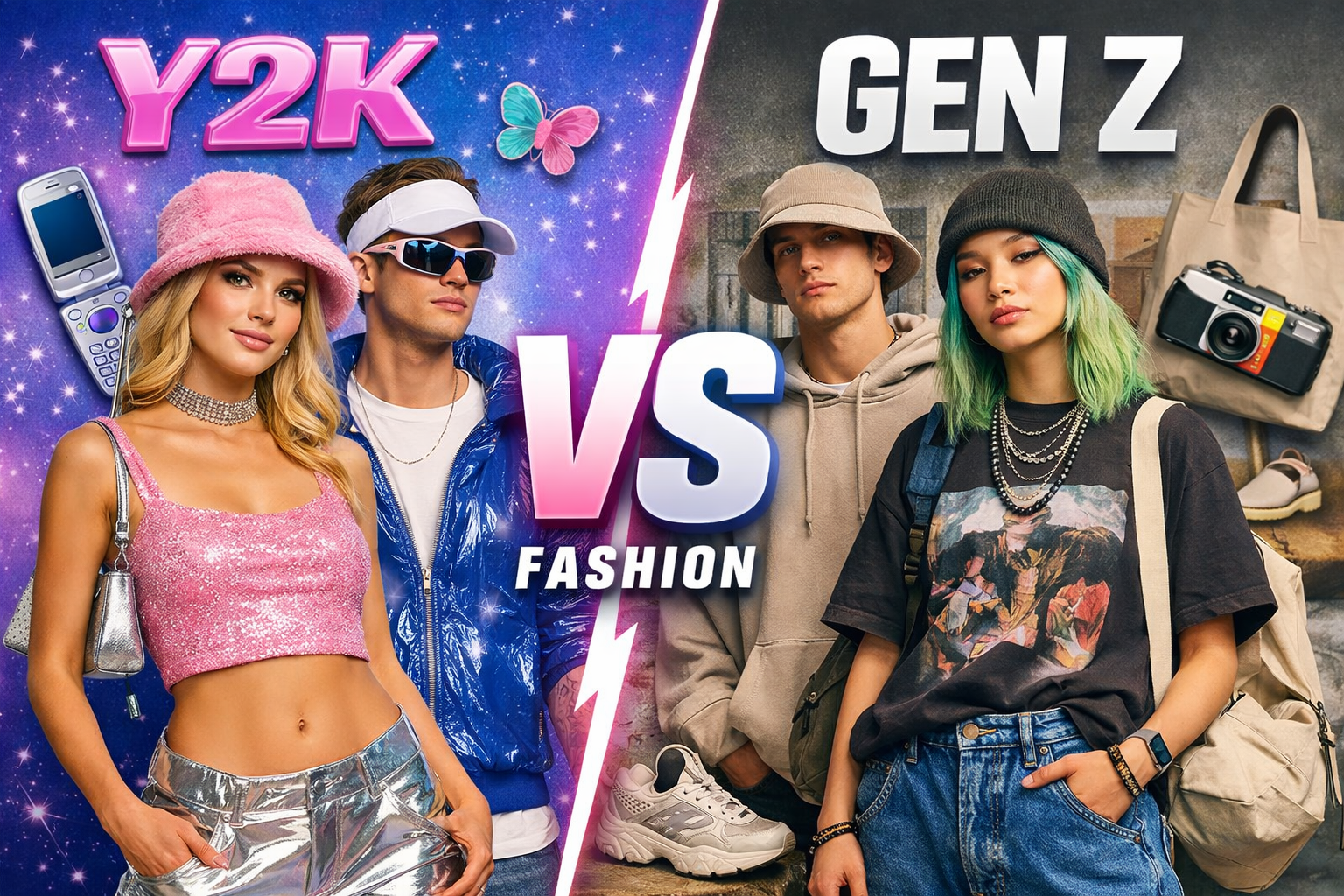
Fashion has always reflected the mindset, technology, and cultural mood of its time. Two of the most talked-about fashion movements today, Y2K fashion and Gen Z fashion, often overlap visually, yet they represent very different philosophies. While Y2K fashion is rooted in early 2000s optimism and celebrity culture, Gen Z fashion is shaped by digital identity, social awareness, and individuality.
This detailed guide breaks down how Y2K and Gen Z fashion compare, where they intersect, and what truly sets them apart. From silhouettes and colors to sustainability and gender expression, this comparison helps you understand why these styles coexist and why Gen Z has redefined Y2K for a new era.
Core Differences Between Y2K and Gen Z Fashion
1. Cultural Origins and Influences
Y2K fashion emerged during the late 1990s and early 2000s, fueled by rapid technological growth, pop icons, and a futuristic outlook. The turn of the millennium brought excitement, consumerism, and a fascination with digital life. Celebrities, music videos, and glossy magazines dictated trends, leaving little room for personal reinterpretation.
Gen Z fashion, on the other hand, is born from the internet age. Social media platforms like TikTok and Instagram shape trends in real time. Instead of celebrities, influencers, creators, and even anonymous users drive style movements. Gen Z draws inspiration from multiple decades, cultures, and subcultures, blending them freely without rigid fashion rules.
Aesthetic Elements That Define Both Styles
2. Silhouettes and Fit
Y2K fashion favored body-hugging silhouettes. Low-rise jeans, baby tees, halter tops, mini skirts, and fitted dresses dominated wardrobes. The goal was to highlight the body, often leaning toward glam and club-ready looks.
Gen Z fashion embraces contrast. Oversized hoodies, baggy jeans, cargo pants, and relaxed fits coexist with cropped tops and fitted pieces. Comfort plays a major role, and proportions are intentionally exaggerated wide pants with tiny tops or oversized layers stacked creatively.
3. Color Palettes and Textures
Y2K fashion thrived on bold, playful colors like metallic silver, bubblegum pink, neon green, and icy blue. Shiny fabrics such as satin, PVC, mesh, and rhinestones were popular, reflecting a futuristic, glossy aesthetic.
Gen Z fashion uses color more strategically. Earth tones, muted pastels, monochrome outfits, and experimental color blocking dominate. Textures are diverse denim, knitwear, thrifted fabrics, and handcrafted pieces are common, often layered for depth rather than shine.
The Role of Expression and Identity
4. Gender Expression and Inclusivity
Y2K fashion largely followed traditional gender norms. Women’s fashion emphasized femininity and sex appeal, while men’s fashion focused on streetwear, denim, and sportswear.
Gen Z fashion actively challenges gender boundaries. Gender-neutral clothing, unisex silhouettes, and fluid styling are central to the aesthetic. Skirts on men, oversized tailoring on women, and experimental layering reflect Gen Z’s focus on self-expression over labels.
5. Influence of Celebrities vs Creators
During the Y2K era, celebrities like Britney Spears, Paris Hilton, Destiny’s Child, and early-2000s pop stars dictated fashion trends. What appeared in magazines or on red carpets quickly filtered into mainstream fashion.
Gen Z looks to content creators instead of celebrities. Micro-influencers, thrift stylists, and everyday users often spark trends that go viral overnight. Fashion is no longer aspirational; it’s participatory.
Shopping Habits and Sustainability
6. Fast Fashion vs Conscious Consumption
Y2K fashion thrived during the rise of fast fashion. Trend cycles were slower, but mass production was booming, with little awareness of environmental impact.
Gen Z fashion places a strong emphasis on sustainability. Thrifting, upcycling, rental fashion, and ethical brands are actively promoted. While fast fashion still exists, Gen Z consumers are more vocal about ethical concerns and transparency.
7. Styling Philosophy
Y2K styling followed trends strictly. Outfits were polished, coordinated, and trend-driven. Looking “on trend” mattered more than individuality.
Gen Z styling celebrates imperfection. Mixing aesthetics such as pairing Y2K pieces with grunge, minimalist, or vintage elements is encouraged. Personal style is more important than following a single trend.
Digital Impact on Fashion Evolution
8. Social Media and Trend Cycles
In the Y2K era, trends spread through magazines, television, and celebrity appearances. It took months for a style to become mainstream.
Gen Z fashion evolves at lightning speed due to social media. Trends can rise and fall within weeks. A single viral video can redefine global fashion conversations overnight.
9. Accessories and Footwear
Y2K accessories were bold and flashy: tiny shoulder bags, rhinestone belts, butterfly clips, platform sandals, and logo-heavy sunglasses.
Gen Z accessories lean toward individuality. Chunky sneakers, thrifted jewelry, tote bags, statement rings, and experimental eyewear dominate. Logos are often replaced by personal or handmade elements.
10. Longevity and Future Impact
Y2K fashion is nostalgic by nature. Its resurgence is driven by Gen Z’s reinterpretation rather than its original form. Many Y2K trends resurface briefly before fading again.
Gen Z fashion is less about a single aesthetic and more about freedom. Its impact is long-term because it prioritizes values of sustainability, inclusivity, and self-expression over fixed trends.
FAQs: Y2K vs Gen Z Fashion
1. Is Gen Z fashion the same as Y2K fashion?
No. Gen Z fashion borrows elements from Y2K but blends them with modern values like sustainability, inclusivity, and individuality.
2. Why is Y2K fashion popular again?
Nostalgia, social media, and Gen Z’s love for retro aesthetics have brought Y2K fashion back into mainstream culture.
3. What defines Gen Z fashion the most?
Self-expression, comfort, gender fluidity, sustainability, and mixing multiple aesthetics define Gen Z fashion.
4. Can Y2K and Gen Z styles be worn together?
Yes. Many modern outfits combine Y2K silhouettes with Gen Z styling techniques for a balanced look.
5. Which style is more sustainable?
Gen Z fashion is generally more sustainability-focused due to thrifting, upcycling, and ethical brand awareness.