
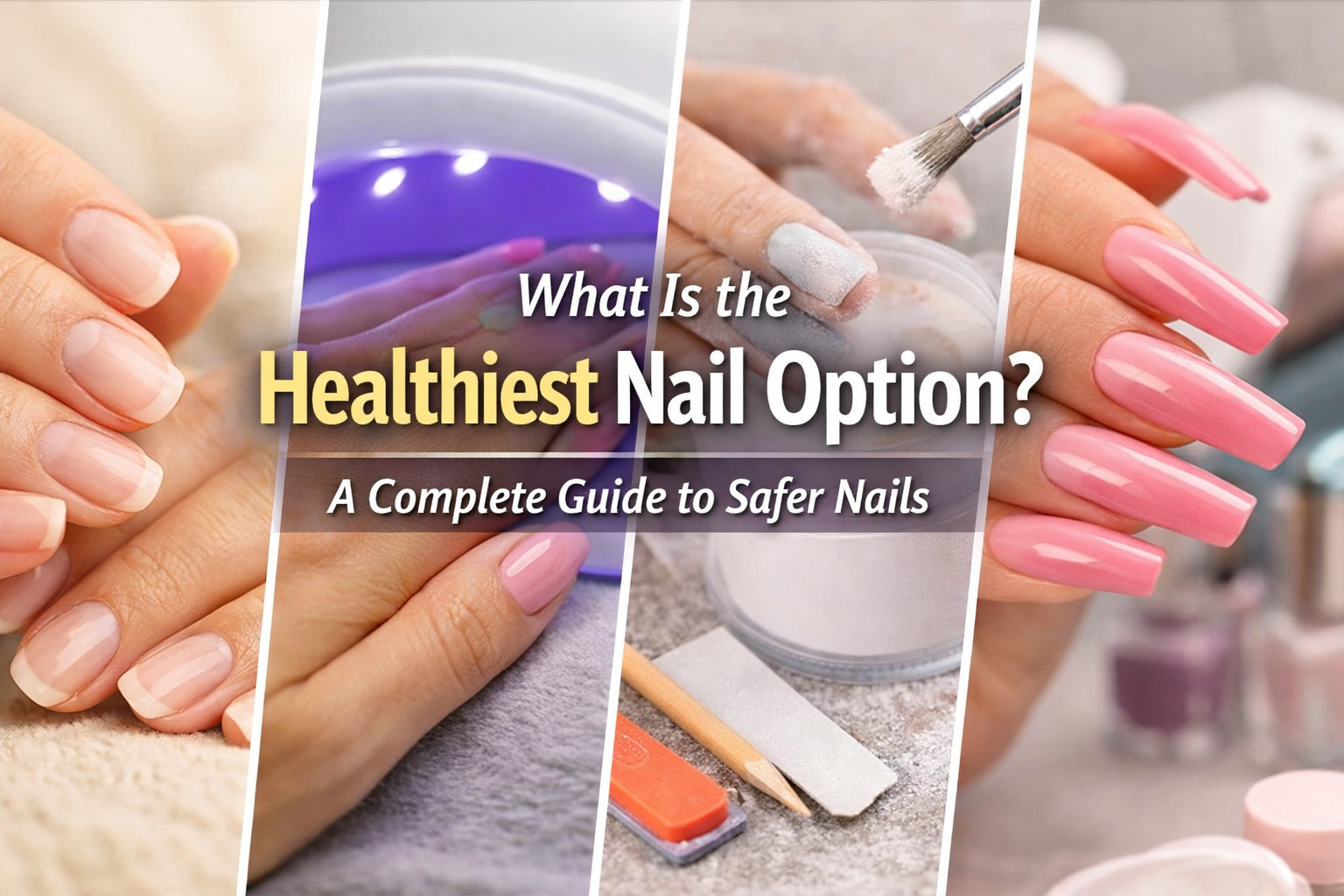
Beautiful nails are often seen as a symbol of self-care, style, and confidence. From glossy gel manicures to elegant acrylic extensions, nail trends continue to evolve rapidly. However, with increasing awareness around health and wellness, many people are now asking an important question: what is the healthiest nail option?
If you’ve ever dealt with brittle nails, peeling layers, discoloration, or nail pain after a manicure, you’re not alone. While nail enhancements can look stunning, not all of them are kind to your natural nails in the long run. This guide takes a deep, honest look at the healthiest nail options available today, helping you make safer choices without sacrificing beauty.
Whether you prefer natural nails or enjoy occasional enhancements, understanding how each option affects nail health is the key to maintaining strong, damage-free nails for years to come.
Understanding Nail Health: What Makes Nails Healthy?
Before choosing the healthiest nail option, it’s essential to understand what healthy nails actually look like.
Healthy nails are:
- Smooth, not ridged or bumpy
- Pinkish with a clean white tip
- Free from pain, swelling, or discoloration
- Strong yet flexible (not overly brittle)
Your nails are made of keratin, a protein that also forms hair and skin. Anything that strips moisture, weakens keratin bonds, or damages the nail bed can compromise nail health over time. This includes harsh chemicals, aggressive filing, improper removal techniques, and constant occlusion (blocking airflow).
Natural Nails vs Artificial Nails: A Quick Comparison
When evaluating the healthiest nail option, most choices fall into two categories:
- Natural nails with minimal enhancements
- Artificial nail systems such as gel, acrylic, dip powder, or press-ons
Each option comes with its own benefits and drawbacks. The healthiest choice often depends on how frequently you get your nails done, how they are applied and removed, and how well you care for your nails between manicures.
The 10 Key Factors That Decide the Healthiest Nail Option
1. Natural Bare Nails: The Gold Standard for Nail Health
If health is your top priority, bare natural nails are undeniably the healthiest nail option. They allow your nail plate to breathe, maintain moisture balance, and grow without interference.
With proper care, regular trimming, gentle filing, cuticle oil, and hand cream, natural nails can look clean, elegant, and strong without any enhancements.
Best for: Long-term nail health, recovery from damage, and minimal maintenance.
2. Regular Nail Polish: A Low-Risk Enhancement
Traditional nail polish is one of the safest cosmetic options when used correctly. It doesn’t require UV lamps, aggressive buffing, or chemical soaking for removal.
To keep this option healthy:
- Use acetone-free removers when possible
- Take Polish breaks between applications
- Apply a nourishing base coat
Health impact: Low, especially with breathable or “5-free/10-free” formulas.
3. Breathable Nail Polish: A Healthier Upgrade
Breathable nail polish allows oxygen and moisture to pass through the nail plate while still offering color. These formulas are often enriched with vitamins like biotin and calcium.
They are ideal for people who want polished nails without constant damage.
Health impact: Very low, making it one of the healthiest nail options with color.
4. Gel Nails: Long-Lasting but Not Risk-Free
Gel nails are popular for their durability and glossy finish, but they come with health concerns. The process involves:
- Buffing the nail surface
- Curing under UV or LED lamps
- Acetone soaking during removal
Frequent gel manicures can thin the nail plate and cause dehydration if not done carefully.
Health impact: Moderate risk with frequent use, safer when used occasionally.
5. Dip Powder Nails: Strong but Drying
Dip powder nails don’t require UV curing, which is a plus. However, they involve layers of resin and powder that can make nails extremely dry.
Another concern is hygiene if salons reuse dipping powders across clients.
Health impact: Moderate, especially for dry or brittle nails.
6. Acrylic Nails: The Most Damaging Option
Acrylic nails offer dramatic length and strength, but they are widely considered the harshest option for nail health. They require heavy filing, strong chemicals, and forceful removal.
Common side effects include:
- Nail thinning
- Lifting and fungal infections
- Weak, peeling nails after removal
Health impact: High risk, least healthy option long-term.
7. Press-On Nails: A Surprisingly Safe Alternative
Modern press-on nails have improved significantly in quality and design. When applied with adhesive tabs instead of glue, they cause minimal damage.
They are removable, reusable, and ideal for special occasions.
Health impact: Low when used occasionally and removed gently.
8. Nail Wraps and Stickers: Gentle and Stylish
Nail wraps are thin adhesive films that stick to the nail without chemicals or curing. They are lightweight and easy to remove.
They don’t damage the nail surface when applied and removed properly.
Health impact: Very low, suitable for fragile nails.
9. Importance of Proper Removal Techniques
Even the healthiest nail option can become harmful if removed incorrectly. Peeling, scraping, or forcefully pulling enhancements damages the nail plate.
Healthy removal tips:
- Never peel gel or acrylic
- Use professional removal or follow instructions carefully
- Rehydrate nails immediately after removal
10. Nail Care Habits That Matter More Than the Product
Ultimately, nail health depends as much on your habits as the products you use. Daily exposure to water, detergents, and neglect can damage nails faster than occasional enhancements.
Healthy nail habits include:
- Using cuticle oil daily
- Wearing gloves for chores
- Maintaining a balanced diet rich in biotin and protein
- Taking regular manicure breaks
So, What Is the Healthiest Nail Option Overall?
If we rank nail options purely by health impact, the healthiest nail options are:
- Natural bare nails with proper care
- Breathable or regular nail polish
- Press-on nails (adhesive tabs)
- Gel nails (occasional use)
- Dip powder nails
- Acrylic nails (least healthy)
The healthiest nail option is one that balances beauty with minimal long-term damage and fits your lifestyle.
How to Transition Back to Healthy Nails
If your nails are currently damaged, give them time to recover:
- Take a 4–6 week break from enhancements
- Keep nails short and moisturized
- Use nail strengtheners sparingly
- Avoid harsh removers
Patience is key—healthy nails grow from consistent care, not quick fixes.
FAQs: What Is the Healthiest Nail Option?
1. Are gel nails bad for your nails?
Gel nails are not inherently bad, but frequent use and improper removal can weaken and thin your natural nails over time.
2. What nail option causes the least damage?
Natural nails or breathable nail polish cause the least damage and are considered the healthiest nail options.
3. Are acrylic nails worse than gel nails?
Yes, acrylic nails generally cause more damage than gel nails due to aggressive filing and chemical use.
4. Can nails recover after years of acrylics?
Yes, nails can recover with proper care, hydration, and time, though it may take several months.
5. Are press-on nails safe for weak nails?
Press-on nails using adhesive tabs are one of the safest options for weak or damaged nails.