
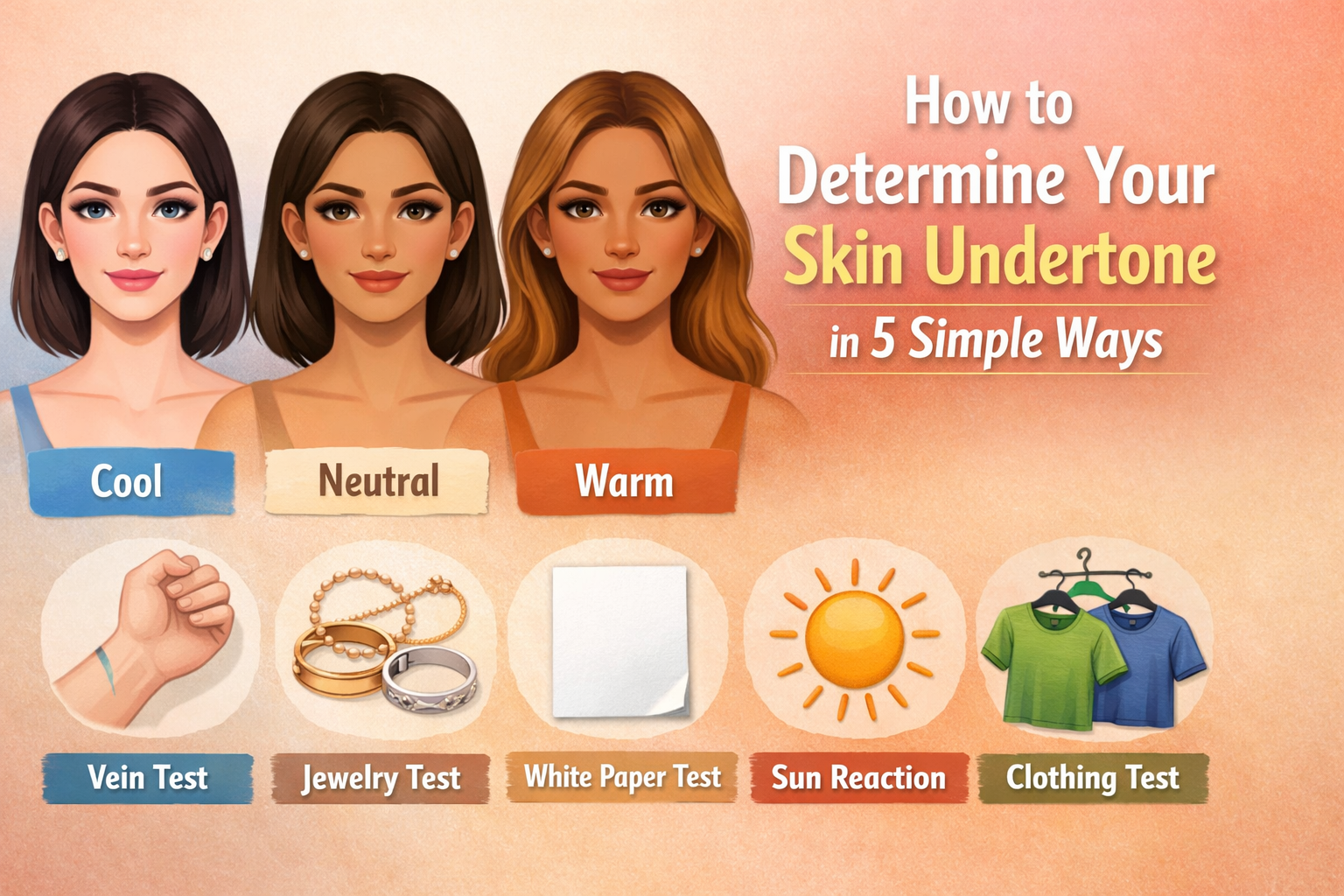
Understanding your skin undertone is one of the most helpful steps in building a flattering beauty routine. While many people focus only on skin tone (fair, medium, or deep), undertone is the subtle hue beneath your skin that stays the same regardless of tanning or seasonal changes. Knowing your undertone can help you choose the right foundation, clothing colors, jewelry, and even hair shades that complement your natural complexion.
Generally, skin undertones fall into three main categories: cool, warm, and neutral. People with cool undertones often have hints of pink, red, or blue beneath the skin. Warm undertones lean toward golden, yellow, or peachy hues. Neutral undertones are a balanced mix of both warm and cool tones.
If you’re unsure which category you fall into, don’t worry. There are several easy ways to identify your undertone right at home. Below are five simple and effective methods to help you determine your skin undertone.
1. The Vein Test
One of the quickest ways to identify your undertone is by looking at the veins on the inside of your wrist.
Stand in natural light and observe the color of your veins. If your veins appear blue or purple, you likely have a cool undertone. If they look green, you probably have a warm undertone. If it’s difficult to tell whether they’re blue or green, you may have a neutral undertone.
This test works because the skin’s undertone affects how the veins appear beneath the surface. However, lighting and skin depth can sometimes make the results slightly confusing, so it’s best used alongside other methods.
2. The Jewelry Test
Another easy method involves comparing how your skin looks when wearing different types of jewelry.
Try holding or wearing both gold and silver jewelry. If gold jewelry makes your skin look brighter and more radiant, you likely have a warm undertone. If silver jewelry looks more flattering, you probably have a cool undertone. If both gold and silver look equally good on you, you likely have a neutral undertone.
This method works because warm undertones typically complement gold’s yellow hues, while cool undertones harmonize better with silver’s cooler shine.
3. The White Paper Test
The white paper test is a classic technique often used by makeup artists.
Stand in front of a mirror in natural daylight and hold a plain white sheet of paper next to your face. Observe how your skin appears against the white background.
If your skin looks yellow, golden, or peachy, you likely have a warm undertone. If it appears pink, rosy, or bluish, you probably have a cool undertone. If your skin looks neither strongly pink nor yellow, you likely fall into the neutral undertone category.
This test works because the bright white background helps highlight the subtle hues beneath your skin.
4. The Sun Reaction Test
How your skin reacts to sun exposure can also reveal clues about your undertone.
If your skin tends to burn quickly and rarely tans, you likely have a cool undertone. People with cool undertones often have more sensitivity to sun exposure.
If your skin tans easily and rarely burns, you likely have a warm undertone. Warm undertones usually contain more melanin, which helps the skin tan more easily.
If you burn slightly but still develop a tan afterward, you may have a neutral undertone.
While this method isn’t perfect for everyone, it can be a helpful indicator when combined with other tests.
5. The Clothing Color Test
Take a look at the colors in your wardrobe that make you feel the most confident. Certain shades naturally complement specific undertones.
People with cool undertones often look best in jewel tones such as emerald green, sapphire blue, lavender, and icy pink. Crisp white and cool gray shades also tend to flatter cool-toned skin.
Those with warm undertones usually shine in earthy shades like mustard yellow, olive green, warm reds, coral, and burnt orange. Cream and warm beige tones often look especially flattering.
If you notice that both cool and warm colors look equally good on you, chances are you have a neutral undertone, which gives you more flexibility when choosing colors.
Why Knowing Your Undertone Matters
Understanding your undertone can make a big difference when choosing beauty and fashion products. For example, foundation shades are often labeled with undertone indicators such as cool (C), warm (W), or neutral (N). Choosing the right undertone helps your foundation blend seamlessly with your skin.
It can also guide decisions about lipstick shades, hair color, clothing, and accessories. When your undertone matches the colors you wear, your overall appearance looks more balanced and natural.
For instance, warm undertones often pair beautifully with golden highlights and earthy makeup shades, while cool undertones tend to look great with ashy hair colors and berry-toned lipsticks.
Tips for Getting the Most Accurate Result
While each test can give you clues about your undertone, the most reliable approach is to combine multiple methods. Lighting conditions, skin depth, and even surface redness can sometimes influence the results of a single test.
Try performing the vein test, jewelry test, and white paper test together. If most of the results point to the same undertone category, you’ve likely found your answer.
Also, remember that undertones don’t change, even if your skin becomes darker from tanning or lighter during winter.
Final Thoughts
Determining your skin undertone doesn’t require professional tools or complicated analysis. With a few simple tests—like checking your veins, comparing jewelry, using the white paper method, observing your reaction to the sun, and evaluating clothing colors—you can easily identify whether your undertone is cool, warm, or neutral.
Once you understand your undertone, choosing makeup, clothing, and accessories becomes much easier. You’ll be able to select shades that naturally enhance your complexion, helping you look and feel more confident every day.