
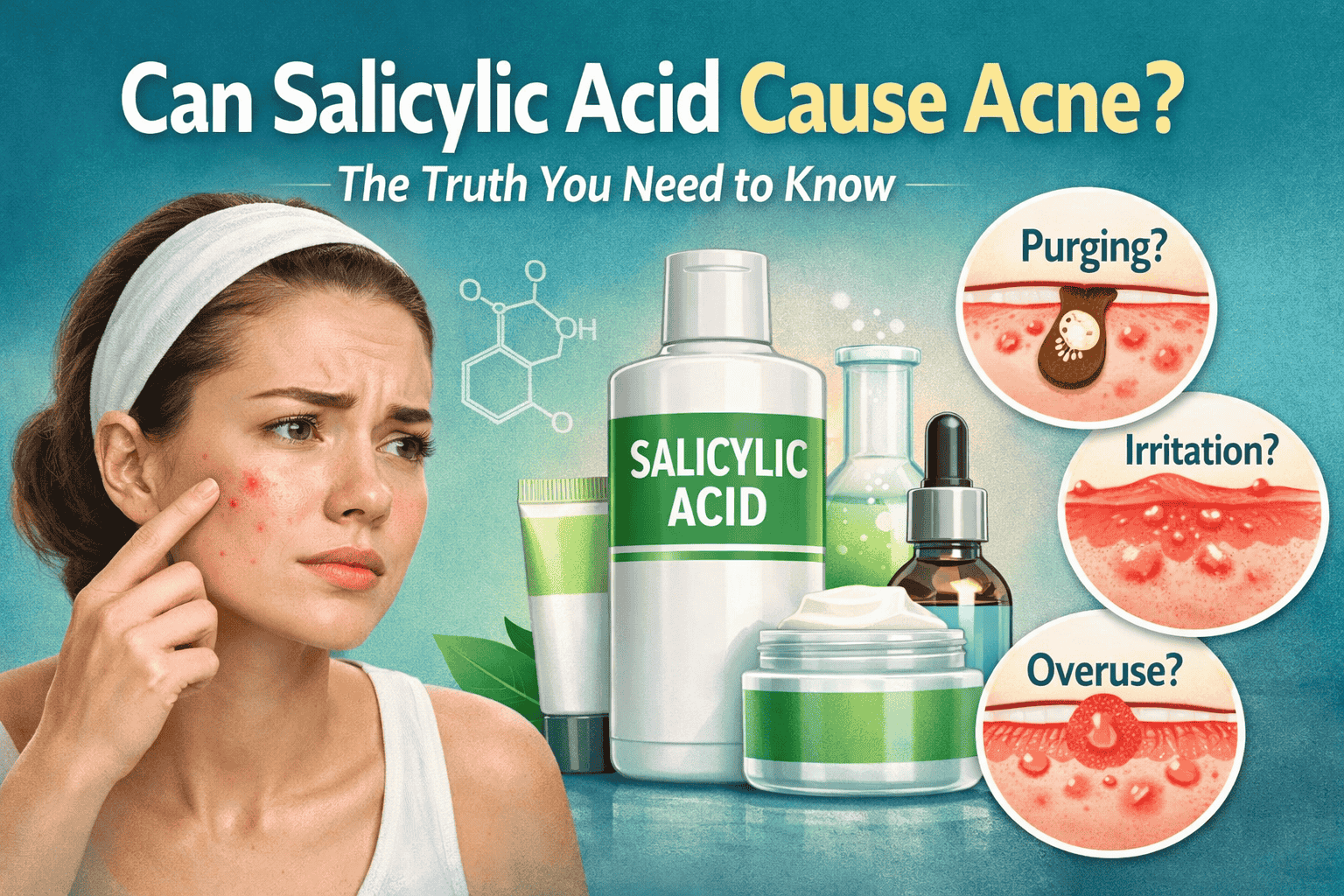
Salicylic acid is one of the most trusted ingredients in skincare, especially for acne-prone skin. It’s widely used in cleansers, toners, serums, and spot treatments to unclog pores and reduce breakouts. However, many people report experiencing more acne after starting salicylic acid, which raises an important question: Can salicylic acid actually cause acne?
The answer isn’t as straightforward as yes or no. While salicylic acid is designed to fight acne, certain situations can make it appear as though it’s causing breakouts. Let’s explore the truth behind this confusion and understand how to use it effectively.
What Is Salicylic Acid and How Does It Work?
Salicylic acid is a beta-hydroxy acid (BHA) that penetrates deep into the pores. Unlike water-soluble acids, it is oil-soluble, which allows it to dissolve excess sebum and dead skin cells trapped inside pores.
Here’s what it does:
- Exfoliates dead skin cells
- Unclogs pores
- Reduces inflammation
- Prevents future breakouts
Because of these benefits, it’s commonly recommended for people with oily and acne-prone skin.
Can Salicylic Acid Cause Acne?
Technically, salicylic acid does not cause acne. However, it can trigger temporary breakouts in certain cases. These breakouts are often misunderstood and can be due to several reasons, such as purging, irritation, or incorrect usage.
Let’s break it down.
7 Reasons Why Salicylic Acid May Seem to Cause Acne
1. Skin Purging Phase
When you first start using salicylic acid, your skin may go through a process called “purging.” This happens because the ingredient speeds up cell turnover, pushing underlying clogged material to the surface faster.
Purging usually:
- Occurs in areas where you already get acne
- Lasts 2 to 6 weeks
- Clears up faster than regular breakouts
2. Overuse or High Concentration
Using too much salicylic acid or starting with a high concentration can irritate your skin. Irritation can lead to redness, dryness, and even more breakouts.
3. Skin Barrier Damage
Excessive exfoliation can weaken your skin barrier. When your skin barrier is compromised, it becomes more prone to inflammation and acne.
4. Mixing with Harsh Ingredients
Combining salicylic acid with strong ingredients like retinoids or benzoyl peroxide without guidance can overwhelm your skin, leading to irritation and breakouts.
5. Not Moisturizing Enough
Salicylic acid can dry out the skin. If you skip moisturizer, your skin may produce more oil to compensate, which can clog pores and cause acne.
6. Using the Wrong Formulation
Not all salicylic acid products suit every skin type. A product that is too strong or poorly formulated can irritate and worsen acne instead of helping it.
7. Allergic Reaction or Sensitivity
Some people may be sensitive or allergic to salicylic acid. This can result in redness, itching, or acne-like bumps that resemble breakouts.
How to Tell the Difference Between Purging and Breakouts
It’s important to distinguish between purging and actual acne caused by irritation.
Purging:
- Happens in usual breakout areas
- Clears faster than normal acne
- Occurs shortly after starting a new product
Breakouts (Irritation):
- Appears in new areas
- Takes longer to heal
- Comes with redness, burning, or discomfort
If your acne persists beyond 6–8 weeks or worsens significantly, it’s likely not purging.
How to Use Salicylic Acid Without Causing Breakouts
To avoid unwanted acne flare-ups, follow these best practices:
Start Slow
Begin with a low concentration (0.5% to 2%) and use it 2–3 times a week.
Patch Test First
Always test the product on a small area before applying it to your face.
Keep Your Routine Simple
Avoid mixing too many active ingredients at once. Stick to a gentle cleanser, moisturizer, and sunscreen.
Moisturize Regularly
Use a non-comedogenic moisturizer to maintain your skin barrier.
Use Sunscreen Daily
Salicylic acid can make your skin more sensitive to the sun, so SPF is essential.
Who Should Avoid Salicylic Acid?
Salicylic acid may not be suitable for everyone. You should be cautious if you have:
- Very sensitive skin
- Extremely dry or damaged skin
- Allergies to aspirin (salicylic acid is related to it)
If unsure, consult a dermatologist before adding it to your routine.
Final Thoughts
Salicylic acid is a powerful and effective ingredient for treating acne, but it doesn’t directly cause breakouts. What many people experience is either skin purging or irritation due to improper use.
Understanding how your skin reacts and using the product correctly can make all the difference. With the right approach, salicylic acid can become a game-changer in your skincare routine rather than a source of frustration.
FAQs
1. Can salicylic acid make acne worse before it gets better?
Yes, it can cause temporary purging as it brings clogged pores to the surface. This is normal and usually resolves within a few weeks.
2. How long does salicylic acid purging last?
Purging typically lasts between 2 and 6 weeks. If it continues longer, it may be irritation rather than purging.
3. Should I stop using salicylic acid if I break out?
Not immediately. If it’s purging, continue using it. However, if irritation persists or worsens, discontinue use.
4. Can I use salicylic acid every day?
It depends on your skin type. Some people tolerate daily use, while others should use it only a few times a week.
5. Is salicylic acid good for all skin types?
It works best for oily and acne-prone skin but may not suit very dry or sensitive skin types.