
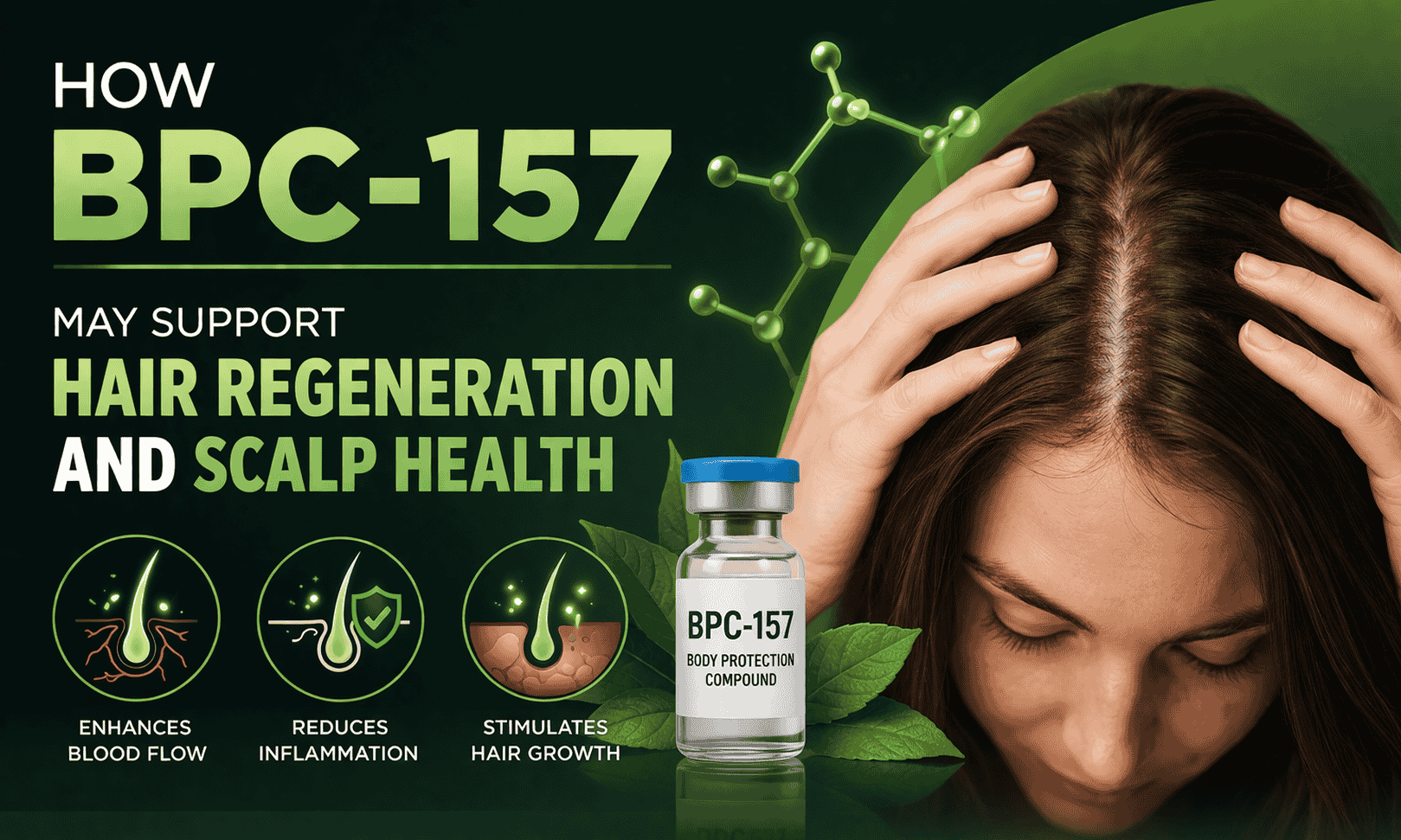
Hair loss and thinning are common concerns that affect both men and women. While traditional treatments like minoxidil and finasteride dominate the market, newer compounds are gaining attention for their regenerative potential. One such compound is BPC-157, a peptide known for its healing and tissue-repair properties. But can it really support hair regeneration and improve scalp health? Let’s explore the science, potential benefits, and limitations.
What Is BPC-157?
BPC-157 stands for “Body Protection Compound-157,” a synthetic peptide derived from a protein found in human gastric juice. It has been widely studied for its ability to accelerate healing in muscles, tendons, ligaments, and even the nervous system.
Although it is not officially approved for medical use in many countries, researchers have shown that BPC-157 interacts with several biological pathways involved in tissue repair, inflammation reduction, and blood vessel formation.
These properties are what make it an interesting candidate for hair and scalp health.
How Hair Growth Works
To understand how BPC-157 may help, it’s important to know the basics of hair growth. Hair grows in cycles consisting of three phases:
- Anagen (growth phase): Active hair growth
- Catagen (transition phase): Hair stops growing
- Telogen (resting phase): Hair sheds
Healthy hair growth depends on proper blood circulation, nutrient delivery, and balanced cellular activity in hair follicles. Disruptions in these processes due to stress, hormonal imbalance, or inflammation can lead to hair thinning or loss.
Potential Benefits of BPC-157 for Hair Regeneration
1. Enhanced Blood Flow to the Scalp
One of the most promising effects of BPC-157 is its ability to promote angiogenesis, which is the formation of new blood vessels. Improved blood flow ensures that hair follicles receive essential nutrients and oxygen.
Better circulation can:
- Strengthen weak follicles
- Stimulate dormant hair roots
- Improve overall scalp vitality
This is particularly beneficial for individuals experiencing hair thinning due to poor scalp circulation.
2. Anti-Inflammatory Properties
Chronic inflammation of the scalp is a major contributor to hair loss conditions such as alopecia. BPC-157 has been shown to reduce inflammation by modulating cytokine activity.
By calming inflammation, it may:
- Protect hair follicles from damage
- Reduce scalp irritation
- Create a healthier environment for hair growth
3. Tissue Repair and Regeneration
BPC-157 is widely recognized for accelerating tissue healing. This includes skin repair, which directly impacts the scalp.
A healthier scalp means:
- Better follicle anchoring
- Reduced scarring or damage
- Improved hair density over time
For individuals with scalp damage due to infections, harsh treatments, or injuries, this regenerative effect could be valuable.
4. Interaction with Growth Factors
BPC-157 may influence important biological pathways, including those related to growth factors. Growth factors play a key role in stimulating hair follicle activity and prolonging the anagen phase.
This interaction may:
- Extend the growth phase of hair
- Increase hair thickness
- Encourage new hair formation
5. Stress and Hormonal Balance Support
While not a direct hormone regulator, BPC-157 has shown potential in stabilizing systems affected by stress. Since stress is a major trigger for hair shedding (telogen effluvium), this indirect benefit can support healthier hair cycles.
Forms and Application Methods
BPC-157 is typically available in two forms:
- Injectable form: Used in research settings for systemic effects
- Topical formulations: Emerging option for localized application on the scalp
For hair-related purposes, topical use is often considered more practical and targeted. However, research on topical BPC-157 for hair growth is still limited.
Is There Scientific Evidence?
While BPC-157 has been extensively studied in animal models and laboratory settings, direct human studies focusing on hair regeneration are still lacking.
Most of the current understanding is based on:
- Its proven ability to enhance healing
- Its role in improving blood flow
- Its anti-inflammatory effects
These mechanisms strongly suggest potential benefits for hair and scalp health, but clinical trials are needed to confirm their effectiveness specifically for hair growth.
Safety and Considerations
BPC-157 is generally considered safe in research environments, with few reported side effects. However, there are important points to keep in mind:
- It is not FDA-approved for hair loss treatment
- Long-term human studies are limited
- Quality and purity may vary depending on the source
Before considering BPC-157, it’s advisable to consult a healthcare professional, especially if you have underlying health conditions.
Who Might Benefit from BPC-157?
BPC-157 may be particularly helpful for individuals dealing with:
- Scalp inflammation or irritation
- Hair thinning due to poor circulation
- Damage from chemical treatments or infections
- Stress-related hair loss
However, it may not be as effective for genetic hair loss conditions like androgenetic alopecia without additional treatments.
Final Thoughts
BPC-157 is an exciting compound with strong regenerative and healing properties that may extend to hair and scalp health. Its ability to improve blood flow, reduce inflammation, and support tissue repair makes it a promising option for those seeking alternative approaches to hair regeneration.
That said, it’s important to approach it with realistic expectations. While early findings are encouraging, more human research is needed to fully validate its effectiveness for hair growth.
If you’re exploring innovative ways to improve scalp health and support hair regrowth, BPC-157 could be worth watching as scientific research continues to evolve.
FAQs
1. Is BPC-157 effective for hair growth?
BPC-157 shows promising regenerative and healing properties that may support hair growth, but there is currently limited direct human research confirming its effectiveness for this purpose.
2. Can BPC-157 regrow lost hair?
It may help improve scalp health and stimulate dormant follicles, but it is not guaranteed to regrow hair, especially in cases of genetic hair loss.
3. How is BPC-157 used for scalp health?
It is typically used in injectable or topical forms. For hair-related benefits, topical application is considered more targeted, though research is still emerging.
4. Are there any side effects of BPC-157?
BPC-157 is generally well-tolerated in studies, but long-term human safety data are limited. Users should consult a healthcare professional before use.
5. Can BPC-157 replace traditional hair loss treatments?
No, it should not replace proven treatments like minoxidil or finasteride. It may be used as a complementary approach rather than a primary solution.