
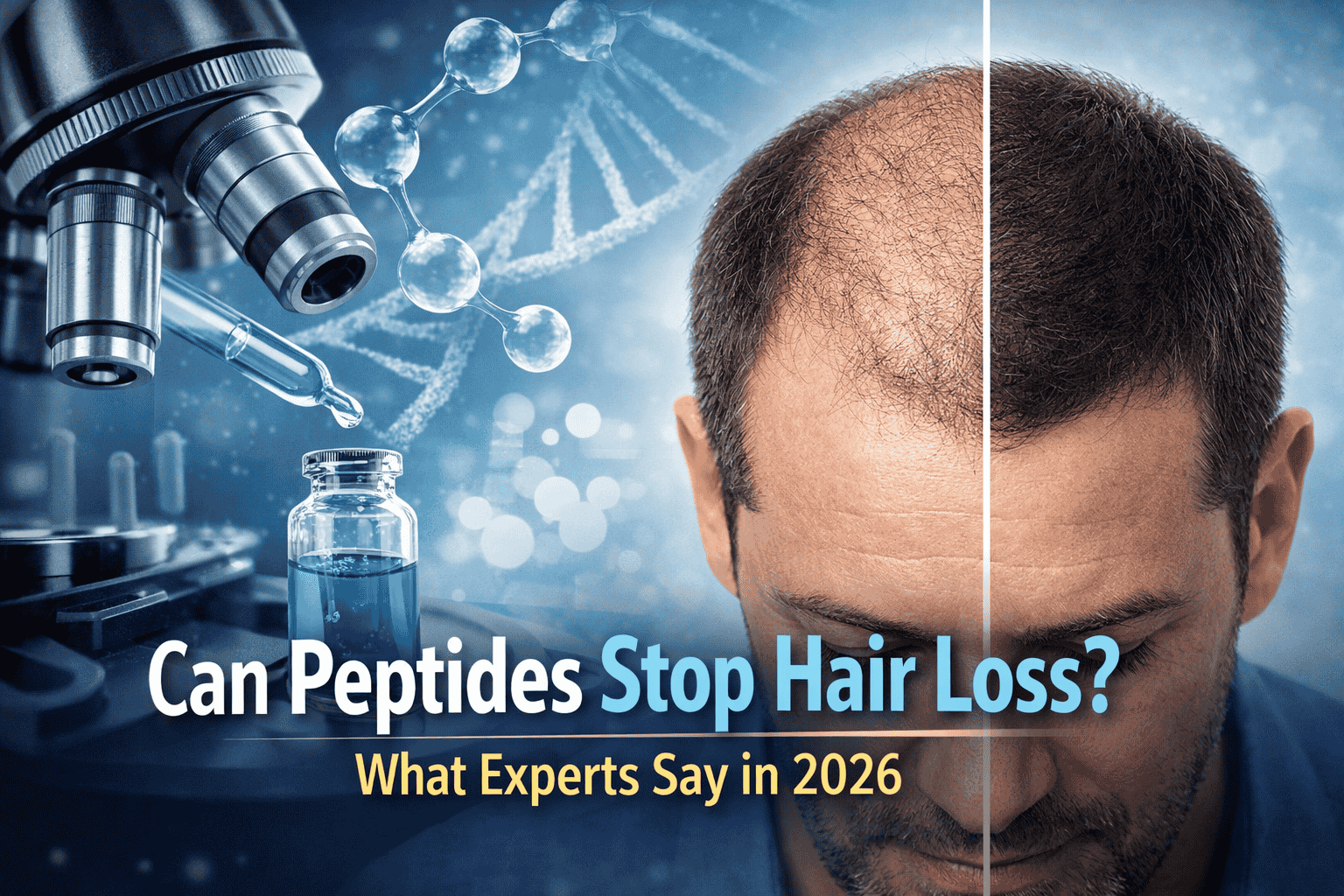
Hair loss continues to be one of the most common concerns for both men and women worldwide. With evolving science and new treatments entering the market, peptides have gained significant attention as a promising solution. But can peptides actually stop hair loss, or is it just another trend?
In this detailed guide, we’ll break down what peptides are, how they work, what experts are saying in 2026, and whether they’re worth incorporating into your hair care routine.
What Are Peptides and Why Are They Used in Hair Care?
Peptides are short chains of amino acids, the building blocks of proteins like keratin, collagen, and elastin. In hair care, peptides are used to signal biological processes that can support healthier hair growth.
They function as “messengers” that communicate with cells in the scalp and hair follicles. This signaling can help:
- Strengthen hair strands
- Stimulate hair follicles
- Improve scalp health
- Promote protein production
In recent years, peptides have become popular in serums, shampoos, and topical treatments aimed at reducing hair thinning.
7 Key Insights: What Experts Say About Peptides and Hair Loss in 2026
1. Peptides May Help Stimulate Hair Growth
Experts agree that certain peptides, such as copper peptides, can stimulate hair follicles. These peptides improve blood circulation in the scalp and encourage follicles to enter the anagen (growth) phase.
While they may not completely reverse severe hair loss, they can significantly improve hair density over time when used consistently.
2. They Support Scalp Health
A healthy scalp is the foundation of strong hair growth. Peptides can help reduce inflammation, improve hydration, and repair damaged skin barriers.
Dermatologists in 2026 emphasize that many hair loss issues stem from poor scalp conditions—and peptides directly address this root cause.
3. Peptides Strengthen Hair Structure
Hair breakage often contributes to the appearance of thinning. Peptides boost keratin production, making hair strands stronger and more resilient.
This doesn’t just help with growth—it also improves overall hair texture, shine, and thickness.
4. They Work Best in Combination with Other Treatments
Experts caution that peptides are not a miracle cure. Instead, they work best when combined with other proven treatments such as:
- Minoxidil
- Microneedling
- Nutritional support
- Proper hair care routines
In 2026, combination therapy is considered the most effective strategy for managing hair loss.
5. Results Take Time and Consistency
One of the biggest misconceptions is expecting instant results. Peptides require consistent use for at least 3–6 months to show visible improvement.
Hair growth cycles are slow, and patience is essential. Experts stress that stopping treatment early often leads to disappointing outcomes.
6. They Are Generally Safe with Minimal Side Effects
Compared to many pharmaceutical treatments, peptides are considered safe for most people. Side effects are rare and usually mild, such as slight scalp irritation.
This makes peptides a popular choice for individuals looking for a more natural or low-risk option.
7. Effectiveness Depends on the Cause of Hair Loss
Not all hair loss is the same. Peptides may be more effective for:
- Early-stage hair thinning
- Stress-related hair loss
- Nutritional deficiencies
However, for genetic conditions like androgenetic alopecia, peptides alone may not be sufficient. Experts recommend a personalized approach based on the underlying cause.
Do Peptides Really Stop Hair Loss?
The short answer: they can help, but they don’t completely stop hair loss on their own.
In 2026, experts widely agree that peptides are a supportive treatment rather than a standalone cure. They enhance scalp health, improve hair strength, and encourage growth, but they are most effective when used as part of a broader hair care strategy.
Types of Peptides Commonly Used for Hair Loss
Some of the most researched peptides in hair care include:
- Copper peptides (GHK-Cu): Promote healing and follicle stimulation
- Biotinoyl tripeptide-1: Supports hair anchoring and strength
- Acetyl tetrapeptide-3: Improves scalp circulation
These peptides are often found in serums and leave-in treatments designed for daily use.
How to Use Peptides for Best Results
To maximize effectiveness, follow these tips:
- Apply peptide-based serums directly to the scalp
- Use consistently (daily or as directed)
- Combine with scalp massage or microneedling
- Maintain a healthy diet rich in protein and vitamins
- Avoid harsh chemical treatments that damage hair
Consistency and a holistic approach are key.
Who Should Consider Using Peptides?
Peptides are ideal for:
- Individuals with early-stage hair thinning
- People looking for preventive care
- Those seeking a gentle alternative to medications
- Anyone wanting to improve overall scalp health
However, individuals with advanced hair loss should consult a specialist for a more comprehensive treatment plan.
Final Thoughts
Peptides are not a magic solution, but they are a powerful addition to modern hair care. In 2026, experts recognize their role in improving scalp health, strengthening hair, and supporting growth.
If you’re dealing with hair thinning, incorporating peptides into your routine alongside other treatments can deliver noticeable results over time.
FAQs
1. Can peptides regrow lost hair completely?
No, peptides can support hair growth and improve density, but they usually cannot fully regrow hair in cases of advanced or genetic hair loss.
2. How long do peptides take to show results?
Most users notice improvements within 3 to 6 months of consistent use.
3. Are peptide hair treatments safe?
Yes, they are generally safe with minimal side effects, making them suitable for long-term use.
4. Can I use peptides with minoxidil?
Yes, peptides can be combined with minoxidil for enhanced results, as they work through different mechanisms.
5. Do peptide shampoos work as well as serums?
Serums are usually more effective because they stay on the scalp longer, allowing better absorption.