
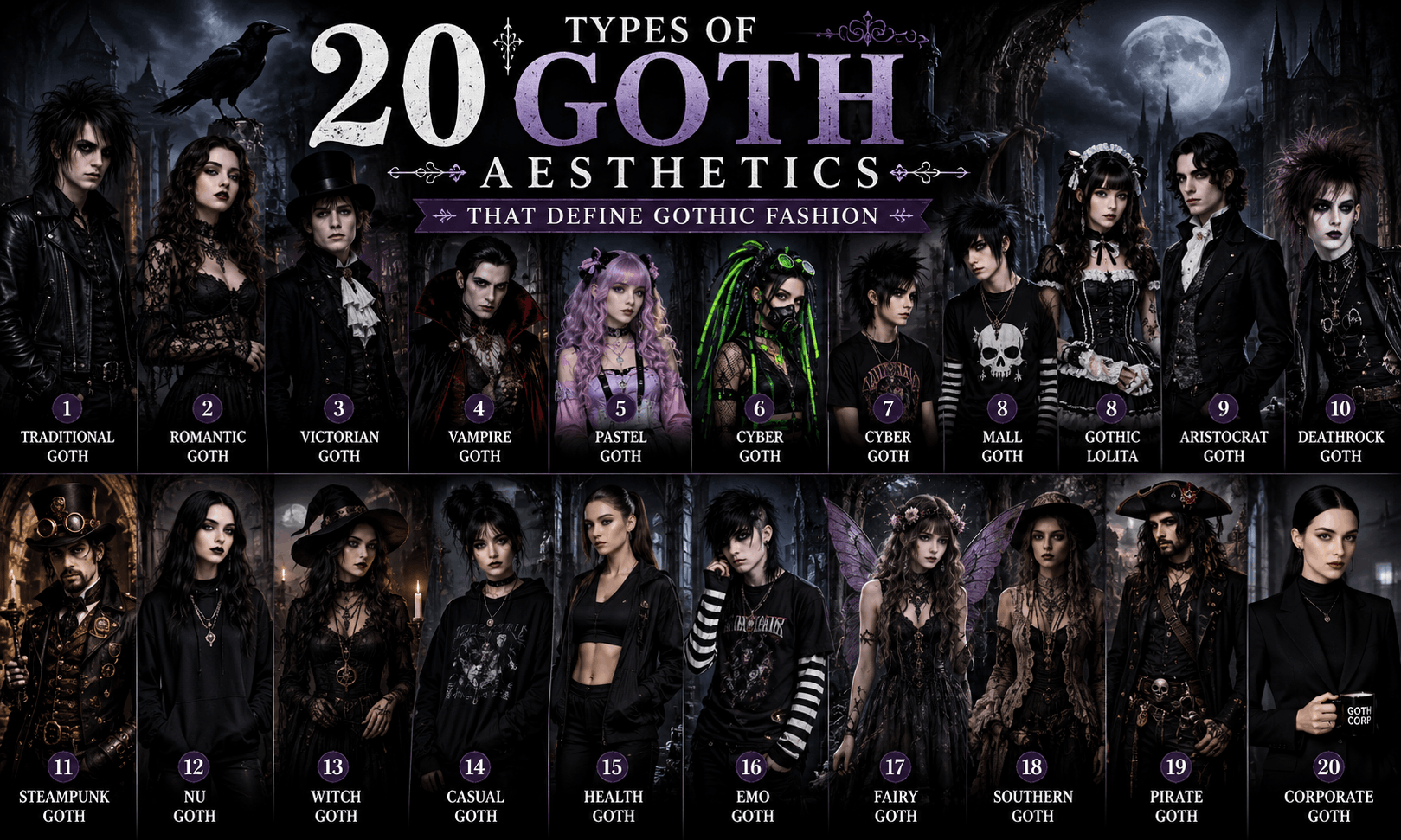
Goth fashion is far more diverse than the classic all-black outfits many people imagine. Over the years, the gothic subculture has evolved into dozens of unique styles, each with its own clothing, makeup, music, and personality. Whether you’re drawn to romantic lace, futuristic cyber fashion, or vintage Victorian elegance, there’s a goth aesthetic that matches your taste.
In this guide, we’ll explore 20 types of goth aesthetics that continue to influence gothic fashion around the world.
1. Traditional Goth
Traditional Goth, often called Trad Goth, originated in the late 1970s and early 1980s alongside gothic rock music. This style embraces black clothing, leather jackets, fishnet tights, lace tops, combat boots, and dramatic dark makeup. Big teased hair and silver jewelry complete the iconic look.
Key Elements:
- Black-on-black outfits
- Fishnets and leather
- Dark lipstick and eyeliner
- Combat boots
2. Romantic Goth
Romantic Goth takes inspiration from Victorian romance and gothic literature. Flowing velvet dresses, lace gloves, corsets, and elegant accessories create a timeless appearance that’s both mysterious and sophisticated.
Best For: People who love classic elegance with a gothic twist.
3. Victorian Goth
Victorian Goth focuses heavily on 19th-century fashion. Think high-neck blouses, long skirts, waistcoats, pocket watches, and top hats. Rich fabrics like velvet and brocade add luxurious detail.
Popular colors include black, burgundy, emerald green, and deep purple.
4. Vampire Goth
Inspired by vampire novels and films, Vampire Goth combines aristocratic fashion with dark glamour. Long capes, velvet coats, dramatic jewelry, and pale makeup create an immortal aesthetic.
Accessories like gothic rings, crosses, and ornate necklaces are common.
5. Pastel Goth
Pastel Goth blends spooky themes with soft pastel colors like lavender, baby pink, mint, and sky blue. Skulls, bats, crosses, and occult symbols appear alongside cute accessories.
It’s the perfect blend of creepy and adorable.
6. Cyber Goth
Cyber Goth introduces futuristic fashion into gothic culture. Neon colors, platform boots, goggles, synthetic dreadlocks, and reflective materials define this energetic style.
The look often combines rave fashion with industrial influences.
7. Mall Goth
Popular in the late 1990s and early 2000s, Mall Goth became mainstream through fashion stores in shopping malls. Oversized black clothing, striped sleeves, chain accessories, fingerless gloves, and chunky boots were signature pieces.
While not considered “traditional” goth by everyone, it remains nostalgic for many fans.
8. Gothic Lolita
Originating in Japan, Gothic Lolita combines Victorian-inspired dresses with modest silhouettes, lace, bows, and elegant accessories. Unlike regular Lolita fashion, Gothic Lolita uses darker color palettes and gothic motifs.
The result is graceful, detailed, and highly artistic.
9. Aristocrat Goth
Aristocrat Goth features refined tailoring rather than elaborate dresses. Long coats, fitted trousers, waistcoats, and luxurious fabrics create an elegant appearance inspired by European nobility.
It’s a sophisticated choice for those who prefer understated gothic fashion.
10. Deathrock Goth
Deathrock blends punk rebellion with gothic horror. Torn fishnets, DIY clothing, leather jackets, bold hairstyles, and horror-inspired makeup make this aesthetic raw and expressive.
Music plays a major role in shaping this style.
11. Steampunk Goth
Steampunk Goth merges Victorian fashion with retro-futuristic technology. Corsets, leather belts, brass gears, goggles, and pocket watches create an adventurous gothic aesthetic.
Brown, bronze, and black are common color choices.
12. Nu Goth
Nu Goth is a modern interpretation of gothic fashion influenced by social media and streetwear. Minimalist black outfits, oversized clothing, chokers, platform shoes, and occult-inspired graphics define this contemporary look.
It’s ideal for everyday wear.
13. Witch Goth
Witch Goth emphasizes mystical and occult themes. Flowing black robes, moon jewelry, pentagrams, crystal accessories, and wide-brimmed hats are common wardrobe staples.
This aesthetic celebrates mystery, spirituality, and nature.
14. Casual Goth
Not every goth outfit needs dramatic clothing. Casual Goth simplifies the aesthetic with black jeans, oversized sweaters, graphic tees, boots, and subtle accessories.
It’s comfortable while maintaining gothic style.
15. Health Goth
Health Goth combines athletic fashion with futuristic minimalism. Black sportswear, technical fabrics, sneakers, and clean silhouettes dominate the look.
This style feels modern, sleek, and functional.
16. Emo Goth
Although Emo and Goth are different subcultures, many people enjoy blending elements of both. Black skinny jeans, band T-shirts, layered hairstyles, and dark makeup create this crossover aesthetic.
It emphasizes emotion alongside gothic influences.
17. Fairy Goth
Fairy Goth combines fantasy with darkness. Sheer fabrics, lace wings, velvet dresses, celestial jewelry, and enchanted forest-inspired accessories create an ethereal appearance.
Deep greens, black, silver, and purple work beautifully together.
18. Southern Goth
Southern Goth draws inspiration from the American South, mixing vintage clothing with haunting, rustic charm. Antique lace, weathered boots, long dresses, and old-world accessories create a mysterious atmosphere.
It reflects storytelling as much as fashion.
19. Pirate Goth
Pirate Goth mixes gothic elegance with swashbuckling adventure. Billowy shirts, corsets, leather boots, tricorn hats, belts, and dramatic coats give this aesthetic a bold personality.
Accessories like skull jewelry and antique maps complete the look.
20. Corporate Goth
Corporate Goth proves you can embrace gothic fashion in professional settings. Tailored black blazers, pencil skirts, button-up shirts, leather loafers, and minimalist jewelry create a polished appearance suitable for the workplace.
This style balances professionalism with personal expression.
How to Choose Your Goth Aesthetic
If you’re new to gothic fashion, don’t feel pressured to fit into just one category. Many goths combine influences from multiple aesthetics to create a style that’s uniquely their own.
When choosing your look, consider:
- Your favorite music and inspirations
- Comfort and daily lifestyle
- Preferred clothing silhouettes
- Makeup and accessories
- Budget for building your wardrobe
Experimenting with different styles is part of the fun, and your aesthetic may evolve.
Final Thoughts
The beauty of gothic fashion lies in its incredible variety. From the timeless elegance of Victorian Goth to the futuristic energy of Cyber Goth and the soft contrast of Pastel Goth, each style offers a unique way to express individuality.
Whether you’re just discovering gothic fashion or expanding your wardrobe, these 20 types of goth aesthetics provide endless inspiration. Explore different influences, wear what makes you feel confident, and remember that the best goth style is the one that feels authentic to you.
5 Frequently Asked Questions (FAQs)
1. What are the main types of goth aesthetics?
The most popular goth aesthetics include Traditional Goth, Victorian Goth, Romantic Goth, Cyber Goth, Pastel Goth, Gothic Lolita, Vampire Goth, Deathrock, Nu Goth, and Corporate Goth. Each has its own fashion influences and signature style.
2. Which goth aesthetic is best for beginners?
Casual Goth and Nu Goth are great for beginners because they use everyday clothing like black jeans, oversized tops, boots, and simple accessories while maintaining a gothic look.
3. What’s the difference between Traditional Goth and Victorian Goth?
Traditional Goth is inspired by gothic rock music and punk fashion, featuring leather, fishnets, and dark makeup. Victorian Goth is based on 19th-century clothing, with corsets, lace, velvet, and elegant tailoring.
4. Can you mix different goth aesthetics?
Yes. Many people combine elements from multiple goth styles, such as Romantic Goth with Vampire Goth or Casual Goth with Witch Goth, to create a unique personal aesthetic.
5. Do goths only wear black?
No. While black is the most common color, many goth aesthetics also include deep reds, purples, emerald greens, silver, white, and even pastel shades in styles like Pastel Goth.