
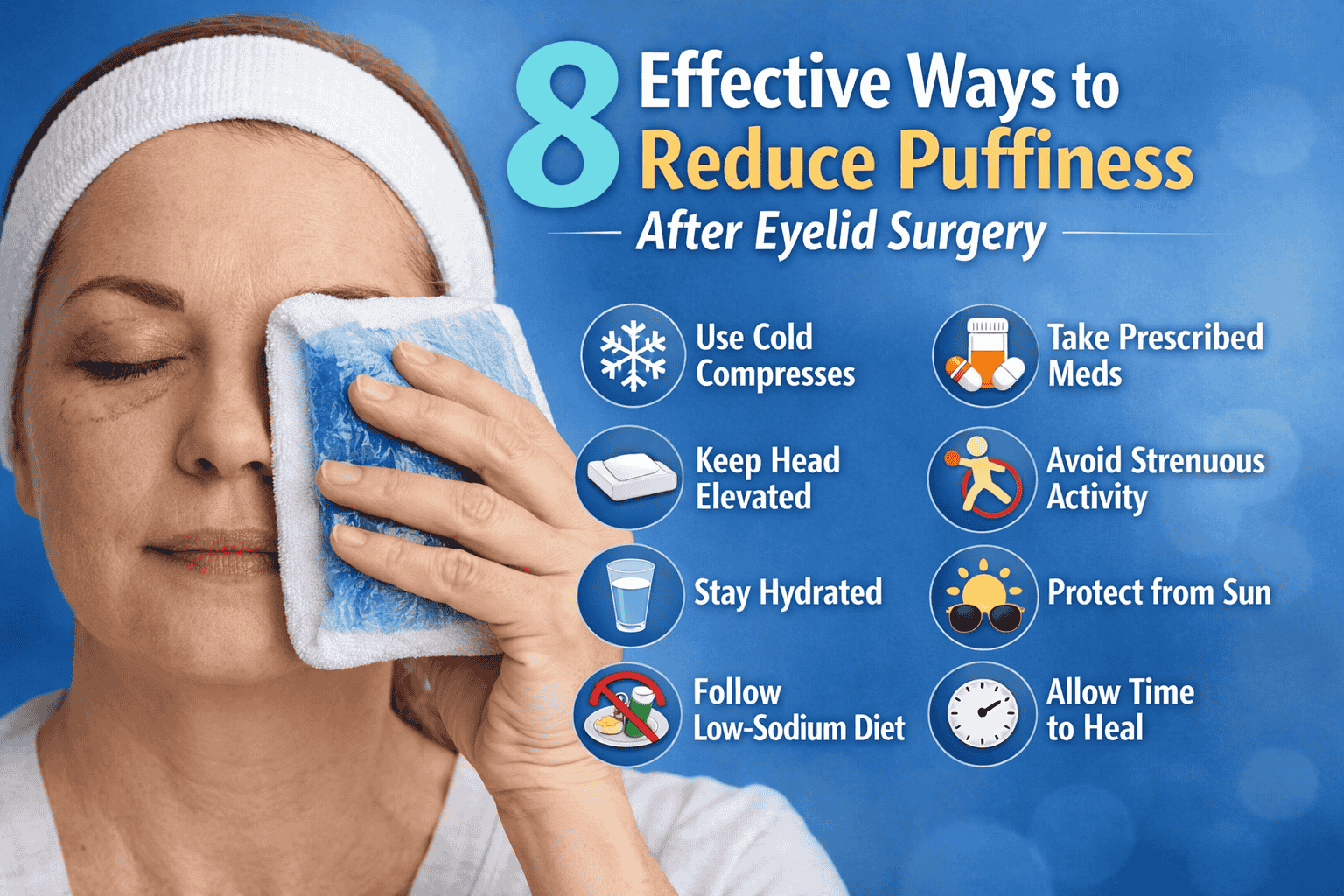
Eyelid surgery, also known as blepharoplasty, is a popular cosmetic procedure designed to improve the appearance of the eyes by removing excess skin, fat, and muscle. While the results can be transformative, one common post-surgery concern is puffiness or swelling around the eyes. This is a natural part of the healing process, but knowing how to manage it can significantly speed up recovery and improve comfort.
Here are eight effective ways to reduce puffiness after eyelid surgery.
1. Apply Cold Compresses
Cold compresses are one of the most effective ways to minimize swelling after eyelid surgery. The cold temperature constricts blood vessels, reducing inflammation and fluid buildup.
Use a clean, soft cloth soaked in cold water or chilled gel packs. Apply gently over your eyes for 10–15 minutes at a time, several times a day during the first 48 hours. Avoid placing ice directly on the skin to prevent irritation.
Also Read: The Rise of Korean Skincare: How Brands Like SSUNSU Are Bringing Traditional Ingredients Back
2. Keep Your Head Elevated
Proper positioning plays a major role in reducing post-surgical swelling. Keeping your head elevated helps prevent fluid accumulation around the eyes.
Sleep with your head propped up using two or more pillows, or consider using a recliner during the first few days. Even during rest, try to avoid lying flat, as this can worsen puffiness.
3. Stay Hydrated
Drinking enough water helps flush out excess sodium and toxins from your body, which can contribute to swelling.
Aim for at least 8–10 glasses of water daily unless advised otherwise by your doctor. Avoid dehydrating beverages like alcohol and excessive caffeine during the recovery phase.
4. Follow a Low-Sodium Diet
Salt causes your body to retain water, which can increase puffiness around sensitive areas like the eyes.
During your recovery, opt for fresh fruits, vegetables, and home-cooked meals. Avoid processed foods, fast food, and salty snacks. A low-sodium diet can make a noticeable difference in reducing swelling.
5. Take Prescribed Medications
Your surgeon may prescribe medications such as anti-inflammatory drugs or antibiotics to support healing and reduce swelling.
Always follow your doctor’s instructions carefully and avoid self-medicating. Over-the-counter medications should only be taken if approved by your healthcare provider.
Also Read: What Is the Clear Liquid That Comes Out of a Pimple?
6. Avoid Strenuous Activities
Physical exertion can increase blood flow and pressure, which may worsen swelling and delay healing.
Avoid heavy lifting, intense workouts, and bending over for at least 1–2 weeks after surgery. Light walking is usually safe and can promote circulation without causing strain.
7. Protect Your Eyes from Sun Exposure
Sun exposure can irritate healing skin and prolong inflammation.
Wear dark sunglasses when going outdoors, even on cloudy days. Additionally, avoid direct sunlight and use a doctor-approved sunscreen around the eye area once healing permits.
Also Read: What Is the Best Cream for Skin Cancer?
8. Be Patient and Allow Time to Heal
Swelling after eyelid surgery is normal and typically peaks within the first few days before gradually subsiding.
Most puffiness improves within 1–2 weeks, but minor swelling may take longer to fully disappear. Following post-operative care instructions and giving your body time to heal is essential for the best results.
Additional Tips for Faster Recovery
- Avoid rubbing or touching your eyes
- Use prescribed eye drops if recommended
- Get enough sleep to support healing
- Limit screen time to reduce eye strain
FAQs
1. How long does puffiness last after eyelid surgery?
Puffiness usually peaks within 2–3 days after surgery and improves significantly within 1–2 weeks. Mild swelling may persist for several weeks.
2. Is swelling after eyelid surgery normal?
Yes, swelling is a natural part of the healing process. It is your body’s response to tissue trauma and typically subsides with proper care.
3. Can I use ice directly on my eyelids?
No, applying ice directly can damage sensitive skin. Always wrap ice or use a cold compress to avoid irritation.
4. When can I return to normal activities?
Most people can resume light activities within a week, but strenuous activities should be avoided for at least 2 weeks or as advised by your doctor.
5. What should I avoid eating after eyelid surgery?
Avoid salty, processed, and spicy foods, as they can increase swelling. Focus on a balanced, low-sodium diet for better recovery.