
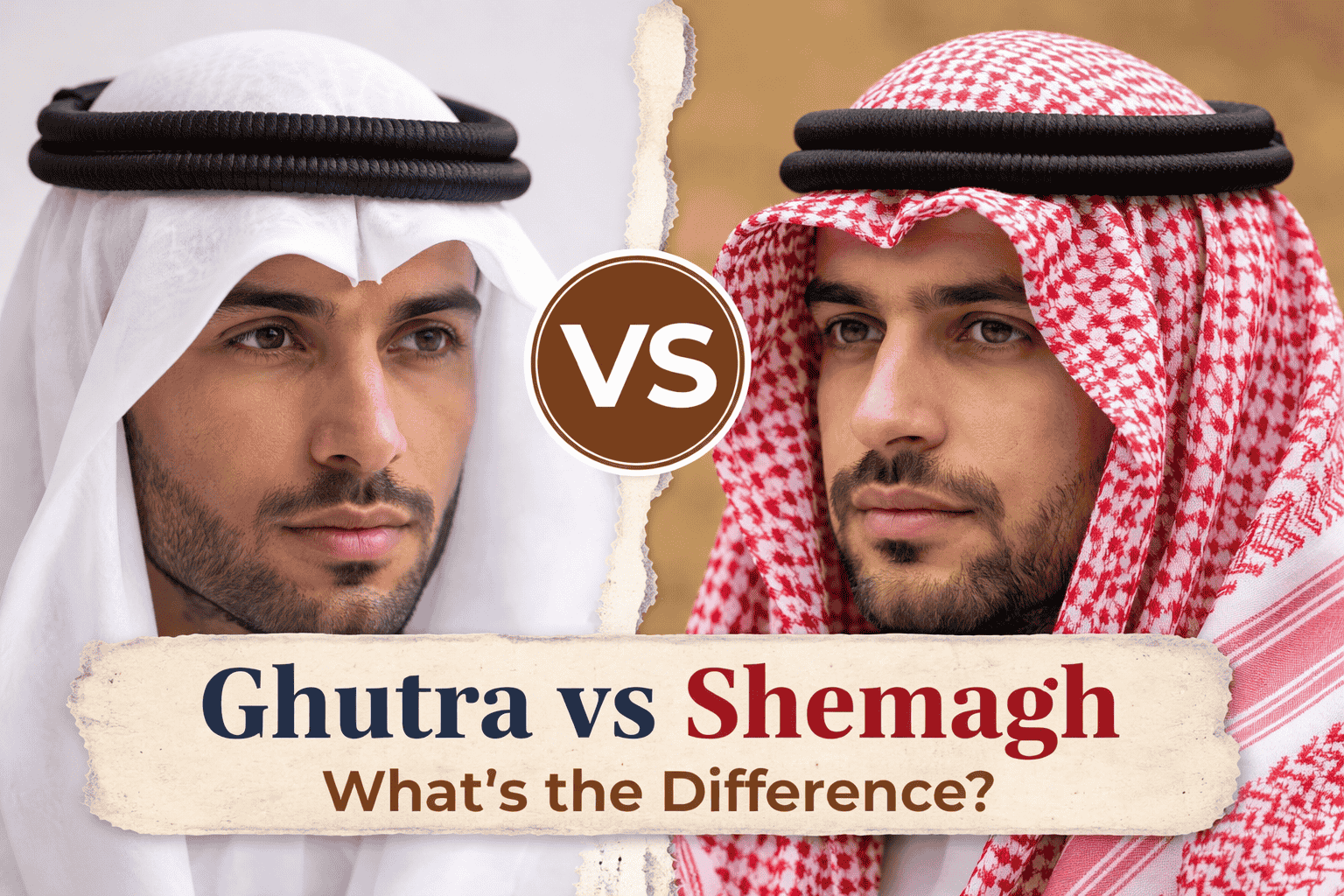
Traditional Middle Eastern headwear has gained global attention not only for its cultural importance but also for its practical and fashion appeal. Among the most recognized styles are the ghutra and the shemagh. While they may appear similar at first glance, they differ in origin, design, and usage. Understanding these differences can help you appreciate their cultural significance and choose the right style for your needs.
What Is a Ghutra?
The ghutra is a traditional headscarf commonly worn by men in the Gulf countries, especially in Saudi Arabia, the UAE, Qatar, and Kuwait. It is usually a plain white square cloth, although red-and-white variations also exist.
The ghutra is typically secured with a black cord known as an agal, which helps keep it in place. It is worn for both cultural identity and practical purposes, such as protecting the head and face from the harsh sun, sand, and dust.
Key Features of Ghutra:
- Usually plain white or lightly patterned
- Made from lightweight cotton for breathability
- Worn with an agal for a formal and neat look
- Common in Gulf Arab countries
- Associated with elegance and tradition
What Is a Shemagh?
The shemagh, also known as a keffiyeh, is a more versatile and widely recognized scarf across the Middle East, particularly in countries like Jordan, Palestine, and Iraq.
Unlike the ghutra, the shemagh is known for its distinctive checkered patterns, most commonly in red-and-white or black-and-white. It is not only a cultural garment but also widely used by military personnel and outdoor enthusiasts due to its durability and multifunctionality.
Key Features of Shemagh:
- Checkered or patterned design
- Available in multiple colors (red, black, and white combinations)
- Thicker fabric compared to the ghutra
- Can be worn in multiple styles (wrapped around face or neck)
- Popular in both traditional and modern fashion
Also Read: What Is a Ghutra? A Complete Guide to Its History and Cultural Significance
Ghutra vs Shemagh: Key Differences
Although both serve similar purposes, several factors set them apart:
1. Design and Appearance
The most noticeable difference lies in their look. The ghutra is typically plain and minimal, giving it a clean and formal appearance. In contrast, the shemagh features bold patterns, making it more visually striking and versatile.
2. Cultural Significance
The ghutra is strongly associated with Gulf Arab identity, often worn during formal events, religious occasions, and daily life. The shemagh, on the other hand, carries broader regional symbolism and, in some cases, political or cultural identity, especially in Palestine.
3. Fabric and Thickness
Ghutras are generally made from lighter materials, making them ideal for hot climates. Shemaghs are often thicker and more durable, providing better protection in rugged environments.
4. Styling and Usage
The ghutra is usually worn in a structured and fixed style, often with an agal. The shemagh is more flexible, allowing it to be wrapped in various ways around the head, neck, or face.
5. Modern Usage
Today, the ghutra remains largely traditional and formal. Meanwhile, the shemagh has crossed into global fashion and utility wear, often used by travelers, hikers, and military personnel.
Which One Should You Choose?
Choosing between a ghutra and a shemagh depends on your purpose:
- If you want a formal, traditional look, especially for cultural or ceremonial occasions, the ghutra is the ideal choice.
- If you need a practical, versatile scarf for outdoor use or casual styling, the shemagh is a better choice.
Both garments offer excellent protection against heat and dust, but their style, symbolism, and functionality cater to different preferences.
Final Thoughts
While the ghutra and shemagh may seem similar at first glance, they represent distinct traditions and styles within Middle Eastern culture. The ghutra emphasizes simplicity, elegance, and formality, while the shemagh stands out for its versatility, bold patterns, and broader cultural presence.
Understanding these differences not only helps in making the right choice but also deepens appreciation for the rich heritage behind these iconic head coverings.