
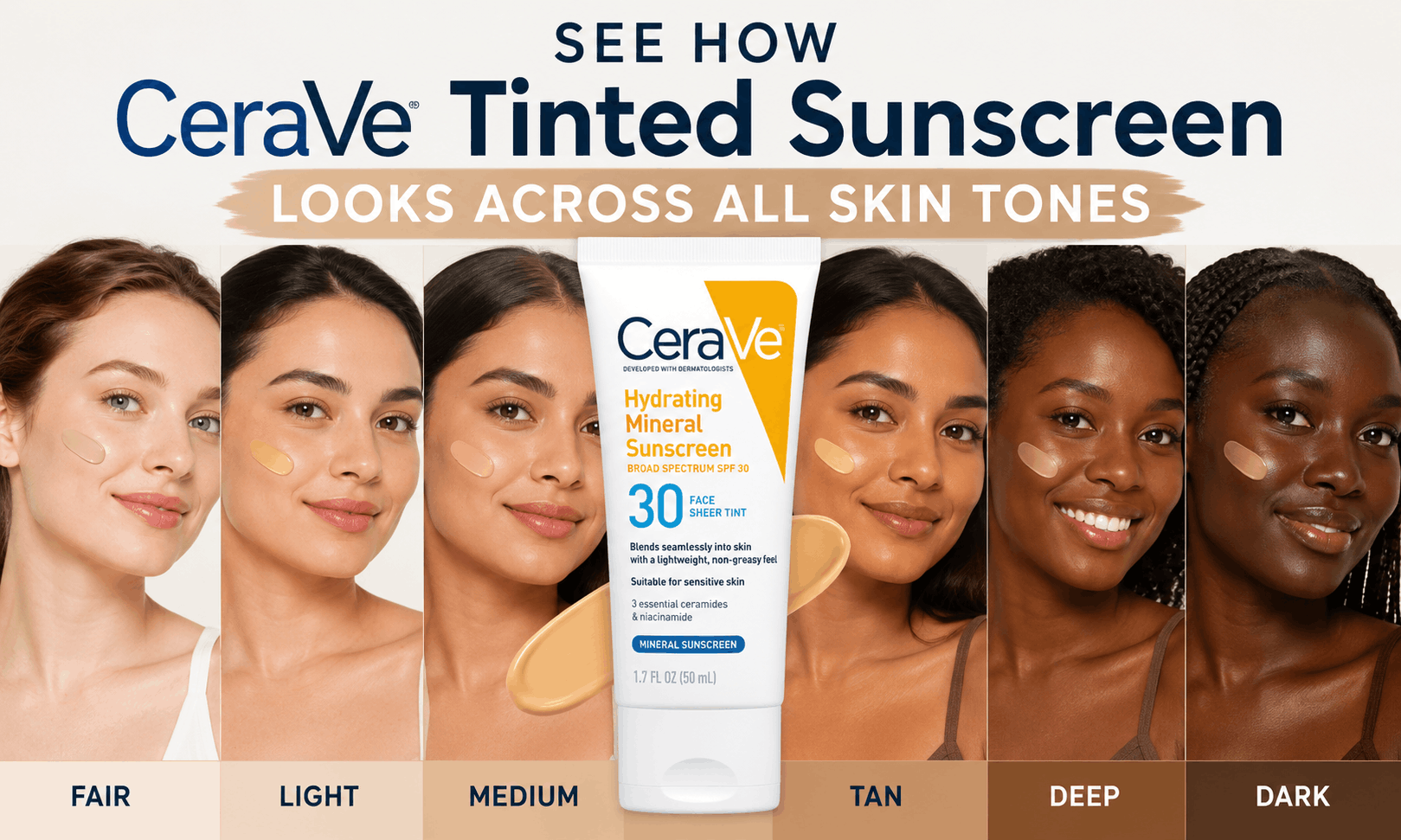
Choosing a tinted sunscreen can feel overwhelming, especially if you’ve ever bought one that looked too orange, too gray, or simply disappeared unevenly on your skin. While many tinted sunscreens claim to work for everyone, the real test is how they look on different skin tones in natural light.
CeraVe Tinted Sunscreen has gained popularity because it’s designed with mineral UV filters and a universal tint that aims to blend across a wide range of complexions. But does it actually deliver on that promise?
In this guide, we’ll explore how CeraVe Tinted Sunscreen looks on fair, light, medium, tan, deep, and dark skin tones, along with its texture, finish, and tips for getting the best results.
What Is CeraVe Tinted Sunscreen?
CeraVe Tinted Sunscreen is a 100% mineral sunscreen with SPF 30 that uses zinc oxide and titanium dioxide to protect against UVA and UVB rays. Unlike traditional mineral sunscreens that often leave a white cast, this formula contains iron oxide pigments, which provide a subtle tint to help the sunscreen blend more naturally into the skin.
It also contains skincare-friendly ingredients like:
- Three essential ceramides
- Niacinamide
- Hyaluronic acid
Together, these ingredients help support the skin barrier while providing lightweight sun protection.
Also Read: 6 Anti-Aging Tips That’ll Transform Your Beauty Routine
Does the Universal Tint Really Work?
The term “universal tint” doesn’t mean the sunscreen perfectly matches every skin tone. Instead, it means the tint is sheer enough to adapt to many complexions without acting like a foundation.
The finish is best described as:
- Natural
- Slightly radiant
- Lightweight
- Low coverage
It evens out minor redness but won’t completely cover blemishes or pigmentation.
How CeraVe Tinted Sunscreen Looks on Different Skin Tones
Fair Skin
On very fair skin, CeraVe Tinted Sunscreen generally blends well after a minute or two.
Appearance
- Adds subtle warmth
- Softens redness
- Gives a healthy glow
- Doesn’t usually appear orange
People with cool undertones may notice the tint initially looks slightly warm, but it typically settles into the skin after blending.
Overall look: Fresh, natural, and healthy.
Also Read: What Nail Shape Looks Best on Short Chubby Fingers? Expert Styling Guide
Light Skin
Light skin tones tend to get one of the best matches from this sunscreen.
The tint creates a “your skin but better” appearance without looking heavy.
Benefits include:
- Smooth complexion
- Minimal white cast
- Natural satin finish
- Comfortable for daily wear
Many users skip foundation altogether after applying it.
Medium Skin
Medium complexions usually experience an excellent color match.
The tint blends evenly without creating obvious contrast between the face and neck.
On medium skin, it can:
- Even mild discoloration
- Reduce visible redness
- Add a healthy glow
- Leave a natural finish
Because the pigment is sheer, freckles and natural skin texture still show through.
Tan Skin
Tan skin often benefits from the sunscreen’s flexible tint, although the exact appearance depends on undertones.
Warm Undertones
The sunscreen usually melts into the skin beautifully.
Neutral Undertones
Blending remains easy with little visible residue.
Olive Undertones
Some people with olive complexions may notice the tint appears slightly warm immediately after application, but this usually softens within several minutes.
Also Read: Korean Skin Care Routine: The Complete Guide to Glass Skin
Deep Skin
Deep skin tones often struggle with mineral sunscreens because of noticeable white cast.
CeraVe performs better than many traditional mineral formulas thanks to the added iron oxides.
However, results vary.
Some users report:
- Little to no white cast
- Smooth finish
- Healthy glow
Others find:
- Slight ashiness immediately after application
- Requires extra blending
- Needs time to settle
Applying thin layers rather than one thick layer generally improves the finish.
Dark Skin
Very dark skin tones are where results become the most individual.
While CeraVe’s tint helps reduce the white cast common with mineral sunscreens, it may not completely disappear on every complexion.
Some people achieve:
- Even blending
- Soft radiant finish
- Comfortable daily wear
Others may notice:
- Slight gray appearance
- Warm tint that’s still visible
- Need for additional blending
For very deep complexions, users who prefer completely invisible sunscreen may find specially formulated tinted mineral sunscreens with multiple shade options provide a closer match.
Texture and Finish
One reason this sunscreen remains popular is its comfortable feel.
The texture is:
- Creamy but lightweight
- Easy to spread
- Non-greasy
- Comfortable under makeup
The finish is neither completely matte nor overly dewy.
Instead, it leaves a healthy skin-like glow that suits most skin types.
Does It Leave a White Cast?
Compared to standard mineral sunscreens, CeraVe Tinted Sunscreen significantly reduces white cast.
Results generally look like this:
| Skin Tone | White Cast |
|---|---|
| Fair | None |
| Light | None |
| Medium | Minimal |
| Tan | Very little |
| Deep | Slight, depending on application |
| Dark | May still be noticeable for some users |
Using the recommended amount and blending thoroughly usually improves the final appearance.
Best Skin Types for This Sunscreen
CeraVe Tinted Sunscreen works especially well for:
- Normal skin
- Dry skin
- Combination skin
- Sensitive skin
Because it’s fragrance-free and mineral-based, it’s often a good option for those who experience irritation from chemical sunscreens.
People with very oily skin may prefer setting it with translucent powder for a longer-lasting matte finish.
Also Read: How To Find Infallible Foundation Shades That Match Your Skin Tone
Tips for the Best Application
To achieve the most natural look:
- Start with moisturized skin.
- Apply sunscreen in small sections.
- Blend using clean fingers or a makeup sponge.
- Allow 2–3 minutes for the tint to settle.
- Apply makeup afterward if additional coverage is desired.
Avoid rubbing too aggressively, as this can create streaks.
Is CeraVe Tinted Sunscreen Worth Trying?
If you’re looking for a lightweight mineral sunscreen that offers subtle complexion-enhancing benefits, CeraVe Tinted Sunscreen is a strong everyday option.
Its universal tint works well across many fair, light, medium, and tan skin tones while reducing the white cast often associated with mineral sunscreens. Deep and very dark complexions may still experience slight ashiness depending on undertones, but many users find the finish more flattering than traditional untinted mineral formulas.
While it isn’t a replacement for foundation or available in multiple shades, its skincare ingredients, comfortable texture, and natural finish make it a practical choice for daily sun protection.
Conclusion
CeraVe Tinted Sunscreen stands out because it combines broad-spectrum mineral sun protection with a lightweight, skin-friendly formula that offers a subtle tint rather than full coverage. On fair through tan skin tones, it typically blends seamlessly and enhances the complexion with a healthy glow. For deeper skin tones, the experience can vary, but it generally performs better than many traditional mineral sunscreens by minimizing white cast.
If your goal is an everyday sunscreen that feels comfortable, supports your skin barrier, and provides a natural-looking finish, CeraVe Tinted Sunscreen is worth considering. As with any tinted product, the best results come from testing it on your own skin tone and undertone to see how it adapts.
FAQs
1. Does CeraVe Tinted Sunscreen work on dark skin?
It can work well for many people with dark skin, but results vary by undertone. Some users may notice slight ashiness, while others achieve a natural-looking finish after proper blending.
2. Is CeraVe Tinted Sunscreen a foundation?
No. It provides very light coverage that helps even out the complexion but is not intended to replace foundation.
3. Does CeraVe Tinted Sunscreen leave a white cast?
It leaves significantly less white cast than most untinted mineral sunscreens, although very deep skin tones may still notice a slight cast.
4. Can I wear makeup over CeraVe Tinted Sunscreen?
Yes. It works well as a makeup base and layers smoothly under foundation, concealer, and powder products.
5. Is CeraVe Tinted Sunscreen suitable for sensitive skin?
Yes. Its fragrance-free, mineral-based formula with ceramides, niacinamide, and hyaluronic acid makes it a popular option for many people with sensitive skin.