
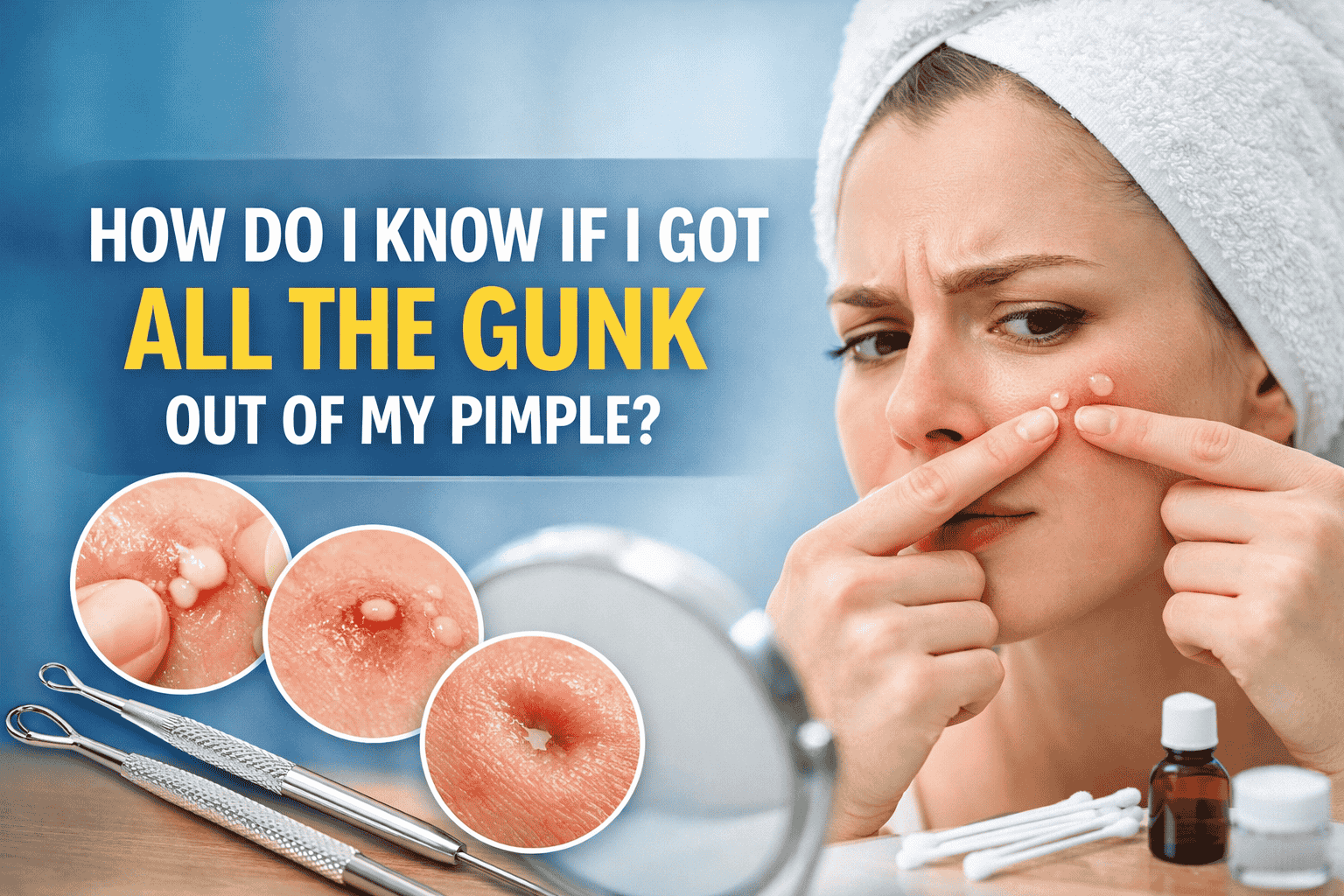
Dealing with pimples can be frustrating, especially when you’re trying to figure out whether you’ve properly cleared one or made things worse. Many people are tempted to squeeze or extract a pimple, hoping to get rid of it quickly. But the big question remains: how do you actually know if you got all the gunk out?
Understanding what’s inside a pimple, how your skin reacts, and the right signs to look for can help you avoid scarring, infection, and prolonged breakouts. In this detailed guide, we’ll break down everything you need to know simply and practically.
What Is the “Gunk” Inside a Pimple?
Before identifying whether it’s fully removed, it’s important to understand what you’re dealing with. The “gunk” inside a pimple is a mixture of:
- Your skin produces sebum (oil)
- Dead skin cells
- Bacteria
- White blood cells (in inflamed pimples)
This combination forms a plug inside your pore. When you squeeze a pimple, you’re trying to remove this material, but it’s not always as straightforward as it seems.
10 Signs and Tips to Know If You Got Everything Out
1. The Pimple Stops Releasing Material
When you gently extract a pimple, and no more white, yellow, or slightly bloody fluid comes out, it’s often a sign that the pore has been cleared. If you keep squeezing and nothing emerges, it’s time to stop.
2. Clear Fluid or Slight Blood Appears
After the thicker material is removed, you may notice a small amount of clear fluid or a tiny spot of blood. This usually indicates that the core has been expelled and you’ve reached the deeper layer of the skin.
3. The Bump Flattens Noticeably
A properly cleared pimple will look flatter than before. The swelling may still be present due to inflammation, but the raised “head” should reduce significantly.
4. There’s Less Pressure and Pain
Before extraction, pimples often feel tight and painful. Once the contents are removed, you’ll feel immediate relief. If it still hurts or feels full, there may be material left inside.
5. No Hard Lump Remains Under the Skin
Gently touching the area can help you determine if anything remains. If you still feel a firm lump beneath the surface, the pimple may not be fully cleared.
6. The Skin Around It Turns Pink, Not Red and Angry
After proper extraction, the area may appear slightly pink. However, if it becomes increasingly red, swollen, or irritated, it could mean over-squeezing or incomplete removal.
7. The Pore Looks Open but Clean
Sometimes you can actually see the pore after extraction. If it appears open but free of visible debris, it’s a good indication that you’ve removed the blockage.
8. It Begins Healing Within a Day or Two
A properly handled pimple should start healing quickly. If it dries out, forms a small scab, or shrinks within 24–48 hours, that’s a positive sign.
9. No Re-Filling Occurs
If the pimple fills back up with pus or oil shortly after extraction, it means some material was left behind or bacteria are still active.
10. You Didn’t Force It Out
One of the most important indicators is how you removed it. If you had to apply excessive pressure, the pimple likely wasn’t ready, and you may have pushed material deeper instead of clearing it.
When You Should NOT Try to Extract a Pimple
Not all pimples are meant to be popped. Avoid squeezing if:
- It’s deep and painful (like cystic acne)
- There’s no visible white or yellow head
- The skin feels hard and inflamed
- It’s located in sensitive areas (like around the nose or lips)
Trying to extract these can lead to scarring or infection.
What Happens If You Don’t Get All the Gunk Out?
Incomplete extraction can lead to several issues:
- Re-infection: Remaining bacteria can cause the pimple to refill
- Increased inflammation: Leading to redness and swelling
- Scarring: Especially if the skin is repeatedly damaged
- Longer healing time: The pimple may linger for days or even weeks
In some cases, squeezing can even push the contents deeper into the skin, making things worse.
Safe Way to Handle a Pimple
If you feel the urge to pop a pimple, follow these safer steps:
- Wash your hands thoroughly
- Cleanse your face with a gentle cleanser
- Use a warm compress to soften the pore
- Apply light pressure only if it’s ready
- Stop immediately if nothing comes out
- Apply an antiseptic or acne treatment afterward
Alternatively, you can use treatments like salicylic acid or benzoyl peroxide to help clear the pores naturally.
Better Alternatives to Popping Pimples
Instead of squeezing, consider these options:
- Hydrocolloid patches: They absorb fluid and protect the area
- Spot treatments: Help reduce bacteria and inflammation
- Professional extraction: Done safely by dermatologists or estheticians
- Consistent skincare routine: Prevents future breakouts
These methods are much safer and reduce the risk of skin damage.
Final Thoughts
Knowing whether you’ve successfully removed the gunk from a pimple isn’t always obvious, but your skin gives clear signals if you pay attention. A flattened bump, reduced pain, and no refilling are strong indicators that the pore is clear.
However, the most important takeaway is this: less is more when it comes to pimples. Over-extraction can do far more harm than good. If a pimple isn’t ready, it’s better to leave it alone and let your skin heal naturally.
Taking a gentle and informed approach will not only help your current breakout heal faster but also protect your skin in the long run.
FAQs
1. Can a pimple refill after popping it?
Yes, if some material or bacteria remain inside, the pimple can refill and become inflamed again.
2. Is it okay to pop pimples regularly?
No, frequent popping can damage your skin, cause scarring, and spread bacteria.
3. What does it mean if only blood comes out?
It usually means you’ve gone too far or the pimple wasn’t ready to be popped.
4. How long should a popped pimple take to heal?
Typically, it should start healing within 1–3 days if handled properly.
5. What’s the safest way to get rid of pimples?
Using topical treatments, maintaining a skincare routine, or consulting a dermatologist is the safest approach.