
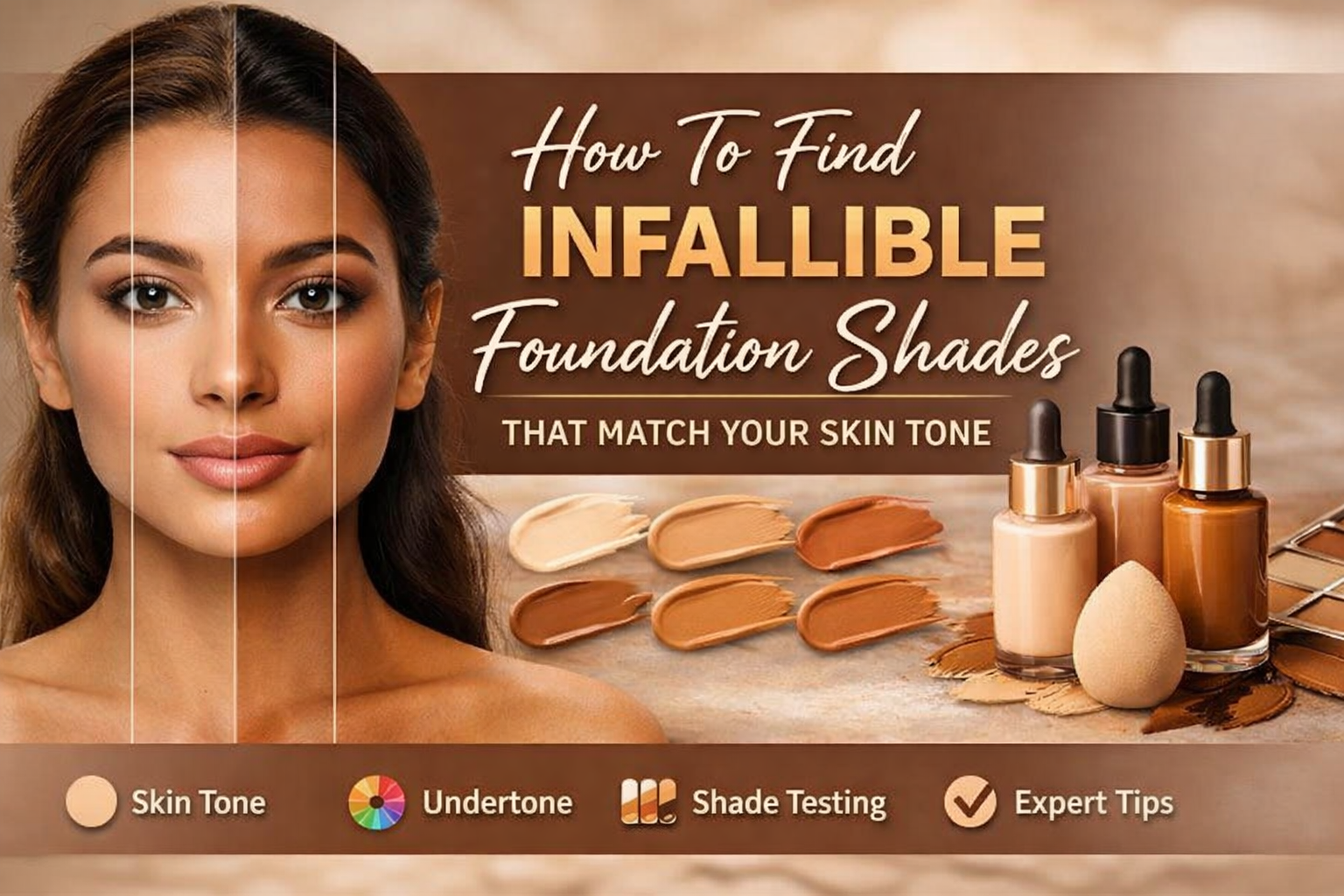
Finding the perfect foundation shade can feel overwhelming. With countless brands, undertones, finishes, and formulas available, even experienced makeup lovers struggle to find a truly seamless match. A foundation that’s even slightly off can appear cakey, ashy, orange, or dull, ruining an otherwise flawless look.
An infallible foundation shade should disappear into your skin, enhance your natural complexion, and look consistent in every lighting condition. Whether you’re shopping online or in-store, understanding your skin tone, undertone, and foundation behavior is the key to achieving a perfect match.
This comprehensive guide breaks down everything you need to know to find a foundation shade that looks natural, feels comfortable, and lasts all day.
Read More: What Is the Clear Liquid That Comes Out of a Pimple?
Understanding the Essentials of Foundation Matching
Before diving into shade selection, it’s important to understand how foundation interacts with your skin. Your skin tone, undertone, texture, and even environment play a role in how a foundation appears after application.
The Ultimate Guide to Finding Your Perfect Foundation Match
1. Identify Your Skin Tone (Light, Medium, Tan, or Deep)
Skin tone refers to the surface color of your skin. It generally falls into four main categories: light, medium, tan, and deep. Determining your skin tone helps narrow down the shade range quickly.
- Light skin tones often burn easily and may appear porcelain or ivory.
- Medium skin tones usually tan gradually and have a beige or golden appearance.
- Tan skin tones appear warm and sun-kissed with deeper pigmentation.
- Deep skin tones have rich brown to ebony hues.
Stand in natural daylight without makeup and observe your face, neck, and chest together. Your foundation should match your neck and chest rather than your hand or wrist.
Read More: A Nose for Trouble: Recognising Signs of Skin Cancer on the Nose
2. Determine Your Skin Undertone Accurately
Undertone is the subtle hue beneath your skin’s surface and never changes. Most people fall into three main undertone categories:
- Cool undertones: Pink, red, or bluish hues
- Warm undertones: Yellow, golden, or peach hues
- Neutral undertones: A balance of warm and cool tones
A simple test involves checking the veins on your wrist:
- Blue or purple veins suggest cool undertones
- Green veins indicate warm undertones
- A mix of both suggests neutral undertones
Choosing the wrong undertone is the most common reason foundations look unnatural.
3. Understand How Foundation Oxidation Affects Shade
Foundation oxidation occurs when makeup reacts with air, oils, or skincare products, causing it to darken or turn orange over time.
To avoid this:
- Always test the foundation and wait 10–15 minutes before deciding
- Avoid heavily oxidizing formulas if you have oily skin
- Use a primer to reduce oil interaction
Testing oxidation before purchase ensures your shade stays consistent throughout the day.
4. Match Foundation to Your Neck and Chest
Many people mistakenly match the foundation to their face only. However, facial redness, pigmentation, or tanning can lead to inaccurate shade selection.
For a seamless finish:
- Test foundation along your jawline
- Ensure it blends naturally into your neck and chest
- Avoid shades that create a visible line of demarcation
A good match should visually blend in when combined.
5. Choose the Right Finish for Your Skin Type
Even the perfect shade can look wrong if the finish doesn’t suit your skin type.
- Oily skin: Matte or soft-matte finishes
- Dry skin: Dewy or hydrating finishes
- Combination skin: Natural or satin finishes
- Mature skin: Luminous or lightweight finishes
The correct finish enhances how the shade reflects light and appears on your skin.
6. Test Shades in Natural Lighting Only
Store lighting can distort color perception, making foundations appear warmer or lighter than they really are.
Always:
- Step outside or near a window
- Check the shade in daylight
- Observe how it looks in both sunlight and shade
Natural light reveals the true undertone and depth of a foundation.
7. Use the Three-Stripe Testing Method
Instead of testing a single shade, apply three close shades side by side on your jawline.
- One shade slightly lighter
- One true match
- One slightly deeper
The shade that disappears into your skin without blending is your best match. This method eliminates guesswork and confusion from comparisons.
Read More: 6 Anti-Aging Tips That’ll Transform Your Beauty Routine
8. Consider Seasonal Skin Changes
Your skin tone can shift with sun exposure, climate, and skincare routines.
- Summer skin may require a deeper shade
- Winter skin may need a lighter shade
- Tan fades unevenly, affecting the undertone appearance
Keeping two foundation shades and mixing them ensures a perfect match year-round.
9. Use Online Shade Finders and Reviews Wisely
Many brands offer digital shade-matching tools based on the existing foundations you use. While helpful, they should not be your only guide.
For better accuracy:
- Read reviews from people with similar skin tone and undertone
- Look for swatches on real skin
- Watch video reviews in natural lighting
Real-world comparisons are often more reliable than algorithms.
10. Adjust with Mixers and Correctors When Needed
Even a near-perfect shade can be customized using foundation mixers or correctors.
- White mixers lighten foundation
- Dark mixers deepen shade
- Blue correctors neutralize orange tones
- Yellow correctors add warmth
This approach saves money and ensures flexibility when your skin tone changes.
Final Thoughts
Finding an infallible foundation shade is not about luck, it’s about understanding your skin. By identifying your tone, undertone, finish preference, and seasonal changes, you can confidently choose a foundation that enhances your natural beauty rather than masking it.
A well-matched foundation looks invisible, feels comfortable, and boosts confidence. With the right techniques, you’ll never have to second-guess your foundation shade again.
Frequently Asked Questions (FAQs)
1. How do I know if my foundation shade is wrong?
If your foundation looks orange, grey, ashy, or creates a visible line at your jawline, the shade or undertone is incorrect.
2. Should the foundation match my face or neck?
Foundation should always match your neck and chest for a seamless, natural look.
3. Can I mix two foundation shades?
Yes, mixing shades is an excellent way to customize your perfect match, especially during seasonal changes.
4. Why does my foundation look darker after a few hours?
This happens due to oxidation caused by oils, air exposure, or incompatible skincare products.
5. Is it better to go lighter or darker with foundation?
It’s generally better to go slightly lighter and warm up the skin with bronzer than to choose a shade that’s too dark.