
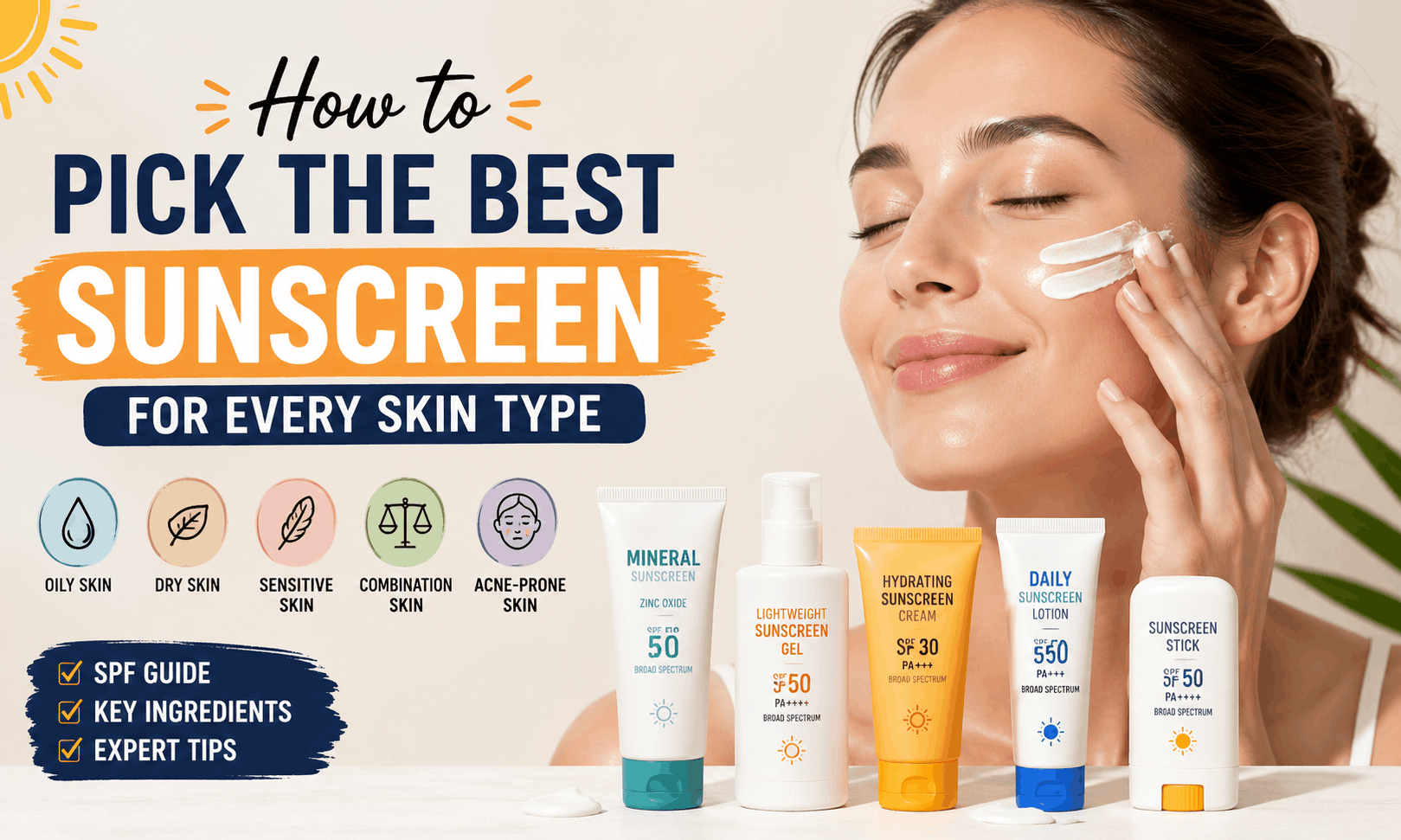
Sun protection is one of the most important steps in any skincare routine. Whether you have oily, dry, sensitive, or combination skin, using the right sunscreen can help protect against sunburn, premature aging, hyperpigmentation, and long-term skin damage. However, with so many options available from mineral and chemical formulas to gels, creams, and sprays, finding the perfect sunscreen can feel overwhelming.
The good news is that choosing the best sunscreen doesn’t have to be complicated. Once you understand your skin type and know what ingredients and formulas to look for, selecting the right product becomes much easier.
In this guide, you’ll learn how to pick the best sunscreen for every skin type, what SPF you need, and the common mistakes to avoid for healthier, better-protected skin.
Why Sunscreen Is Essential for Everyone
Many people think sunscreen is only necessary during summer or when spending hours outdoors. In reality, ultraviolet (UV) rays affect your skin throughout the year, even on cloudy days.
Daily sunscreen use helps:
- Reduce the risk of sunburn
- Prevent premature wrinkles and fine lines
- Minimize dark spots and uneven skin tone
- Lower the risk of skin cancer
- Protect collagen and maintain skin elasticity
Whether you’re indoors near windows or outside running errands, sunscreen should be part of your everyday skincare routine.
Also Read: What Is the Clear Liquid That Comes Out of a Pimple?
Understand the Different Types of Sunscreen
Before choosing a sunscreen, it’s helpful to know the two main categories available.
Mineral (Physical) Sunscreen
Mineral sunscreens contain ingredients like zinc oxide or titanium dioxide that sit on the skin’s surface and reflect UV rays.
Best for:
- Sensitive skin
- Acne-prone skin
- Children
- People with rosacea or eczema
Pros:
- Works immediately after application
- Less likely to irritate sensitive skin
- Broad-spectrum protection
Cons:
- May leave a white cast
- Can feel slightly thicker
- Chemical Sunscreen
Chemical sunscreens absorb UV rays before they damage the skin. Common ingredients include avobenzone, octinoxate, octisalate, and homosalate.
Best for:
- Normal skin
- Combination skin
- Active lifestyles
Pros:
- Lightweight texture
- Blends easily
- No visible white residue
Cons:
- May irritate highly sensitive skin
- Needs about 15–20 minutes before sun exposure
Also Read: Korean Skin Care Routine: The Complete Guide to Glass Skin
How to Choose Sunscreen Based on Your Skin Type
The best sunscreen depends on your skin’s unique needs.
1. Best Sunscreen for Oily Skin
If your skin becomes shiny within a few hours or feels greasy, choose products that control excess oil without clogging pores.
Look for:
- Oil-free formulas
- Gel or fluid textures
- Matte finish
- Non-comedogenic label
- Lightweight consistency
Ingredients like niacinamide can also help reduce excess oil while soothing the skin.
Avoid thick creams that can leave your face feeling heavy.
2. Best Sunscreen for Dry Skin
Dry skin benefits from sunscreens that provide hydration while protecting against UV damage.
Choose formulas containing:
- Hyaluronic acid
- Ceramides
- Glycerin
- Squalane
- Aloe vera
Cream-based sunscreens work especially well because they help lock in moisture throughout the day.
Avoid alcohol-heavy formulas that may worsen dryness.
3. Best Sunscreen for Sensitive Skin
Sensitive skin requires gentle ingredients that minimize irritation.
The safest options usually contain:
- Zinc oxide
- Titanium dioxide
- Fragrance-free formulas
- Alcohol-free ingredients
It’s also wise to patch-test a new sunscreen before applying it to your entire face.
4. Best Sunscreen for Combination Skin
Combination skin has both oily and dry areas, making balance important.
Look for:
- Lightweight lotions
- Non-greasy creams
- Hybrid gel-cream textures
- Broad-spectrum SPF 30 or higher
These formulas moisturize dry areas without making the oily T-zone feel greasy.
5. Best Sunscreen for Acne-Prone Skin
People with acne often avoid sunscreen because they’re worried about breakouts. However, skipping sunscreen can worsen acne marks and post-inflammatory hyperpigmentation.
Choose products labeled:
- Non-comedogenic
- Oil-free
- Lightweight
- Fragrance-free
Mineral sunscreens with zinc oxide are often excellent choices because zinc has calming properties.
6. Best Sunscreen for Mature Skin
As skin ages, it loses moisture and elasticity.
Look for sunscreens that include skincare ingredients like:
- Peptides
- Antioxidants
- Vitamin E
- Hyaluronic acid
- Niacinamide
These ingredients help protect against environmental stress while keeping skin hydrated.
Also Read: How to Determine Your Skin Undertone in 5 Simple Ways
What SPF Should You Choose?
SPF stands for Sun Protection Factor and measures protection against UVB rays.
Here’s a simple guide:
| SPF | UVB Protection |
|---|---|
| SPF 15 | About 93% |
| SPF 30 | About 97% |
| SPF 50 | About 98% |
For daily use, dermatologists generally recommend SPF 30 or higher.
If you spend long periods outdoors, swimming, or exercising, SPF 50 offers slightly more protection.
Remember that no sunscreen blocks 100% of UV rays.
Don’t Forget Broad-Spectrum Protection
A sunscreen should always say Broad Spectrum on the label.
This means it protects against:
- UVA rays, which cause premature aging and wrinkles.
- UVB rays, which cause sunburn.
Both contribute to long-term skin damage, making broad-spectrum protection essential.
Water-Resistant vs. Waterproof
Many people believe waterproof sunscreen exists, but that’s actually a myth.
Instead, products are labeled:
- Water-resistant (40 minutes)
- Very water-resistant (80 minutes)
If you’re swimming or sweating, reapply according to the label for continued protection.
Ingredients to Look For
Different ingredients provide different benefits depending on your skin.
For Hydration
- Hyaluronic acid
- Ceramides
- Glycerin
- Squalane
For Oily Skin
- Niacinamide
- Silica
- Green tea extract
For Sensitive Skin
- Zinc oxide
- Titanium dioxide
- Colloidal oatmeal
For Anti-Aging
- Vitamin E
- Antioxidants
- Peptides
Common Sunscreen Mistakes to Avoid
Even the best sunscreen won’t work properly if it’s used incorrectly.
Applying Too Little
Most adults need approximately:
- Two finger lengths for the face and neck
- One ounce (about a shot glass) for the entire body
Skipping Reapplication
Reapply every two hours, or sooner if swimming or sweating.
Only Wearing Sunscreen Outdoors
UV rays can pass through windows, making indoor sunscreen beneficial, especially if you sit near natural light.
Forgetting Certain Areas
People often miss:
- Ears
- Neck
- Eyelids
- Lips
- Hands
- Feet
These areas are also vulnerable to sun damage.
Relying Only on Sunscreen
Sunscreen works best alongside other protective measures such as:
- Wearing sunglasses
- Wide-brimmed hats
- Protective clothing
- Seeking shade during peak sunlight hours
How to Apply Sunscreen Correctly
To get maximum protection:
- Cleanse and moisturize your skin.
- Apply sunscreen as the final step of your skincare routine before makeup.
- Use enough product to fully cover exposed skin.
- Wait about 15–20 minutes before going outside if using a chemical sunscreen.
- Reapply every two hours during sun exposure.
Consistency matters more than occasionally using a high-SPF product.
Can You Wear Sunscreen Every Day?
Absolutely.
Daily sunscreen use protects your skin from cumulative UV exposure that occurs over time. Even brief periods outside, walking to your car, commuting, or sitting near a sunny window, can contribute to skin aging and discoloration.
Making sunscreen a daily habit is one of the simplest ways to maintain healthier, younger-looking skin.
Conclusion
Choosing the best sunscreen for your skin type doesn’t have to be confusing. The key is understanding your skin’s needs and selecting a formula that feels comfortable enough to wear every day. Oily skin benefits from lightweight, matte-finish products, while dry skin thrives with hydrating creams. Sensitive skin often responds best to gentle mineral sunscreens, and acne-prone skin should look for non-comedogenic formulas.
No matter your skin type, prioritize a broad-spectrum sunscreen with at least SPF 30 and remember to apply enough and reapply regularly. Combined with other sun-safe habits, the right sunscreen can help keep your skin healthier, more even-toned, and protected from both immediate and long-term sun damage.
Frequently Asked Questions (FAQs)
1. Which SPF is best for daily use?
SPF 30 is generally recommended for everyday use because it blocks about 97% of UVB rays. If you’ll be outdoors for extended periods, SPF 50 provides slightly higher protection.
2. Is mineral sunscreen better than chemical sunscreen?
Neither is universally better. Mineral sunscreens are often preferred for sensitive or acne-prone skin, while chemical sunscreens tend to feel lighter and blend more easily on many skin types.
3. Can sunscreen cause acne?
Some heavy or pore-clogging formulas may contribute to breakouts. Choosing an oil-free, lightweight, and non-comedogenic sunscreen can help reduce this risk.
4. How often should I reapply sunscreen?
Reapply sunscreen every two hours when outdoors, and immediately after swimming, excessive sweating, or towel drying, even if the product is water-resistant.
5. Do I need sunscreen on cloudy days?
Yes. Up to 80% of UV rays can penetrate clouds, so daily sunscreen use is recommended regardless of the weather.