
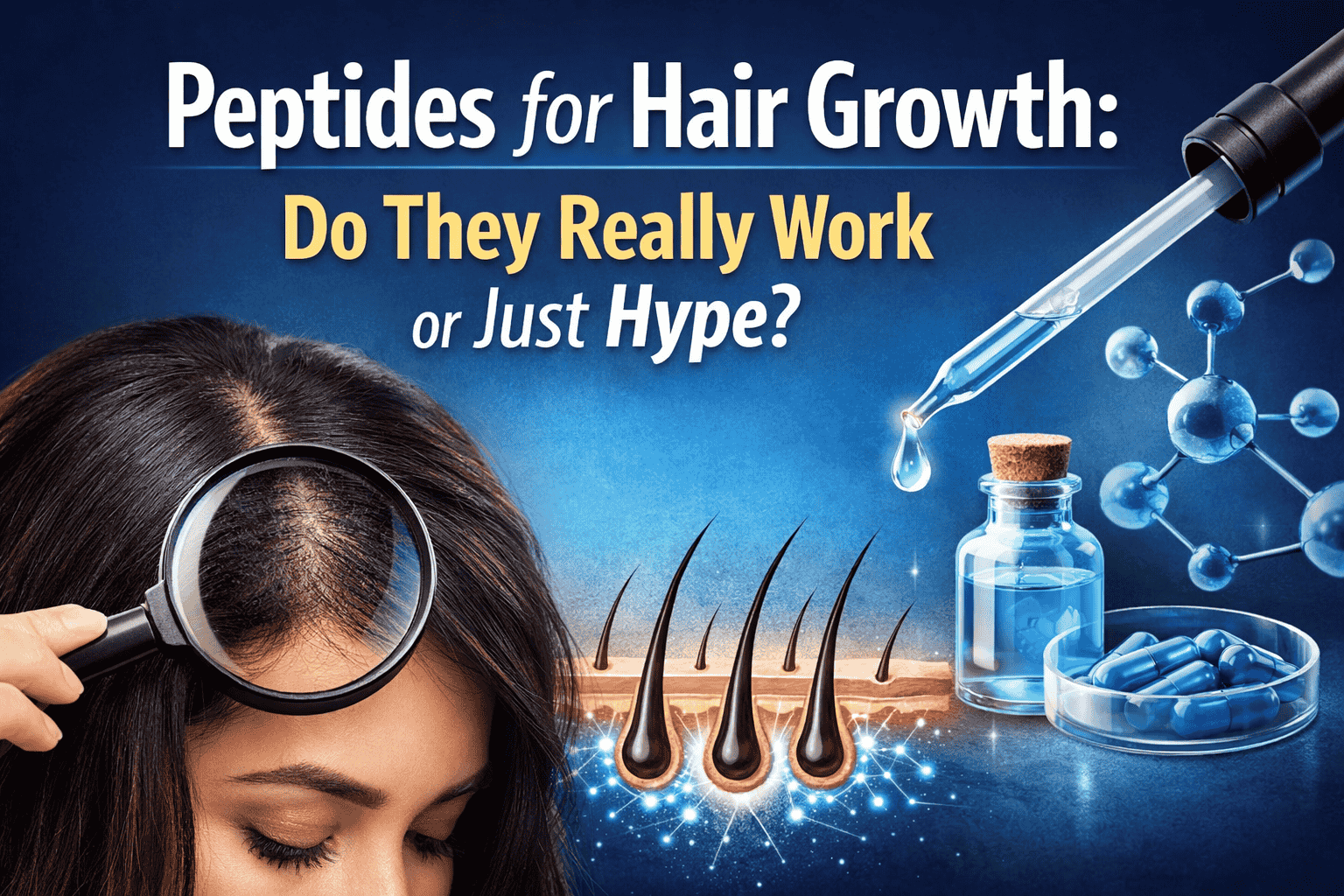
Hair loss is a common concern affecting millions of people worldwide. From thinning strands to receding hairlines, many individuals are constantly searching for effective solutions. Recently, peptides have emerged as a trending ingredient in hair care, often marketed as a breakthrough for hair growth. But do peptides truly deliver results, or are they just another overhyped trend?
Let’s take a closer look at what peptides are, how they work, and whether they can genuinely help with hair growth.
What Are Peptides?
Peptides are short chains of amino acids, which are the building blocks of proteins such as keratin, collagen, and elastin. Since hair is primarily made of keratin, peptides play an important role in maintaining hair structure and strength.
In hair care products, peptides are typically designed to:
- Support hair follicle health
- Improve scalp condition
- Strengthen hair strands
- Promote thicker-looking hair
Different types of peptides are used in formulations, including copper peptides, signal peptides, and carrier peptides, each serving a unique function.
How Do Peptides Work for Hair Growth?
Peptides work at a cellular level to stimulate and support hair growth. Here are the key mechanisms:
1. Stimulating Hair Follicles
Certain peptides may help activate dormant hair follicles, encouraging them to enter the growth (anagen) phase. This can potentially lead to increased hair density over time.
2. Improving Blood Circulation
Some peptides, especially copper peptides, are believed to enhance blood flow to the scalp. Better circulation means more oxygen and nutrients reach the hair follicles, which may support healthier growth.
3. Strengthening Hair Structure
Peptides help boost keratin production, making hair strands stronger and less prone to breakage. This doesn’t necessarily grow new hair but helps retain existing hair.
4. Reducing Inflammation
Inflammation in the scalp can contribute to hair loss. Certain peptides have anti-inflammatory properties, helping create a healthier environment for hair growth.
Types of Peptides Used in Hair Care
Copper Peptides
Copper peptides are among the most studied for hair growth. They may help repair damaged follicles, reduce inflammation, and promote thicker hair.
Signal Peptides
These peptides send signals to cells to produce more collagen and keratin, improving scalp health and hair strength.
Carrier Peptides
Carrier peptides deliver essential minerals like copper and magnesium to hair follicles, supporting overall hair health.
Do Peptides Really Work?
The answer is: partially yes, but with limitations.
What Science Says
Research suggests that certain peptides, especially copper peptides, can support hair health and may improve hair thickness and density. However, most studies are small or limited, and results vary between individuals.
Peptides are not a miracle cure for hair loss. They are more effective as part of a broader hair care routine rather than a standalone solution.
What You Can Expect
- Improved hair strength and reduced breakage
- Healthier scalp condition
- Slight increase in hair thickness over time
What You Should Not Expect
- Instant hair regrowth
- Complete reversal of severe baldness
- Results comparable to medical treatments in advanced cases
Peptides vs Other Hair Growth Treatments
To understand their effectiveness, it helps to compare peptides with other popular treatments:
- Minoxidil: Clinically proven to stimulate hair growth and widely used for treating hair loss.
- Biotin Supplements: Support hair strength but don’t directly stimulate new growth.
- PRP Therapy: Uses platelet-rich plasma to stimulate follicles, but is more invasive and costly.
Compared to these, peptides are gentler and often found in topical products, making them easier to incorporate into daily routines but typically less powerful.
Are Peptide Hair Products Worth It?
Peptide-based products can be worth trying if you’re dealing with:
- Mild hair thinning
- Weak or brittle hair
- Early-stage hair loss
They are especially useful as preventive care or as part of a maintenance routine. However, if you’re experiencing significant hair loss due to genetics or medical conditions, peptides alone may not be enough.
How to Use Peptides for Best Results
If you decide to try peptides, here are some tips to maximize effectiveness:
Choose the Right Product
Look for serums, tonics, or shampoos that clearly list peptides like copper peptides or specific peptide complexes.
Be Consistent
Hair growth takes time. Use peptide products regularly for at least 3–6 months before expecting noticeable results.
Combine with Other Treatments
Peptides work best when paired with a holistic approach, including:
- A balanced diet
- Proper scalp care
- Clinically proven treatments, if needed
Maintain Scalp Health
A clean and healthy scalp improves the absorption and effectiveness of peptide-based products.
Potential Side Effects
Peptides are generally considered safe and well-tolerated. However, some users may experience:
- Mild scalp irritation
- Allergic reactions (rare)
It’s always a good idea to perform a patch test before using a new product.
The Final Verdict: Hype or Helpful?
Peptides are not just hype, but they’re also not a miracle solution.
They offer real, science-backed benefits for improving hair strength, scalp health, and potentially supporting hair growth. However, their effects are usually subtle and gradual. Think of peptides as a supportive ingredient rather than a standalone treatment.
Bottom Line
- Helpful for strengthening hair and improving scalp health
- May support mild hair growth over time
- Not a cure for severe hair loss or baldness
Conclusion
Peptides represent an exciting advancement in hair care, bridging the gap between cosmetic products and science-backed ingredients. While they may not completely transform your hair overnight, they can play a valuable role in maintaining healthier, stronger, and fuller-looking hair.
If you’re looking for a gentle, long-term approach to hair care, peptides are definitely worth considering, but keep your expectations realistic and combine them with other proven strategies for the best results.
5 FAQs About Peptides for Hair Growth
1. Do peptides actually regrow hair?
Peptides may support hair growth by improving scalp health and strengthening follicles, but they are not guaranteed to regrow hair, especially in advanced hair loss cases.
2. How long do peptides take to show results?
Most people may start noticing improvements in hair texture and strength within 2–3 months, while visible growth may take 3–6 months of consistent use.
3. Are peptide hair products safe to use daily?
Yes, most peptide-based shampoos and serums are safe for daily use. However, always follow product instructions and do a patch test first.
4. Can peptides replace treatments like minoxidil?
No, peptides are generally less potent than clinically proven treatments like minoxidil. They work better as a complementary solution rather than a replacement.
5. Do peptides work for all hair types?
Yes, peptides can benefit all hair types, including straight, wavy, curly, and coily hair, as they primarily target scalp and follicle health.