
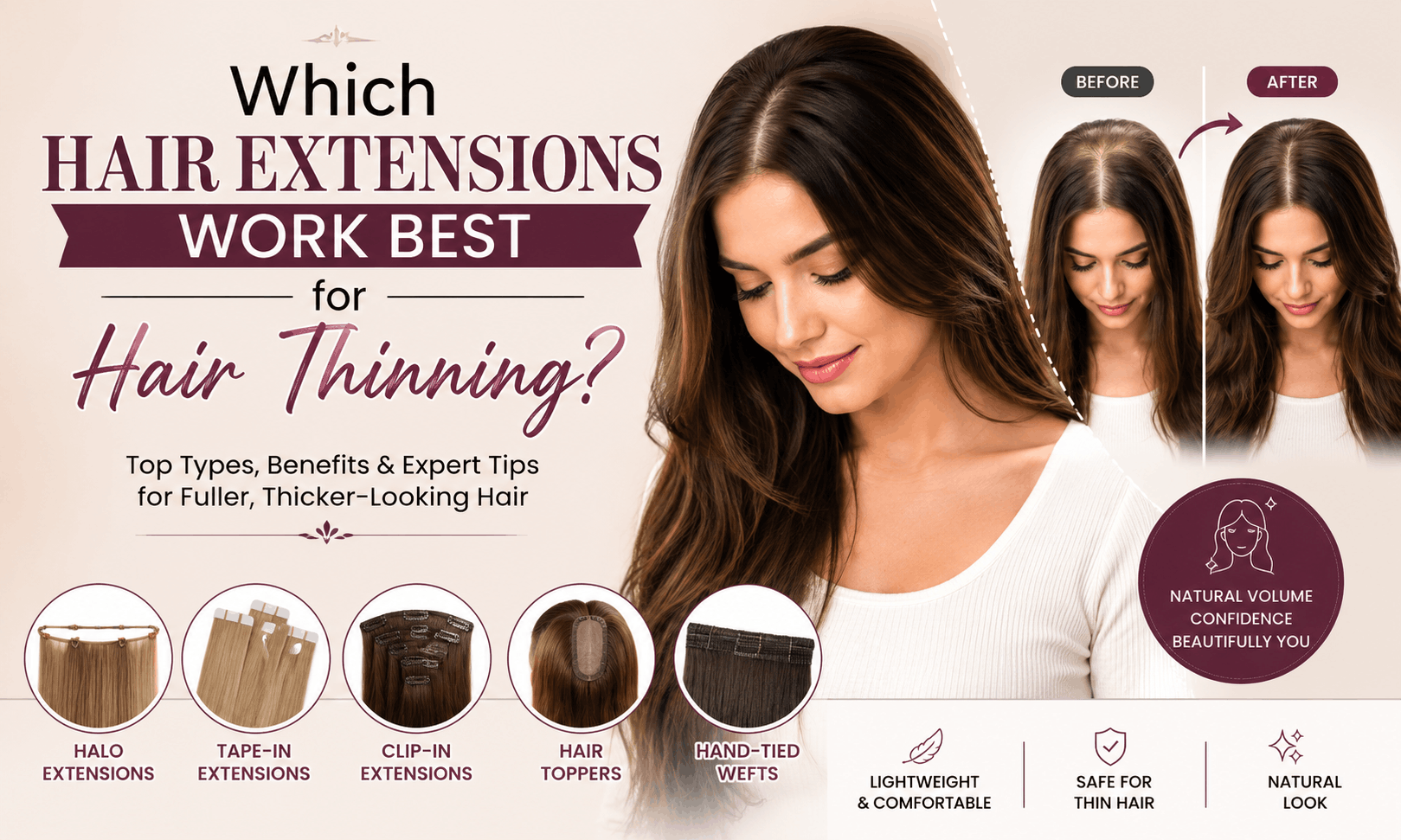
Hair thinning is a common concern that affects people of all ages. Whether it’s caused by genetics, hormonal changes, stress, aging, or medical conditions, thinning hair can impact confidence and make styling more challenging. Fortunately, modern hair extensions offer practical solutions that can instantly create the appearance of fuller, thicker hair without looking unnatural.
However, not every type of extension is suitable for fine or thinning hair. Some methods may put too much stress on delicate strands, while others are specifically designed to blend seamlessly with low-density hair.
In this guide, you’ll learn which hair extensions work best for hair thinning, the pros and cons of each option, and how to choose the safest solution for your hair type.
Can People With Thinning Hair Wear Extensions?
Yes but choosing the right extension method is essential.
People often assume hair extensions are only for adding length. In reality, many extensions are designed primarily to add volume, making them an excellent choice for thinning hair.
The ideal extension should:
- Be lightweight
- Distribute weight evenly
- Blend naturally
- Avoid pulling on fragile roots
- Be comfortable for daily wear
Selecting the wrong extension type can worsen breakage or make thinning areas more noticeable.
What Causes Hair Thinning?
Understanding why your hair is thinning can help you make better styling decisions.
Common causes include:
- Genetics
- Aging
- Hormonal changes
- Pregnancy and postpartum hair loss
- Stress
- Nutritional deficiencies
- Medical treatments
- Heat and chemical damage
- Tight hairstyles
If you’re experiencing sudden or severe hair loss, consult a healthcare professional before using extensions.
Best Hair Extensions for Hair Thinning
1. Halo Hair Extensions
Halo extensions are often considered one of the safest choices for thinning hair.
Instead of attaching directly to your natural hair, a nearly invisible wire sits comfortably around your head, while your own hair covers it.
Benefits
- No glue or adhesive
- No clips pulling on weak strands
- Easy to apply in minutes
- Lightweight
- Great for beginners
Best For
- Mild to moderate thinning
- Fine hair
- People wanting occasional volume
2. Tape-In Hair Extensions
Tape-in extensions are one of the most popular professional options for fine hair.
They use ultra-thin adhesive strips that sandwich small sections of natural hair.
Benefits
- Lie flat against the scalp
- Natural appearance
- Lightweight
- Comfortable to wear
- Reusable with professional maintenance
Things to Consider
Professional installation is recommended because improper placement can cause tension on delicate hair.
Best For
- Fine hair
- Moderate thinning
- Long-term wear
3. Clip-In Hair Extensions (Lightweight Versions)
Traditional clip-ins can sometimes be too heavy for thinning hair. However, lightweight clip-in sets designed for fine hair work well for occasional use.
Benefits
- No permanent attachment
- Easy to remove daily
- Affordable
- Ideal for special occasions
Avoid
- Heavy multi-weft sets
- Wearing them every day
- Placing clips directly over sparse areas
Best For
- Temporary volume
- Events and parties
- First-time extension users
4. Hair Toppers
Hair toppers are different from traditional extensions because they cover thinning areas on the crown while blending with natural hair.
Many women experiencing thinning at the top find toppers more effective than extensions alone.
Benefits
- Covers visible scalp
- Adds significant volume
- Natural appearance
- Available in various sizes
Best For
- Crown thinning
- Female pattern hair loss
- Widening part lines
5. Hand-Tied Weft Extensions
Hand-tied wefts are much lighter than traditional machine wefts.
When installed correctly by an experienced stylist, they provide natural fullness without excessive bulk.
Benefits
- Flexible movement
- Lightweight feel
- Natural blend
- Comfortable for many users
Best For
- Medium-density hair
- Mild thinning
- Long-term volume
Extensions That May Not Be Ideal for Severe Hair Thinning
Some extension methods place more tension on the hair shaft and scalp.
These include:
- Heavy sew-in weaves
- Fusion (keratin bond) extensions
- Large machine wefts
- Very heavy clip-in sets
While these methods work well for thicker hair, they may increase stress on already fragile strands.
How to Choose the Right Hair Extensions
When selecting extensions, consider several factors.
Hair Density
Fine hair requires lighter extensions than thick hair.
Thinning Location
- Crown thinning → Hair toppers
- Overall thin hair → Halo or tape-ins
- Thin ends → Lightweight clip-ins
Lifestyle
Ask yourself:
- Do you wear extensions daily?
- Do you style your hair frequently?
- Do you prefer low maintenance?
Your answers can help determine the most practical option.
Tips for Wearing Extensions on Thin Hair Safely
Healthy application and maintenance matter just as much as choosing the right extension.
Here are a few best practices:
- Never install extensions on damaged hair.
- Choose lightweight pieces whenever possible.
- Avoid sleeping with removable extensions.
- Brush gently using an extension-friendly brush.
- Schedule regular maintenance if using professional extensions.
- Avoid excessive heat styling.
- Wash with sulfate-free products when recommended.
- Give your natural hair occasional breaks from extensions.
How to Make Hair Extensions Look Natural
Even the highest-quality extensions can look obvious if they aren’t matched correctly.
For the most natural finish:
- Match both hair color and undertone.
- Blend layers with a professional haircut if needed.
- Choose human hair for the most realistic appearance.
- Avoid overly thick extensions if your natural hair is very fine.
- Place extensions strategically rather than adding excessive volume.
A customized approach typically delivers the most believable results.
Are Human Hair Extensions Better Than Synthetic?
For people with thinning hair, human hair extensions are usually the preferred option.
Human Hair
Pros
- Natural appearance
- Heat styling compatible
- Longer lifespan
- Better blending
Cons
- Higher cost
- Requires regular care
- Synthetic Hair
Pros
- Budget-friendly
- Pre-styled
- Low maintenance
Cons
- Less natural movement
- Limited heat styling
- Shorter lifespan
If you’re looking for everyday wear and a seamless finish, investing in quality human hair extensions is often worthwhile.
Conclusion
Hair thinning doesn’t mean you have to give up on achieving fuller, more voluminous hair. The key is choosing extension methods that prioritize both appearance and hair health.
For most people with fine or thinning hair, halo extensions, tape-ins, lightweight clip-ins, hand-tied wefts, and hair toppers offer the best balance of comfort, natural-looking volume, and minimal stress on fragile strands. The right choice depends on where your hair is thinning, how often you plan to wear extensions, and your long-term styling goals.
Whenever possible, seek advice from a professional stylist experienced with thinning hair. A personalized recommendation and proper application can help you enjoy beautiful results while protecting your natural hair.
FAQs
1. Which hair extensions are safest for thinning hair?
Halo extensions and professionally installed tape-in extensions are generally considered among the safest options because they are lightweight and place minimal tension on natural hair.
2. Can hair extensions make thinning hair worse?
Extensions can contribute to breakage or traction-related hair loss if they are too heavy, improperly installed, or worn without proper maintenance. Choosing lightweight methods and following care guidelines helps reduce this risk.
3. Are hair toppers better than extensions for thinning hair?
If thinning is concentrated at the crown or along the part line, hair toppers often provide better coverage than traditional extensions. For overall volume, extensions may be the better choice.
4. Can I wear clip-in extensions every day with thin hair?
Occasional use is ideal. Wearing clip-ins daily may place repeated stress on the same sections of hair, especially if they are heavy or positioned incorrectly.
5. How long do tape-in hair extensions last?
With proper care and professional maintenance, tape-in extensions typically last 6 to 8 weeks before they need to be removed, repositioned, and reapplied. The hair itself can often be reused multiple times if kept in good condition.