
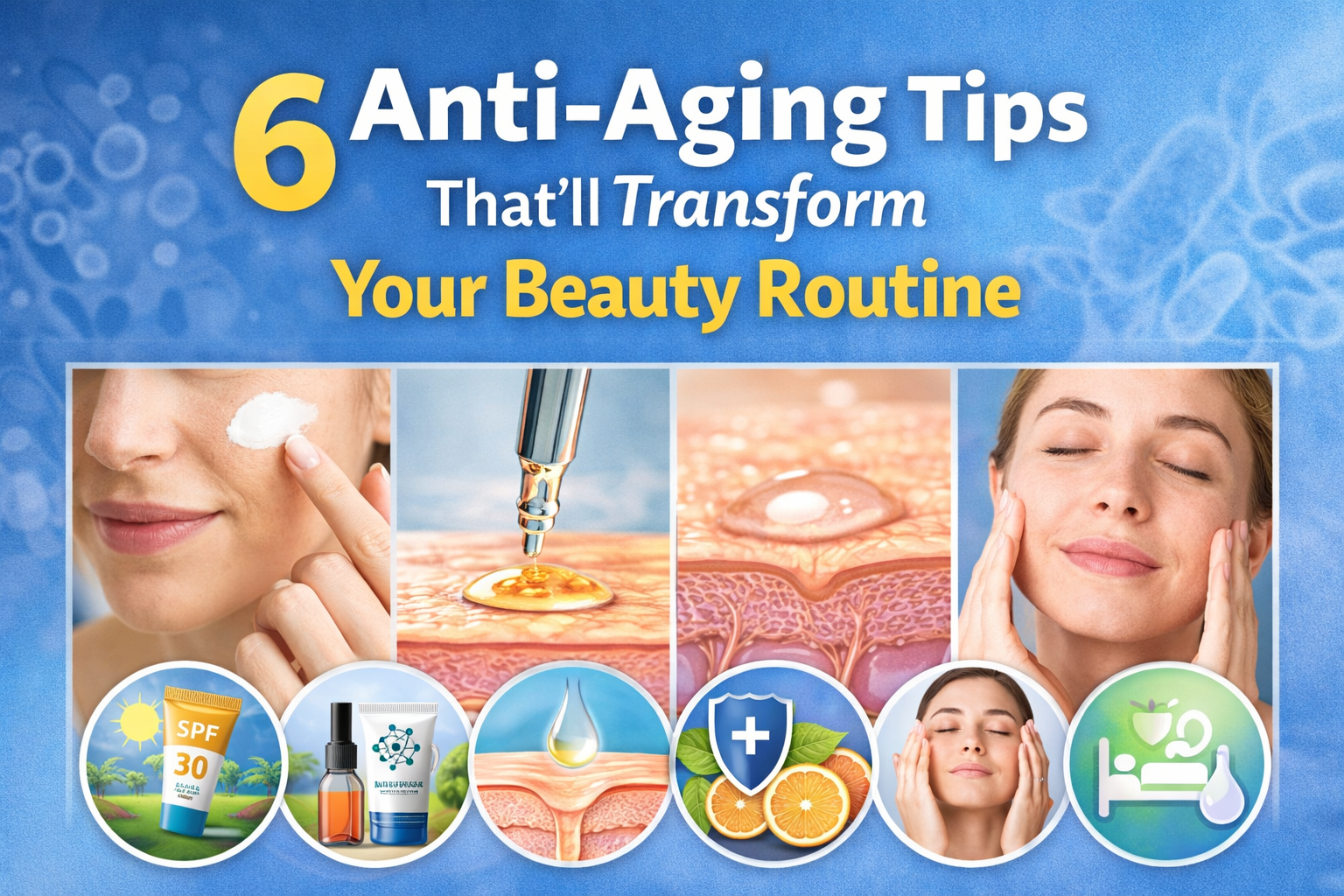
Aging is a natural part of life, but premature skin aging isn’t inevitable. Based on widely accepted dermatology principles and real-world skincare experience, a consistent and well-structured routine can significantly slow visible signs of aging, such as fine lines, uneven tone, and loss of firmness.
Rather than relying on trends or miracle products, effective anti-aging care focuses on prevention, protection, and long-term skin health. The following six tips are rooted in practical skincare science and everyday experience, making them safe, realistic, and effective for most skin types.
Read More: How To Find Infallible Foundation Shades That Match Your Skin Tone
Why an Anti-Aging Beauty Routine Matters
Skin ages due to both intrinsic factors (like genetics) and extrinsic factors such as sun exposure, pollution, lifestyle habits, and skincare choices. Research consistently shows that UV damage and dehydration are the leading causes of premature aging, while collagen breakdown accelerates with time.
A smart anti-aging routine doesn’t aim to “stop aging,” it supports the skin’s natural repair processes and protects it from unnecessary damage.
The Best Anti-Aging Tips for Healthy, Youthful Skin
1. Make Daily Sunscreen Use a Lifelong Habit
From both professional dermatology guidance and long-term skincare experience, sunscreen remains the most effective anti-aging product available. Consistent UV exposure breaks down collagen and elastin, leading to wrinkles, sagging, and dark spots.
Even minimal daily sun exposure accumulates over time.
Best practices supported by experts:
- Use a broad-spectrum sunscreen with SPF 30 or higher
- Apply every morning, regardless of the weather
- Reapply when outdoors for extended periods
- Include neck, ears, and hands
Daily sunscreen use has been shown to significantly reduce visible signs of aging over time.
Read More: What Is the Clear Liquid That Comes Out of a Pimple?
2. Use Retinol to Support Collagen Renewal
Retinol is one of the most clinically studied skincare ingredients for aging skin. Dermatologists often recommend it for improving skin texture, fine lines, and uneven tone because it accelerates cell turnover and supports collagen production.
However, experience shows that slow and consistent use delivers the best results.
Safe usage guidelines:
- Start with a low strength, 1–2 times per week
- Apply only at night
- Pair with a gentle moisturizer
- Always use sunscreen during the day
Proper use minimizes irritation while maximizing long-term benefits.
3. Prioritize Deep, Consistent Hydration
As skin ages, its ability to retain moisture declines. Dehydrated skin exaggerates fine lines and appears dull and rough. Clinical skincare experience confirms that hydration plays a crucial role in maintaining skin elasticity and barrier strength.
Well-hydrated skin:
- Appears smoother and plumper
- Recovers faster from irritation
- Shows fewer visible fine lines
Using a mild cleanser, hydrating serum, and a suitable moisturizer helps maintain moisture balance throughout the day.
4. Strengthen Your Routine With Antioxidants
Environmental stressors like pollution and UV exposure create free radicals that damage skin cells. Antioxidants neutralize these free radicals, helping preserve collagen and improve overall skin tone.
Topical antioxidants are commonly recommended by skincare professionals as part of a preventive anti-aging routine.
Proven benefits include:
- Improved brightness
- Reduced dullness
- Enhanced protection against environmental damage
Using antioxidants in the morning under sunscreen provides added defense against daily exposure.
Read More: How to Prevent Skin Cancer After a Bad Sunburn
5. Improve Circulation With Gentle Facial Massage
Facial massage is supported by both traditional skincare practices and modern dermatology as a beneficial habit. Regular massage improves blood circulation and lymphatic drainage, helping skin appear firmer and more refreshed.
From practical experience, facial massage also improves product absorption and reduces facial tension caused by stress and repetitive expressions.
Benefits include:
- Reduced puffiness
- Improved glow
- Relaxed facial muscles
Consistency is more important than tools—clean hands and gentle pressure are sufficient.
6. Support Skin Health Through Lifestyle Choices
Skincare products work best when paired with healthy lifestyle habits. Scientific research confirms that sleep, diet, stress levels, and hydration significantly impact skin aging.
Chronic stress and poor sleep increase inflammation and accelerate collagen breakdown, while balanced nutrition supports skin repair.
Skin-supportive habits include:
- 7–9 hours of quality sleep
- A diet rich in antioxidants and healthy fats
- Adequate water intake
Stress management through movement or relaxation
Healthy skin reflects a well-supported body.
Read More: What Is the Best Cream for Skin Cancer?
How Long Does It Take to See Anti-Aging Results?
Based on dermatological timelines and real-world use, most people notice visible improvements within 6–12 weeks of consistent care. Preventive habits like sunscreen show long-term benefits, while ingredients like retinol require patience.
Consistency, not perfection, is the key factor in achieving lasting results.
Final Thoughts on Building a Trustworthy Anti-Aging Routine
An effective anti-aging routine is not about chasing trends or expensive treatments. It’s about evidence-based habits that protect, repair, and nourish the skin over time.
Daily sun protection, gradual use of proven ingredients, hydration, antioxidant defense, gentle massage, and healthy lifestyle choices work together to support skin at every age.
When approached with patience and consistency, these tips can truly transform your beauty routine—and your skin’s future.