
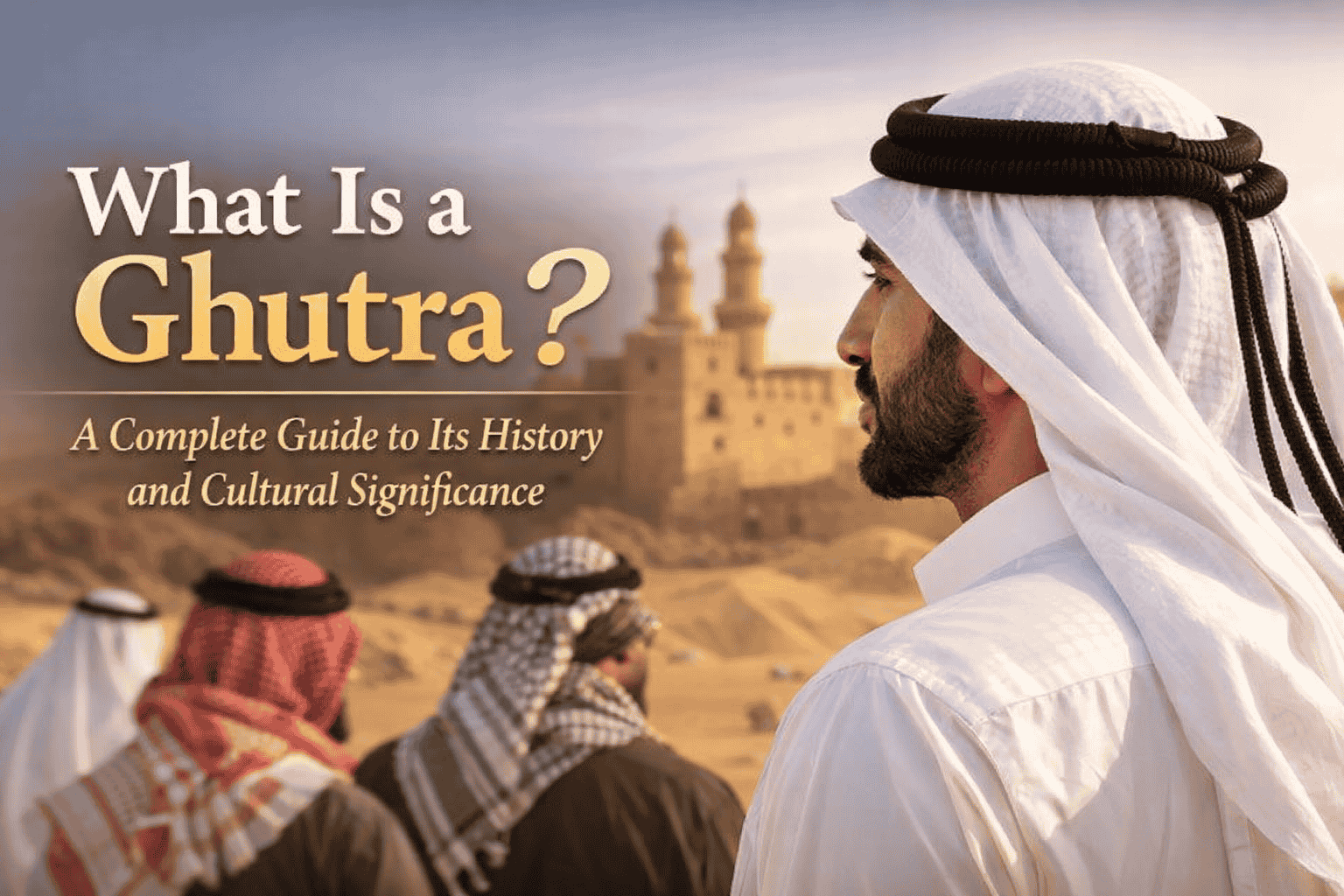
The ghutra is more than just a piece of cloth; it is a powerful symbol of tradition, identity, and cultural pride in the Arab world. Worn primarily by men across the Gulf region and parts of the Middle East, the ghutra has stood the test of time as both a practical garment and a meaningful cultural emblem. Whether seen in everyday wear or formal settings, it reflects heritage, social values, and even regional identity.
In this comprehensive guide, we will explore what a ghutra is, its origins, its historical evolution, and the cultural significance it holds today.
Also Read: How to Wear a Ghutra: Modern Styling Tips for Men
What Is a Ghutra?
A ghutra is a traditional square or rectangular scarf, usually made from cotton, that is worn on the head by men in many Middle Eastern countries. It is typically secured in place by a black cord known as an agal.
The ghutra serves both functional and symbolic purposes. Practically, it protects the wearer from harsh desert conditions such as intense sunlight, sand, and wind. Symbolically, it represents dignity, respect, and adherence to cultural norms.
The ghutra comes in various styles and colors, the most common being:
- White Ghutra – Popular in countries like the UAE and Oman, symbolizing simplicity and elegance.
- Red-and-White Checkered Ghutra (Shemagh) – Common in Saudi Arabia and Jordan, often associated with heritage and tradition.
- Black-and-White Variants – Seen in certain regions, though less common.
Historical Origins of the Ghutra
The history of the ghutra dates back thousands of years to ancient Mesopotamia and the Arabian Peninsula. Early civilizations in these regions developed head coverings as a practical solution to extreme desert climates.
Archaeological and historical evidence suggests that similar head coverings were worn by Bedouins and desert tribes long before the rise of modern nations. These coverings evolved, eventually becoming the ghutra we recognize today.
In ancient times, the ghutra served several essential purposes:
- Shielding the head and face from intense sun exposure
- Protecting against sandstorms and harsh winds
- Helping regulate body temperature in extreme heat
As trade routes expanded and cultures interacted, the design and usage of the ghutra spread across different regions, adapting to local customs and preferences.
Also Read: Ghutra vs Shemagh: What’s the Difference?
Evolution Through the Ages
Over centuries, the ghutra transformed from a purely functional garment into a cultural symbol. During the Islamic Golden Age, clothing began to reflect social status and identity more distinctly, and the ghutra became part of traditional attire for men.
In modern times, the ghutra has maintained its traditional roots while also adapting to contemporary fashion trends. Today, it is worn:
- As part of the national dress in countries like Saudi Arabia, the UAE, Qatar, and Kuwait
- During formal events, ceremonies, and religious occasions
- In daily life, especially among older generations and in conservative settings
The style of wearing the ghutra may vary depending on the country or even personal preference. Some drape it loosely over the shoulders, while others secure it tightly using an agal.
Cultural Significance of the Ghutra
The ghutra carries deep cultural meaning that goes beyond its physical appearance. It is a symbol of identity, pride, and belonging.
1. Representation of Heritage
The ghutra is closely tied to Arab heritage and Bedouin traditions. Wearing it is a way of honoring one’s roots and maintaining a connection to ancestral customs.
2. Symbol of Respect and Modesty
In many cultures, modesty in dress is highly valued. The ghutra reflects this principle, representing humility and respect for societal norms.
3. Indicator of Regional Identity
Different patterns and styles of ghutra can signify a person’s nationality or regional affiliation. For example, the red-and-white shemagh is strongly associated with Saudi Arabia, while plain white ghutras are more common in the UAE.
4. Social and Formal Importance
The ghutra is often worn during important events such as weddings, religious celebrations, and official gatherings. It adds a sense of formality and elegance to traditional attire.
5. A Mark of Masculinity and Pride
In many Middle Eastern societies, the ghutra is seen as a defining element of male identity. It reflects dignity, maturity, and cultural pride.
Ghutra vs Shemagh vs Keffiyeh
While the terms are sometimes used interchangeably, there are subtle differences:
- Ghutra – A general term used in Gulf countries for a headscarf, often white or lightly patterned.
- Shemagh – Typically refers to the red-and-white checkered version, commonly worn in Saudi Arabia and Jordan.
- Keffiyeh – A broader term used across the Arab world, including black-and-white patterns, especially associated with Palestinian culture.
Despite these differences, all three share similar origins and functions.
How the Ghutra Is Worn
There are several ways to wear a ghutra, each reflecting style, tradition, or practicality:
- Loose Drape – Simply placed over the head without an agal, common in informal settings.
- With Agal – Secured with a black cord for a more formal and polished appearance.
- Wrapped Style – Wrapped around the head and neck for protection against harsh weather.
- Shoulder Drape – Letting one side fall over the shoulder for a relaxed yet stylish look.
Each style can convey different messages, from casual comfort to formal elegance.
Modern-Day Relevance
In today’s globalized world, the ghutra continues to hold its cultural importance while also gaining recognition internationally. Designers have incorporated ghutra-inspired elements into modern clothing, blending tradition with contemporary aesthetics.
Additionally, the ghutra is often worn by younger generations as a statement of cultural pride, especially during national celebrations and festivals.
Its presence in global media and fashion shows has also contributed to increased awareness and appreciation of Middle Eastern traditions.
Materials and Craftsmanship
Traditionally, ghutras are made from lightweight cotton, making them breathable and suitable for hot climates. However, modern variations may include blends of polyester or silk for added durability and style.
High-quality ghutras are known for their fine weaving, soft texture, and precise patterns. Craftsmanship plays a crucial role in determining the garment’s overall appearance and comfort.
Conclusion
The ghutra is far more than a traditional headscarf—it is a timeless symbol of culture, identity, and heritage. From its ancient origins in desert survival to its modern role as a cultural icon, the ghutra continues to hold a special place in the lives of millions.
Understanding the history and significance of the ghutra provides valuable insight into Middle Eastern traditions and the values they represent. Whether worn for practical reasons or cultural expression, the ghutra remains a powerful emblem of pride and continuity.
FAQs
1. What is the purpose of wearing a ghutra?
The ghutra protects against the sun, wind, and sand while also serving as a cultural and traditional symbol.
2. What is the difference between a ghutra and a shemagh?
A ghutra is typically plain white, while a shemagh usually features a red-and-white checkered pattern.
3. How is a ghutra worn?
It can be worn loosely or secured with an agal, depending on the occasion and personal style.
4. Is the ghutra worn only in Saudi Arabia?
No, it is worn across many Middle Eastern countries, including the UAE, Qatar, Kuwait, and Oman.
5. What material is a ghutra made from?
It is usually made from cotton, though modern versions may include synthetic or silk blends.