
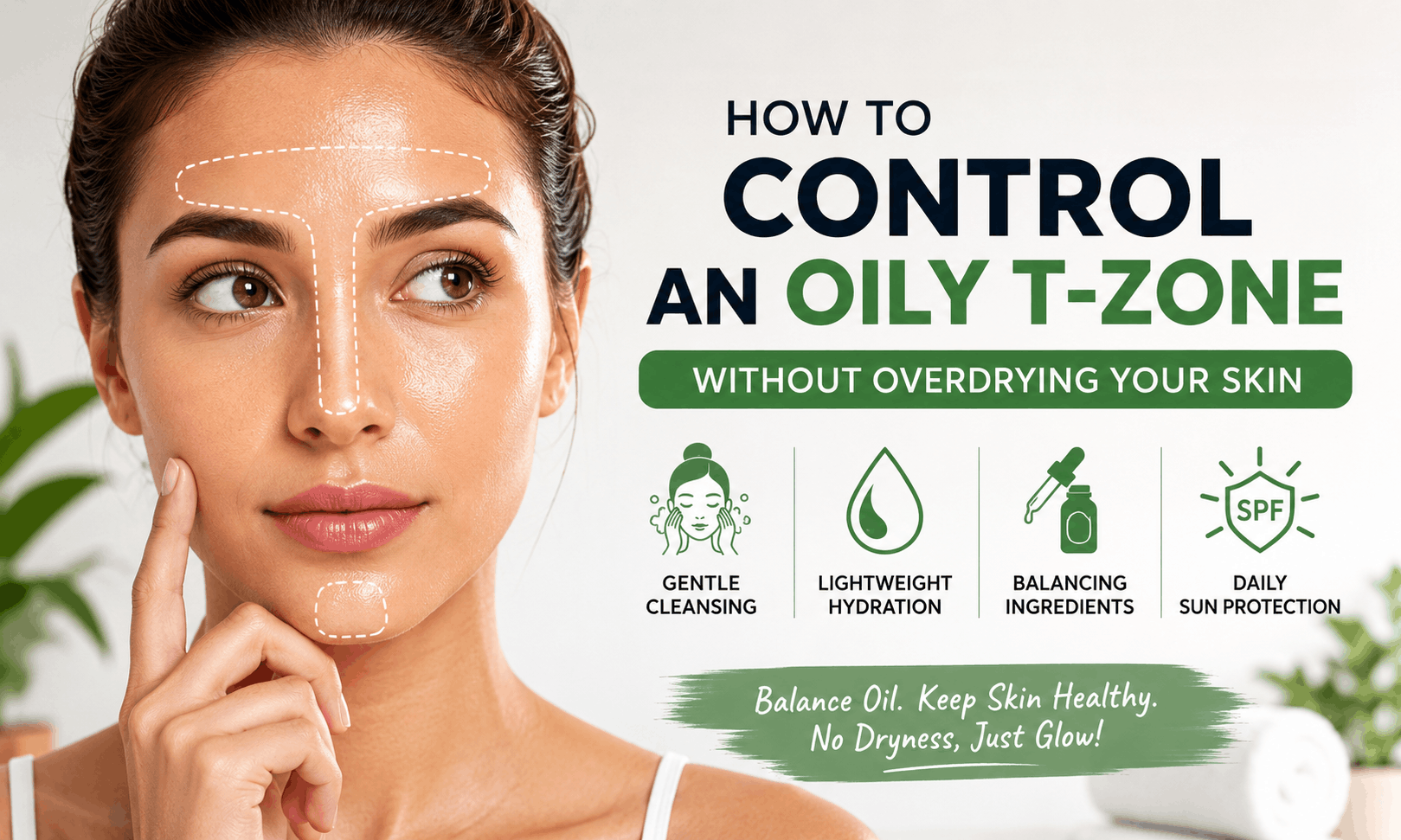
If your forehead, nose, and chin become shiny just a few hours after washing your face while the rest of your skin feels normal or even dry, you’re dealing with an oily T-zone. This is one of the most common skincare concerns, especially for people with combination skin. The challenge isn’t just reducing excess oil; it’s doing so without stripping your skin of its natural moisture.
The good news is that you can balance your T-zone by using the right skincare ingredients and habits. Here’s how to control oil production while keeping your skin healthy and hydrated.
Why Does the T-Zone Get So Oily?
The T-zone contains a higher concentration of sebaceous (oil) glands than other areas of the face. These glands produce sebum, which helps protect the skin. However, factors such as genetics, hormones, humidity, stress, and harsh skincare products can cause the glands to produce excess oil.
Ironically, using products that are too drying can make the problem worse. When the skin loses too much moisture, it often responds by producing even more oil to compensate.
Also Read: How to Pick the Best Sunscreen for Every Skin Type
Use a Gentle Cleanser
A harsh face wash may leave your skin feeling squeaky clean, but it can damage your skin barrier. Instead, choose a gentle, sulfate-free cleanser that removes dirt, sunscreen, and excess oil without stripping away essential moisture.
Wash your face twice daily, once in the morning and once before bed. Over-cleansing can lead to irritation and increased oil production.
Don’t Skip Moisturizer
Many people with oily skin avoid moisturizers, believing they’ll make the skin greasier. In reality, dehydrated skin often produces more oil to make up for the lack of hydration.
Look for lightweight, oil-free, or gel-based moisturizers containing ingredients like:
- Hyaluronic acid
- Glycerin
- Ceramides
- Niacinamide
These ingredients hydrate the skin while supporting a healthy skin barrier.
Add Niacinamide to Your Routine
Niacinamide is one of the most effective ingredients for managing an oily T-zone. It helps regulate sebum production, minimizes the appearance of enlarged pores, reduces redness, and strengthens the skin barrier.
A serum containing 5% to 10% niacinamide can be used once or twice daily after cleansing.
Exfoliate Wisely
Dead skin cells can mix with oil and clog pores, leading to blackheads and breakouts. Gentle chemical exfoliation helps keep pores clear without causing excessive dryness.
Salicylic acid (BHA) is especially beneficial because it penetrates oily pores and removes excess sebum. Use it two or three times per week instead of every day to avoid irritation.
Also Read: 6 Anti-Aging Tips That’ll Transform Your Beauty Routine
Always Wear Sunscreen
Skipping sunscreen won’t reduce oiliness. In fact, sun damage can weaken the skin barrier and increase dehydration.
Choose a lightweight, non-comedogenic sunscreen with a matte or gel finish. Many modern sunscreens are designed specifically for oily and combination skin and won’t leave a greasy residue.
Blot Oil Instead of Rewashing
If your face becomes shiny during the day, avoid washing it repeatedly. Frequent cleansing strips the skin and may trigger even more oil production.
Instead, use blotting papers to absorb excess oil without disturbing your makeup or skincare products. This instantly reduces shine while keeping the skin balanced.
Avoid Common Mistakes
Several everyday habits can unintentionally make an oily T-zone worse:
- Using alcohol-based toners regularly
- Over-exfoliating
- Applying heavy creams to the entire face
- Touching your face frequently
- Sleeping without removing makeup
Making small adjustments to your routine can significantly improve oil control over time.
Support Healthy Skin from Within
Lifestyle also affects oil production. Drinking enough water, eating a balanced diet rich in fruits and vegetables, managing stress, and getting adequate sleep all contribute to healthier skin.
While no single food causes oily skin, maintaining overall wellness helps your skin function more efficiently.
Also Read: How To Find Infallible Foundation Shades That Match Your Skin Tone
Conclusion
Managing an oily T-zone doesn’t mean drying your skin out. The key is to maintain a healthy balance between controlling excess oil and preserving hydration. By choosing gentle cleansers, lightweight moisturizers, niacinamide, occasional salicylic acid, and daily sunscreen, you can reduce unwanted shine while keeping your skin smooth, comfortable, and healthy.
Consistency is more important than using aggressive treatments. A balanced skincare routine will help your T-zone stay under control without compromising your skin’s natural protective barrier.
FAQs
1. Why is my T-zone oily while the rest of my face is dry?
This is a common sign of combination skin. The forehead, nose, and chin have more oil glands, which produce excess sebum, while the cheeks may have fewer oil glands and lose moisture more easily.
2. Can using a moisturizer make my oily T-zone worse?
No. A lightweight, oil-free, or gel-based moisturizer helps keep your skin hydrated. Skipping moisturizer can actually cause your skin to produce even more oil.
3. How often should I exfoliate an oily T-zone?
Exfoliating 2–3 times a week with a gentle chemical exfoliant, such as salicylic acid, is usually enough. Over-exfoliating can damage your skin barrier and increase oil production.
4. Which skincare ingredients are best for controlling an oily T-zone?
Niacinamide, salicylic acid, hyaluronic acid, ceramides, and glycerin are excellent ingredients. They help balance oil production while maintaining healthy skin hydration.
5. Does drinking more water reduce an oily T-zone?
While drinking water won’t directly reduce oil production, staying hydrated supports overall skin health and helps maintain a balanced skin barrier.