
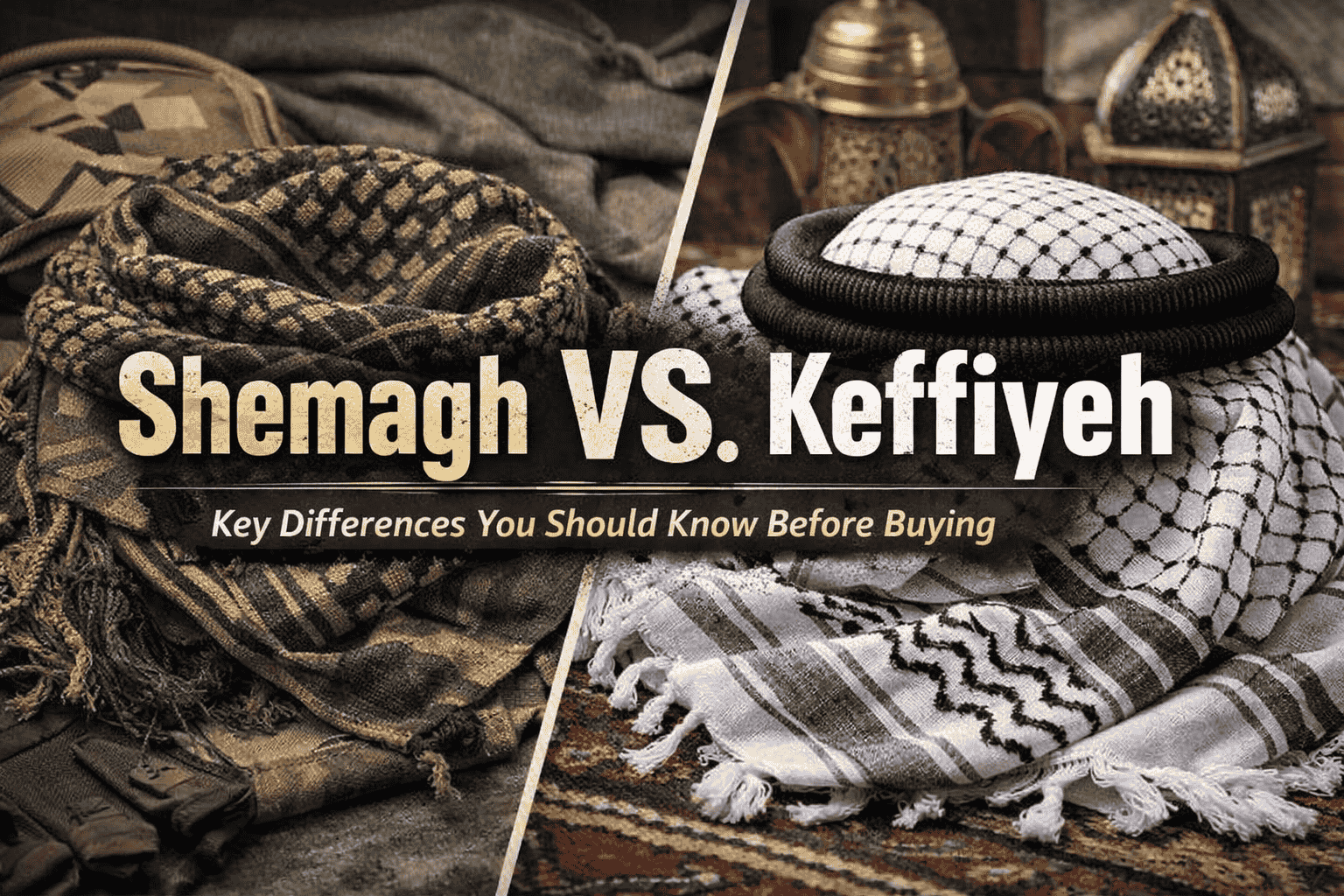
When it comes to traditional Middle Eastern headwear, two terms often get used interchangeably: shemagh and keffiyeh. While they may look similar at first glance, these iconic scarves have distinct origins, styles, and purposes. If you’re considering buying one, whether for fashion, cultural appreciation, or practical outdoor use, understanding their differences can help you make a smarter choice.
In this guide, we’ll break down the key differences between a shemagh and a keffiyeh, including their history, design, materials, and modern-day uses.
What Is a Keffiyeh?
The keffiyeh is a traditional Middle Eastern headscarf that has been worn for centuries, particularly in regions like Palestine, Jordan, and Iraq. It is typically made from cotton and features a distinctive checkered pattern.
Historically, the keffiyeh served as protection against harsh desert conditions, shielding the wearer from sun, dust, and wind. Over time, it has also become a symbol of cultural identity and heritage, especially in Palestinian culture.
Key Features of a Keffiyeh:
- Lightweight cotton fabric
- Classic black-and-white or red-and-white patterns
- Cultural and symbolic significance
- Often worn with a black cord (agal) to secure it
What Is a Shemagh?
The shemagh is essentially a type of keffiyeh but is more commonly associated with military and outdoor use. The term “shemagh” is widely used in Western countries, especially among military personnel and survival enthusiasts.
While it shares the same basic design as the keffiyeh, the shemagh is often made with slightly thicker or more durable fabric, making it ideal for rugged environments.
Key Features of a Shemagh:
- Durable, tightly woven cotton or cotton blends
- Designed for practical outdoor use
- Popular in tactical and survival communities
- Available in a wide range of colors beyond traditional patterns
Also Read: 10 Stylish Ways to Wear a Ghutra Like a Pro
Shemagh vs. Keffiyeh: Key Differences
Although they look alike, the differences between a shemagh and a keffiyeh lie in their usage, cultural context, and design variations.
1. Cultural Significance
The keffiyeh carries deep cultural and historical meaning, especially in the Middle East. It is often associated with identity, tradition, and even political symbolism.
The shemagh, on the other hand, is more of a functional adaptation. While it originates from the same roots, it is widely used in a non-cultural context, particularly by military personnel and outdoor enthusiasts.
2. Usage and Purpose
- Keffiyeh: Traditionally worn as a head covering for daily life and cultural expression
- Shemagh: Used for practical purposes like protection from dust, sun, and cold during outdoor activities
If you’re looking for something with cultural authenticity, the keffiyeh is the better choice. For hiking, camping, or tactical use, a shemagh may be more suitable.
3. Fabric and Durability
Keffiyehs are usually made from lighter cotton, making them breathable and comfortable in hot climates. Shemaghs, however, often feature thicker weaves or blended materials, offering enhanced durability.
This makes the shemagh more versatile in extreme conditions, while the keffiyeh excels in comfort and traditional wear.
Also Read: Ghutra vs Shemagh: What’s the Difference?
4. Design and Color Options
Traditional keffiyehs typically come in:
- Black and white
- Red and white
Shemaghs, however, are available in a broader range of colors, including olive, tan, grey, and even camouflage patterns. This makes them more appealing for tactical or fashion-forward users.
5. Styling and Wearing Methods
Both garments can be worn in similar ways wrapped around the head, neck, or shoulders. However, keffiyehs are often styled in traditional ways, sometimes secured with an agal.
Shemaghs are usually worn more casually or functionally, such as around the neck for protection or as a face cover in dusty environments.
Which One Should You Choose?
Choosing between a shemagh and a keffiyeh depends on your needs and preferences.
Go for a keffiyeh if you want:
- A traditional and culturally significant accessory
- A lightweight scarf for everyday wear
- A classic and timeless style
Choose a shemagh if you need:
- A durable scarf for outdoor activities
- Protection from harsh weather conditions
- A versatile, tactical accessory
Practical Uses of Shemagh and Keffiyeh
Both scarves are incredibly versatile, which is one reason they’ve remained popular across generations.
Common Uses:
- Protection from the sun and heat
- Shielding the face from dust and sand
- Neck warmer in cold weather
- Fashion accessory
- Emergency tool (bandage, sling, or towel)
Their multifunctionality makes them a valuable addition to both everyday wardrobes and travel gear.
Also Read: How to Wear a Ghutra: Modern Styling Tips for Men
Tips for Buying the Right One
Before purchasing, consider the following:
1. Material Quality
Look for 100% cotton or high-quality blends. Breathability and comfort are essential, especially in warm climates.
2. Size
Most scarves are around 40–45 inches square. Larger sizes offer more versatility in styling and use.
3. Weave Type
A tighter weave provides durability, while a looser weave enhances breathability.
4. Intended Use
Think about how you plan to use it: daily wear, fashion, or outdoor survival, and choose accordingly.
Conclusion
While the terms shemagh and keffiyeh are often used interchangeably, they are not the same. The keffiyeh stands out for its cultural roots and traditional significance, while the shemagh is valued for its durability and practicality in modern settings.
Understanding these differences ensures you choose the right scarf for your needs, whether you’re drawn to heritage, functionality, or style. Both options offer versatility and timeless appeal, making them worthwhile additions to your wardrobe.
FAQs
1. Are shemagh and keffiyeh the same thing?
Not exactly. A shemagh is a type of keffiyeh but is typically used in a more practical, tactical context, while the keffiyeh has stronger cultural significance.
2. Which is better for hot weather?
Keffiyehs are generally better for hot climates due to their lightweight and breathable cotton fabric.
3. Can I wear a shemagh as a fashion accessory?
Yes, shemaghs are widely used as fashion accessories, especially in casual and streetwear styles.
4. Is it okay to wear a keffiyeh if I’m not from the Middle East?
Yes, but it’s important to be respectful of its cultural significance and avoid using it inappropriately.
5. What size should I choose for a shemagh or keffiyeh?
A standard size of around 42 x 42 inches works well for most uses, offering flexibility in styling and functionality.