
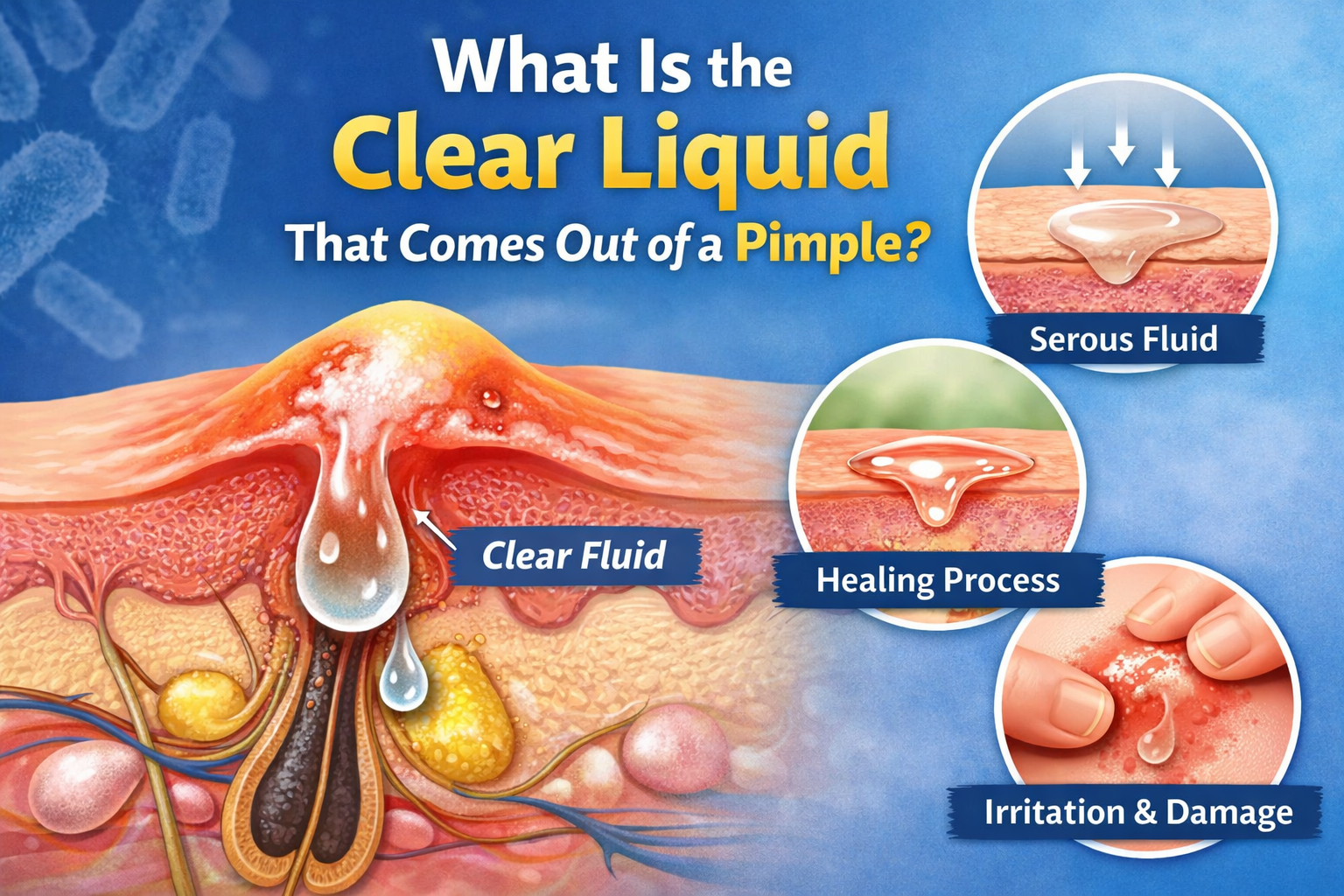
Pimples are one of the most common skin concerns, affecting people of all ages. While many people expect pus or blood when a pimple pops, it can be confusing and sometimes worrying when a clear liquid comes out instead. Is it normal? Is it a sign of infection? Should you be concerned?
The clear fluid that emerges from a pimple is usually harmless, but it does provide important clues about what’s happening beneath your skin. Understanding its source can help you care for your skin more effectively and prevent unnecessary irritation, scarring, or breakouts.
Also Read: A Nose for Trouble: Recognising Signs of Skin Cancer on the Nose
Understanding Pimples and Skin Inflammation
Before diving into the clear liquid itself, it’s helpful to understand how pimples form. Pimples develop when hair follicles become clogged with oil (sebum), dead skin cells, and bacteria. This blockage creates an environment that allows inflammation to thrive.
Not all pimples are the same. Some are filled with pus, while others are inflamed but not infected. The type of fluid released depends on the pimple’s stage, severity, and how your body responds to irritation.
What Does the Clear Liquid From a Pimple Mean?
The clear liquid is typically serous fluid, a plasma-like substance produced by your body during inflammation or healing. Unlike pus, which signals infection, clear fluid often indicates irritation, pressure, or early-stage inflammation rather than a serious problem.
In most cases, this fluid is your skin’s natural response to damage and is part of the healing process.
Key Reasons Why a Clear Liquid Comes Out of a Pimple
1. Serous Fluid (Plasma Leakage)
The most common source of clear liquid is serous fluid, which comes from blood plasma. When skin tissue becomes inflamed, tiny blood vessels leak plasma into the surrounding areas. This fluid helps transport nutrients and immune cells to support healing.
Serous fluid is:
- Clear or slightly yellow
- Watery in consistency
- Odorless
Its presence usually means your body is responding to minor skin trauma or inflammation.
2. Early-Stage Pimple Formation
In the early stages of a pimple, there may not yet be pus. If you squeeze or irritate it too soon, only clear fluid may come out. This doesn’t mean the pimple is gone—it may continue developing if the pore remains clogged.
This is common with:
- Whiteheads just forming
- Small bumps under the skin
- Mild inflammatory acne
Read More: How to Prevent Skin Cancer After a Bad Sunburn
3. Skin Irritation or Mechanical Damage
Touching, picking, or squeezing a pimple can damage the surrounding skin. When this happens, clear fluid can leak out as the skin reacts to injury.
Common triggers include:
- Excessive squeezing
- Scratching the area
- Using harsh skincare products
This type of fluid is part of the skin’s natural repair mechanism.
4. Healing Response After Popping a Pimple
After a pimple has been popped, the skin enters healing mode. Clear fluid may seep out for a short time as the wound tries to close and repair itself.
This fluid:
- Keeps the area moist
- Helps prevent infection
- Supports tissue regeneration
While normal, repeated popping can slow healing and increase the risk of scarring.
5. Absence of Bacterial Infection
Unlike pus, clear fluid does not indicate infection. Pus contains white blood cells, bacteria, and dead tissue, giving it a white or yellow appearance.
Clear liquid suggests:
- Minimal bacterial activity
- Mild inflammation
- Lower risk of infection
This is generally a good sign compared to thick, colored discharge.
6. Cystic or Nodular Acne Pressure
In deeper pimples, especially cystic acne, pressure can build beneath the skin. If the surface breaks slightly, clear fluid may escape before pus or blood appears.
This often happens when:
- The pimple is deep under the skin
- Pressure increases without a visible head
- The skin barrier becomes weak
Cystic acne should be treated gently to avoid long-term marks.
7. Lymphatic Fluid Drainage
In some cases, the clear liquid may be lymphatic fluid, which helps remove waste and fight inflammation. This fluid is part of the immune system and can leak when skin tissue is irritated.
Lymphatic fluid is:
- Clear or pale yellow
- Thin and watery
- Usually short-lived
It’s another sign your body is working to heal itself.
Read More: What Is the Best Cream for Skin Cancer?
8. Allergic Reaction or Contact Dermatitis
If a pimple-like bump releases clear fluid after exposure to a new product, it may not be acne at all. Instead, it could be a mild allergic reaction or contact dermatitis.
Possible triggers include:
- New skincare products
- Fragrances
- Harsh chemicals
In these cases, stopping the irritant usually resolves the issue.
9. Excessive Oil and Moisture Build-Up
Sometimes, the clear liquid is mixed with excess oil and moisture trapped under the skin. This can happen in humid climates or with heavy skincare products that clog pores.
This mixture may appear clear but slightly sticky and is often linked to oily or combination skin types.
10. Improper Pimple Extraction Techniques
Using improper tools or squeezing at the wrong angle can force clear fluid out instead of removing the clog. This doesn’t fully clear the pore and can worsen inflammation.
Professional extraction or gentle skincare routines are safer alternatives.
Is It Safe to Pop a Pimple With Clear Liquid?
Dermatologists generally advise against popping pimples. Even when clear fluid comes out, popping can:
- Spread bacteria
- Increase inflammation
- Lead to scars or dark spots
If a pimple opens on its own, keep the area clean and avoid further irritation.
How To Treat Pimples That Release Clear Fluid
- Clean the area gently with a mild cleanser
- Apply a soothing, non-comedogenic moisturizer
- Use spot treatments with salicylic acid or benzoyl peroxide sparingly
- Avoid touching or squeezing
- Protect healing skin with sunscreen
If pimples recur frequently or become painful, professional advice may be helpful.
When Should You Be Concerned?
You should seek medical advice if:
- The fluid turns yellow, green, or foul-smelling
- The area becomes very painful or swollen
- Pimples do not heal after several weeks
- You experience frequent cystic breakouts
These may indicate infection or an underlying skin condition.
FAQs
Q1. Is the clear liquid from a pimple dangerous?
Ans: No, it’s usually harmless serous fluid related to inflammation or healing.
Q2. Does clear fluid mean the pimple is healing?
Ans: Often yes, especially if it appears after mild popping or irritation.
Q3. Why does no pus come out of some pimples?
Ans: Not all pimples are infected; early-stage or mild acne may only release clear fluid.
Q4. Can popping a pimple with clear liquid cause scarring?
Ans: Yes, repeated popping can damage skin and increase the risk of scars.
Q5. How can I prevent clear fluid pimples?
Ans: Maintain a gentle skincare routine, avoid squeezing, and keep pores clean.