
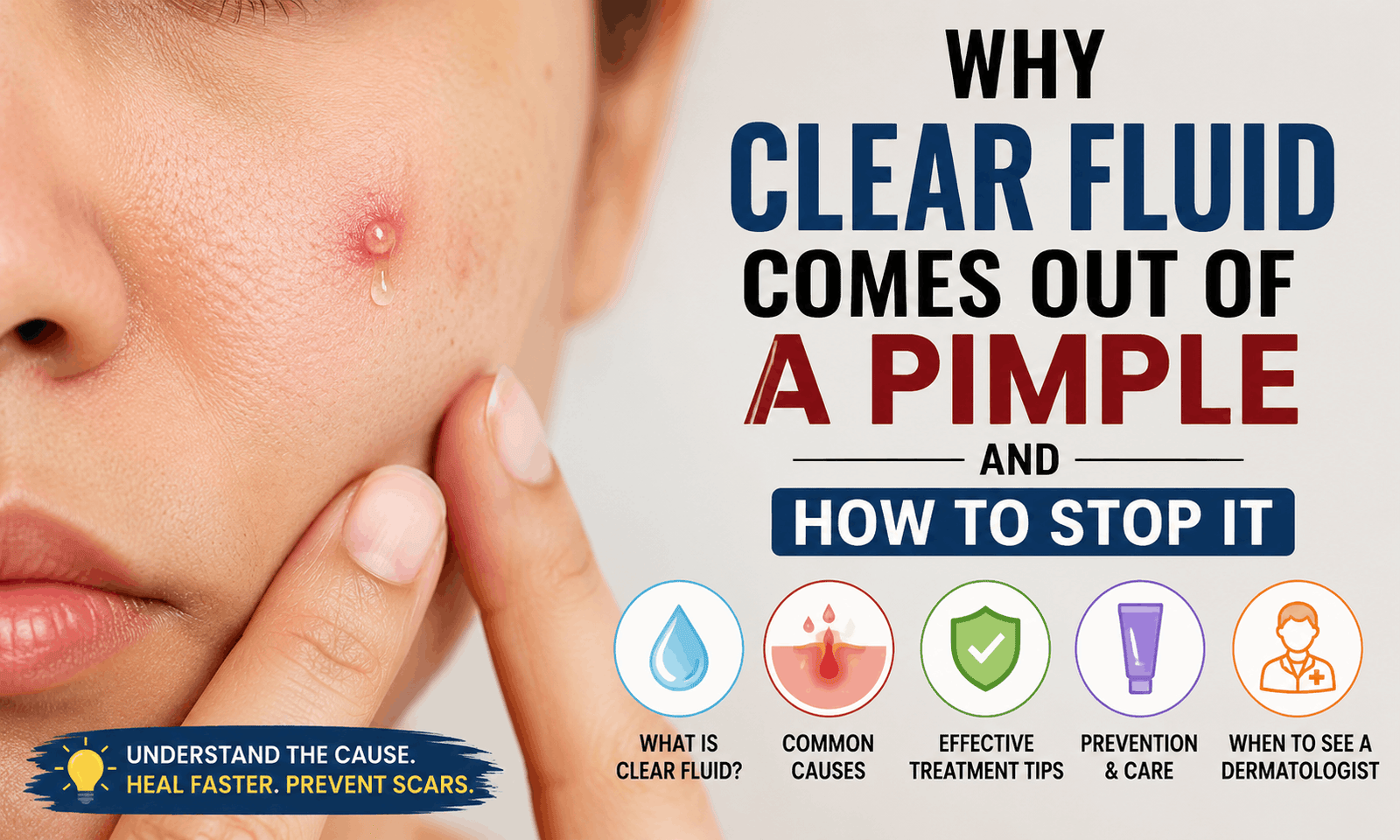
Have you ever popped a pimple only to notice a clear, watery fluid coming out instead of thick white pus? It can be confusing and may leave you wondering whether the pimple is infected, healing, or something more serious. In most cases, clear fluid from a pimple is not a cause for alarm. It is often part of your skin’s natural healing process.
Understanding why clear fluid comes out of a pimple can help you avoid making the problem worse and support faster healing. In this guide, we’ll explain what the fluid is, why it happens, how to treat it properly, and when it’s time to see a dermatologist.
What Is the Clear Fluid Coming Out of a Pimple?
The clear liquid that sometimes drains from a pimple is usually serous fluid. Serous fluid is a thin, watery liquid made up of water, proteins, and immune cells. Your body naturally releases it to protect damaged skin and promote healing.
Unlike pus, which is thick and contains dead white blood cells, bacteria, and oil, serous fluid is generally a sign that your skin is responding to irritation or injury rather than a severe infection.
Also Read: How Do I Know If I Got All the Gunk Out of My Pimple?
Why Does Clear Fluid Come Out of a Pimple?
Several factors can cause a pimple to release clear fluid.
1. The Pimple Was Squeezed Too Early
Many people pop pimples before they have fully developed. If the clogged pore hasn’t filled with pus yet, squeezing it may only force out clear fluid instead of the contents you expect.
This also damages surrounding skin, increasing the risk of inflammation and scarring.
2. Your Skin Is Healing
After a pimple breaks open naturally or is accidentally scratched, your skin begins repairing itself. During this healing stage, serous fluid may seep from the area for a short time before a scab forms.
This is a normal part of wound healing.
3. Irritated or Inflamed Skin
Repeatedly picking at acne can irritate the skin barrier. When the skin becomes inflamed, it may leak clear fluid as part of the body’s inflammatory response.
4. Acne Lesions Have Ruptured
Deeper pimples, such as cystic acne, can sometimes rupture beneath the skin. If this happens, you may notice a mixture of clear fluid, blood, or a small amount of pus.
These types of acne often require professional treatment.
5. Skin Damage from Harsh Products
Overusing exfoliants, acne treatments, or alcohol-based products can weaken the skin barrier. Damaged skin may ooze clear fluid even without an active infection.
Also Read: 3 Major Things To Know About The Pico Laser Treatment Process
Is Clear Fluid from a Pimple a Sign of Infection?
Usually, no.
Clear fluid alone is generally not a sign of infection. However, you should monitor the area for symptoms such as:
- Thick yellow or green pus
- Increasing redness
- Swelling that worsens
- Warm skin around the pimple
- Severe pain
- Fever (rare but possible with serious infections)
If these symptoms appear, consult a healthcare professional for evaluation.
How to Stop Clear Fluid from Coming Out of a Pimple
The best treatment depends on allowing your skin to heal naturally while preventing further irritation.
Keep the Area Clean
Wash the affected area gently with a mild, fragrance-free cleanser twice daily. Avoid scrubbing, as friction can worsen inflammation.
Stop Touching or Picking It
Every time you squeeze or pick at the pimple, you delay healing and increase the risk of infection and permanent acne scars.
Apply a Hydrocolloid Pimple Patch
Hydrocolloid patches absorb excess moisture, including clear fluid, while protecting the wound from bacteria and dirt. They also discourage touching the pimple.
Use a Gentle Moisturizer
Keeping the skin hydrated supports barrier repair. Choose a non-comedogenic moisturizer that won’t clog pores.
Apply Acne Treatments Carefully
Once the skin has stopped leaking fluid, ingredients like:
- Benzoyl peroxide
- Salicylic acid
- Adapalene
can help treat acne. Avoid applying strong acne medications directly onto open or oozing skin unless advised by a healthcare provider.
Should You Pop a Pimple That Has Clear Fluid?
No.
Although it may be tempting, popping pimples usually causes more harm than good. Squeezing can:
- Push bacteria deeper into the skin
- Increase inflammation
- Slow healing
- Cause post-inflammatory hyperpigmentation
- Lead to permanent acne scars
Allow the pimple to drain naturally if it opens on its own.
How Long Does It Take to Heal?
For minor pimples that release clear fluid, healing usually takes:
- 1–3 days for small superficial pimples
- Up to one week if the skin has been picked
- Several weeks for deeper cystic acne
Healing time depends on your skin type, acne severity, and whether the area remains protected from irritation.
Also Read: How To Find Infallible Foundation Shades That Match Your Skin Tone
When Should You See a Dermatologist?
You should seek medical advice if:
- Pimples repeatedly ooze clear fluid.
- Acne becomes painful or cystic.
- The area develops yellow or green discharge.
- Redness spreads quickly.
- The wound does not heal after one to two weeks.
- Acne leaves frequent scars or dark spots.
A dermatologist can determine whether you’re dealing with acne, a skin infection, folliculitis, or another skin condition.
Can You Prevent Pimples from Leaking Clear Fluid?
While not every breakout can be prevented, healthy skincare habits significantly reduce irritation.
Helpful prevention tips include:
- Wash your face twice daily with a gentle cleanser.
- Avoid picking or squeezing pimples.
- Use non-comedogenic skincare products.
- Remove makeup before bed.
- Apply sunscreen daily to protect healing skin.
- Follow a consistent acne treatment routine if you’re prone to breakouts.
Conclusion
Clear fluid coming out of a pimple is usually a normal part of your skin’s healing process rather than a sign of infection. In most cases, the fluid is serous fluid, which helps repair damaged tissue after inflammation or irritation. The best approach is to avoid squeezing the pimple, keep the area clean, and allow your skin to heal naturally. If you notice worsening redness, thick pus, severe pain, or repeated fluid leakage, consult a dermatologist for proper evaluation and treatment. Understanding what your skin is telling you can help you manage acne more effectively while reducing the risk of scars and future breakouts.
FAQs
1. Is clear fluid from a pimple the same as pus?
No. Clear fluid is usually serous fluid, while pus is thicker and contains bacteria, dead white blood cells, and debris.
2. Should I squeeze a pimple if only clear liquid comes out?
No. Continuing to squeeze can damage the skin, increase inflammation, and raise the risk of scarring.
3. Can clear fluid from a pimple spread acne?
No. The clear fluid itself does not spread acne, but touching the area with unclean hands can introduce bacteria and worsen breakouts.
4. How do I know if my pimple is infected?
Signs of infection include thick yellow or green pus, increasing redness, warmth, swelling, severe pain, and delayed healing.
5. Are hydrocolloid pimple patches good for leaking pimples?
Yes. Hydrocolloid patches help absorb excess fluid, protect the skin from bacteria, and create a moist environment that supports faster healing.